
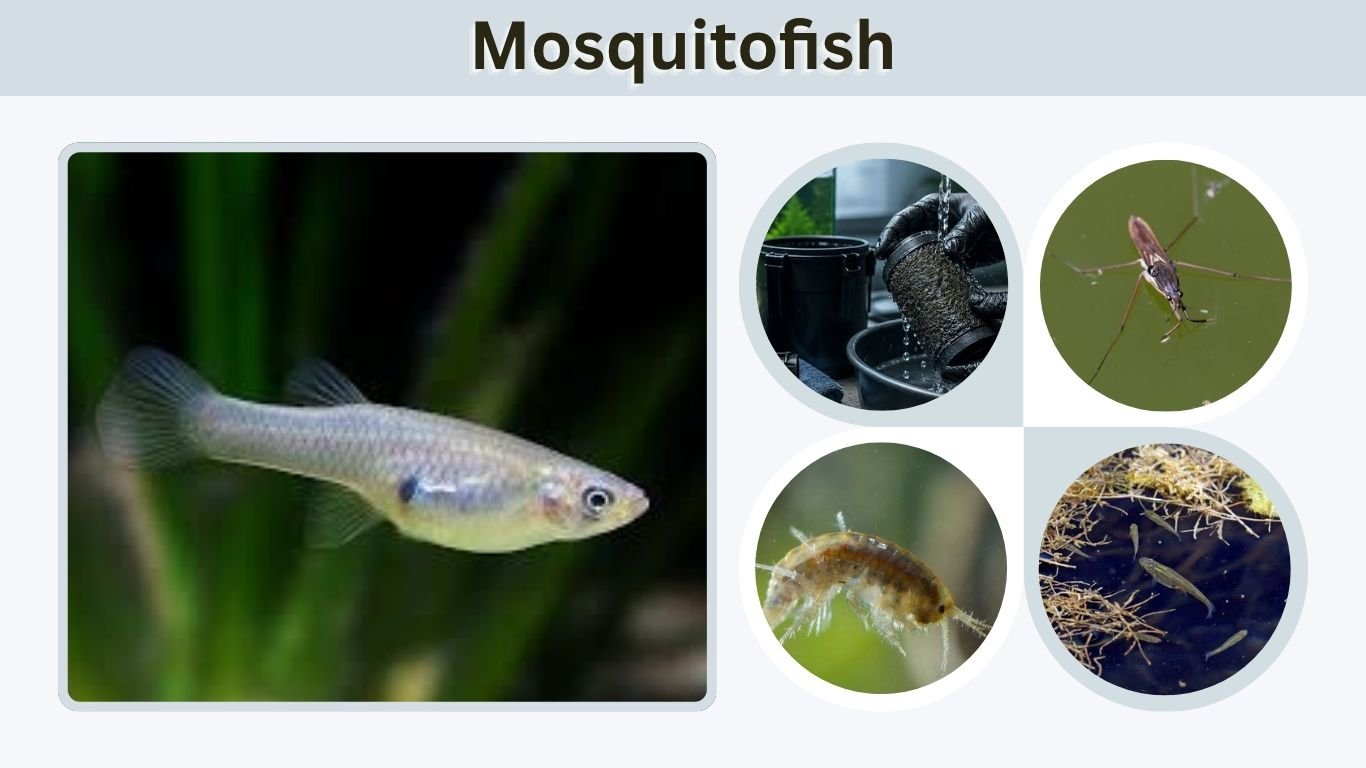
Mosquitofish are small freshwater fish widely recognized for their ability to eat mosquito larvae and survive in challenging aquatic environments. These hardy fish belong to the genus Gambusia and are commonly found in ponds, streams, wetlands, and slow-moving waters. Two well-known species are the eastern mosquitofish and western mosquitofish. Although they look similar, they have different natural ranges and biological characteristics. Understanding mosquitofish care, diet, breeding, lifespan, and environmental impact can help aquarium enthusiasts and pond owners make informed decisions about keeping these fascinating fish.
What Is a Mosquitofish?
A mosquitofish is a small, livebearing freshwater fish belonging to the family Poeciliidae. Its name comes from its habit of feeding on mosquito larvae near the water’s surface. Mosquitofish are adaptable, reproduce quickly, and tolerate environmental conditions that many other fish cannot survive.
Mosquitofish Characteristics
Mosquitofish have several physical features that make them easy to recognize.
- Scientific name: Gambusia spp., especially G. affinis and G. holbrooki.
- Size: Usually 1–2.5 inches, although large females can approach 3 inches.
- Color: Gray, olive, brown, or occasionally black.
- Body shape: Slender body with a flattened head.
- Mouth: Upturned for feeding near the surface.
- Reproduction: Give birth to live young rather than laying eggs.
Females are generally larger and have rounder abdomens, while males are smaller and possess a modified anal fin used for reproduction.
Eastern Mosquitofish vs. Western Mosquitofish
Two of the best-known mosquitofish species are eastern and western mosquitofish. Both have similar feeding habits, body shapes, and reproductive characteristics, but they differ in their native distribution and certain anatomical features.
Eastern Mosquitofish (Gambusia holbrooki)
The eastern mosquitofish is native to Atlantic and Gulf coastal drainages of the eastern United States, including Florida and other southeastern regions.
This species prefers shallow, slow-moving water with aquatic vegetation. It commonly inhabits ponds, marshes, ditches, and streams.
Eastern mosquitofish are typically grayish or olive-brown. Some individuals develop unusual dark coloration, known as melanism. They are adaptable fish, but introductions outside their natural range can threaten native aquatic wildlife.
Western Mosquitofish (Gambusia affinis)
The western mosquitofish naturally occurs in parts of the Mississippi River basin and Gulf Coast drainages extending westward into Mexico.
It closely resembles the eastern species, with a slender body, rounded tail, and upward-pointing mouth.
Western mosquitofish have been introduced to many regions for mosquito management. However, distinguishing the two species reliably often requires examining fin rays and male reproductive anatomy rather than relying on color alone.
Mosquitofish Habitat and Natural Range
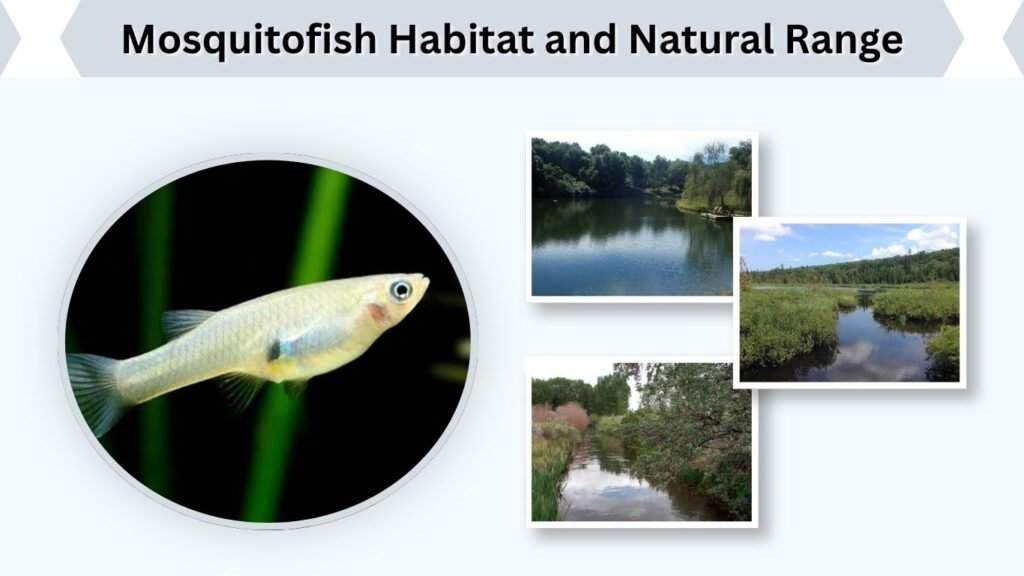
Mosquitofish occupy various freshwater environments, particularly shallow areas where food is readily available. Their adaptability allows them to survive in warmer, slow-moving water and habitats with fluctuating conditions.
Where Do Mosquitofish Live?
Common mosquitofish habitats include:
- Freshwater ponds and small lakes
- Marshes and wetlands
- Slow-moving streams and rivers
- Drainage ditches and canals
- Vegetated pools and shallow backwaters
- Artificial ponds and water-storage systems
Mosquitofish often remain near the water’s surface, searching for insects and other tiny organisms. Although they tolerate relatively low oxygen levels, they still benefit from clean, well-oxygenated water.
Are Mosquitofish Invasive?
Mosquitofish can become invasive when introduced outside their native range. Their rapid reproduction and aggressive feeding behavior may harm native fish, amphibians, and aquatic invertebrates.
The U.S. Fish and Wildlife Service classifies the eastern mosquitofish as a high ecological risk because of its documented impacts in invaded waterways. Never release aquarium mosquitofish into natural waters.
What Do Mosquitofish Eat?

Mosquitofish are opportunistic omnivores that consume various small aquatic organisms. Despite their name, they do not feed exclusively on mosquitoes. Their flexible diet helps them survive when particular food sources become scarce.
Mosquitofish Diet and Food
In natural environments, mosquitofish commonly consume:
- Mosquito larvae and pupae
- Small aquatic insects
- Tiny crustaceans
- Zooplankton
- Insect eggs and other small prey
- Occasional plant material and organic debris
In aquariums, they can accept appropriately sized commercial fish food supplemented with small frozen or live foods.
Do Mosquitofish Really Control Mosquitoes?
Yes, mosquitofish eat mosquito larvae and can reduce mosquito production in suitable environments. However, their effectiveness varies depending on vegetation, habitat conditions, and mosquito species.
According to the American Mosquito Control Association, results range from excellent control to little or no measurable benefit. Removing standing water remains an essential mosquito-prevention measure.
Mosquitofish Care in Aquariums and Ponds

Mosquitofish are hardy freshwater fish, but proper care is necessary for their long-term health. A stable aquatic environment, nutritious diet, and suitable tankmates help reduce stress and support natural behavior.
Mosquitofish Aquarium Setup
A small group can be maintained in a properly established aquarium. A 20-gallon tank provides a practical starting point, although space requirements depend on the number of fish and their behavior.
Important care considerations include:
- Filtration: Use an established biological filter.
- Water quality: Maintain zero detectable ammonia and nitrite.
- Temperature: Provide stable temperatures suitable for the particular species.
- Plants: Include aquatic vegetation and hiding areas.
- Feeding: Offer small portions of varied food.
- Maintenance: Perform regular partial water changes.
Avoid overcrowding because mosquitofish reproduce quickly and may show aggressive behavior.
Keeping Mosquitofish in Outdoor Ponds
Mosquitofish can thrive in suitable ornamental ponds when local regulations permit them.
A pond should provide adequate water depth, vegetation, and protection from predators. Fish must not have access to natural waterways where they could escape.
For mosquito control, contact a local vector-control authority before introducing fish. In environmentally sensitive locations, native fish or approved mosquito larvicides may be better choices.
Mosquitofish Breeding and Life Cycle
Mosquitofish reproduce through internal fertilization and give birth to live young. Their fast reproductive cycle is one reason populations can increase rapidly in favorable aquatic environments.
How Do Mosquitofish Breed?
Males possess a specialized reproductive fin called a gonopodium. During mating, this fin transfers sperm to the female.
After a gestation period commonly lasting around three to four weeks in warm conditions, females give birth to fully developed fry.
The young can swim and begin feeding almost immediately. Dense aquatic vegetation provides shelter because adult fish may consume newborn fry.
Mosquitofish Lifespan
Mosquitofish commonly live around one to two years, although some individuals survive longer under favorable conditions.
Their lifespan depends on water temperature, food availability, predation, and environmental stress. In natural habitats, seasonal temperature changes and predators can significantly reduce survival.
Mosquitofish vs. Guppy: What’s the Difference?
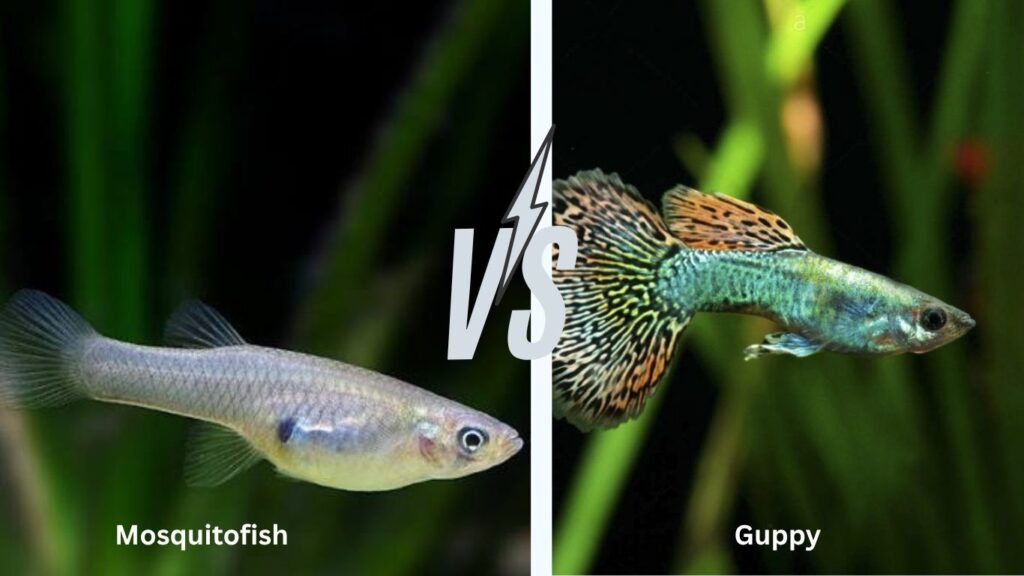
Mosquitofish and guppies are related freshwater livebearers belonging to the same family, Poeciliidae. However, they are different fish.
Guppies (Poecilia reticulata) are popular ornamental aquarium fish, known for their colorful tails and numerous selectively bred varieties.
Mosquitofish generally have less colorful bodies, shorter rounded tails, and a more aggressive temperament. They may nip the fins of slower aquarium fish.
For decorative community aquariums, guppies are often more suitable, while mosquitofish require more careful tankmate selection.
Where to Buy Mosquitofish
Mosquitofish may be available from specialty aquarium suppliers, pond-fish sellers, or local mosquito-control programs. Some regional programs distribute them for approved mosquito-management purposes.
Before purchasing, verify the species, local ownership restrictions, and whether outdoor stocking is permitted.
Availability at major pet retailers such as Petco and PetSmart varies, so contact individual stores rather than assuming mosquitofish are stocked.
Never introduce purchased fish into public lakes, rivers, or natural wetlands.
FAQs
1. Can mosquitofish live in cold water?
Mosquitofish tolerate some temperature variation, but prolonged freezing conditions can kill them. Their cold tolerance depends on the species, local adaptation, and water depth. In colder climates, heated indoor aquariums may be more reliable.
2. Do mosquitofish eat algae?
Mosquitofish may consume small amounts of algae and plant material, but animal prey makes up much of their diet. They are not dependable algae-cleaning fish and should receive a varied, nutritionally complete diet.
3. Can mosquitofish live with goldfish?
Mosquitofish and goldfish may coexist in some spacious environments, but they are not ideal tankmates. Mosquitofish may nip fins, while larger goldfish can eat small mosquitofish. Careful observation and adequate space are essential.
4. How many babies do mosquitofish have?
Females can produce dozens of live young per brood, although numbers depend on age, size, and environmental conditions. Frequent reproduction can quickly overcrowd an aquarium without population management.
5. Are mosquitofish good aquarium pets?
Mosquitofish can be interesting aquarium pets for experienced keepers who understand their breeding and aggressive tendencies. They are hardy and active but generally less suitable for peaceful community tanks containing delicate or long-finned fish.