
Guppy fish are colorful, active freshwater fish that need a balanced diet to stay healthy. But what do guppy fish eat, and which foods are best for their growth and vibrant colors? Guppies are omnivores, meaning they consume both plant-based and animal-based foods. In aquariums, they enjoy tropical fish flakes, small pellets, algae, brine shrimp, and certain vegetables. Feeding them the right combination of nutrients supports healthy development, reproduction, and overall well-being. Understanding their natural eating habits makes it easier to provide a nutritious daily diet.
What Do Guppy Fish Eat?
Guppy fish eat a wide variety of foods, including small insects, aquatic organisms, algae, and commercially prepared fish food. In their natural habitats, guppies consume insect larvae and other tiny invertebrates while occasionally grazing on algae and plant material. Aquarium guppies are adaptable feeders that readily accept most appropriately sized tropical fish foods.
Their diet should provide a balanced combination of proteins, fats, vitamins, minerals, and plant-based nutrients.
Common foods that guppies eat include:
- Tropical fish flakes: Provide balanced everyday nutrition.
- Small fish pellets: Supply essential proteins and nutrients.
- Brine shrimp: Offer protein and encourage natural feeding behavior.
- Daphnia: Provide variety and small animal-based food.
- Bloodworms: Serve as an occasional protein-rich treat.
- Algae: Provide supplementary plant-based nutrition.
- Vegetables: Offer fiber and nutritional variety.
- Mosquito larvae: Serve as a natural animal-based food when obtained from a safe source.
A varied diet is beneficial, but high-quality prepared food should remain the primary source of nutrition for most aquarium guppies.
Best Foods for Guppy Fish
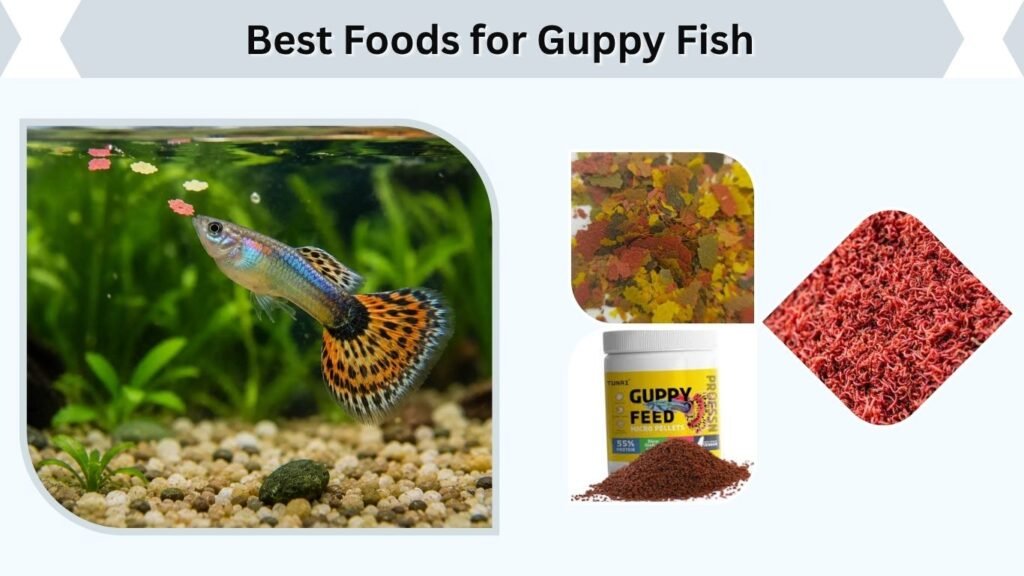
Choosing nutritious foods is essential for maintaining healthy guppies. Although these fish are not particularly picky eaters, relying on one type of food may limit dietary variety. Combining complete commercial foods with occasional frozen, live, or vegetable-based options provides a practical feeding routine for beginners and experienced aquarium owners.
1. Tropical Fish Flakes
Tropical fish flakes are among the most convenient foods for guppies. Quality flakes are formulated with proteins, vitamins, minerals, and plant-based ingredients to support everyday health.
Choose flakes designed for omnivorous tropical fish, ideally containing ingredients such as algae or spirulina. Crush large flakes into smaller pieces if necessary, allowing guppies to swallow them comfortably.
2. Guppy Pellets
Small guppy pellets and micro-pellets are another excellent feeding option. These foods offer concentrated nutrition in convenient portions and are available in different formulations.
Select products specifically made for small tropical fish. Large or hard pellets may be difficult for guppies to consume, so appropriately sized food is important.
3. Brine Shrimp
Brine shrimp are popular because they provide protein and encourage active feeding behavior. Guppies readily consume appropriately sized live or frozen brine shrimp.
Baby brine shrimp are particularly useful for growing guppy fry. They should supplement a balanced diet rather than replace complete prepared food.
4. Daphnia
Daphnia are tiny freshwater crustaceans that guppies naturally enjoy eating. They can be offered live, frozen, or freeze-dried, depending on availability.
Daphnia provide dietary variety and encourage natural hunting behavior. Feed small quantities alongside regular tropical fish food to maintain balanced nutrition.
5. Bloodworms
Bloodworms are protein-rich insect larvae commonly sold as frozen or freeze-dried aquarium food. Adult guppies may readily consume suitably sized pieces.
However, bloodworms are best offered occasionally rather than daily. They should not become the main food because they do not provide a complete nutritional balance.
6. Vegetables and Algae-Based Foods
Guppies can eat small portions of soft vegetables such as blanched spinach, zucchini, and shelled peas. These foods add variety to their regular diet.
Offer vegetables in tiny pieces and remove uneaten portions before they decay. Spirulina-based flakes are another convenient way to provide plant-based nutrients.
What Do Guppies Eat Besides Fish Food?

Guppies can eat several natural foods besides commercially prepared flakes and pellets. In suitable environments, they consume tiny aquatic invertebrates, insect larvae, and algae. These foods resemble parts of their natural diet and can provide useful variety when offered safely.
Some suitable alternatives include:
- Mosquito larvae: Guppies naturally consume small mosquito larvae, but cultured or responsibly sourced larvae are safer than collecting them from potentially contaminated water.
- Live daphnia: These tiny crustaceans encourage active feeding.
- Baby brine shrimp: A nutritious supplemental food suitable for fry and adults.
- Soft vegetables: Small portions of blanched spinach or zucchini provide variety.
- Algae: Guppies may graze on soft algae growing on aquarium surfaces.
Avoid feeding bread, seasoned human food, or large quantities of raw grains. These foods are not appropriate substitutes for a complete guppy diet.
How Often Should You Feed Guppy Fish?
Adult guppies generally do well when fed once or twice daily in small portions. Offer only as much food as they can consume in approximately one to two minutes, adjusting portions according to the fish’s size, number, and appetite.
Overfeeding is a common problem in home aquariums because guppies often appear hungry even after eating.
A practical feeding schedule is shown below.
| Guppy age | Feeding frequency | Recommended food |
| Newborn fry | 3–5 small meals daily | Fry food, baby brine shrimp |
| Young guppies | 2–3 small meals daily | Crushed flakes, micro-pellets |
| Adult guppies | 1–2 meals daily | Complete flakes or pellets |
| Pregnant guppies | 1–2 small meals daily | Balanced diet with occasional protein supplements |
Feeding more frequently is not necessarily better. Excess food decomposes, increases waste, and may contribute to harmful water conditions.
What Do Baby Guppy Fish Eat?
Baby guppy fish, commonly called fry, require tiny, nutritious food that supports rapid growth. Unlike many fish species, guppy fry are born as free-swimming young and can begin feeding shortly after birth.
Suitable foods include powdered fry food, finely crushed tropical flakes, and newly hatched brine shrimp. Small live foods are particularly useful because they encourage natural feeding behavior.
Feed fry several times daily using very small portions. Their small bodies require frequent nutrition, but leftover food can quickly pollute their aquarium.
A sponge filter, stable water quality, and regular maintenance are important for healthy fry development. As they grow, gradually introduce larger food particles.
Can Guppies Eat Betta Fish Food or Goldfish Food?
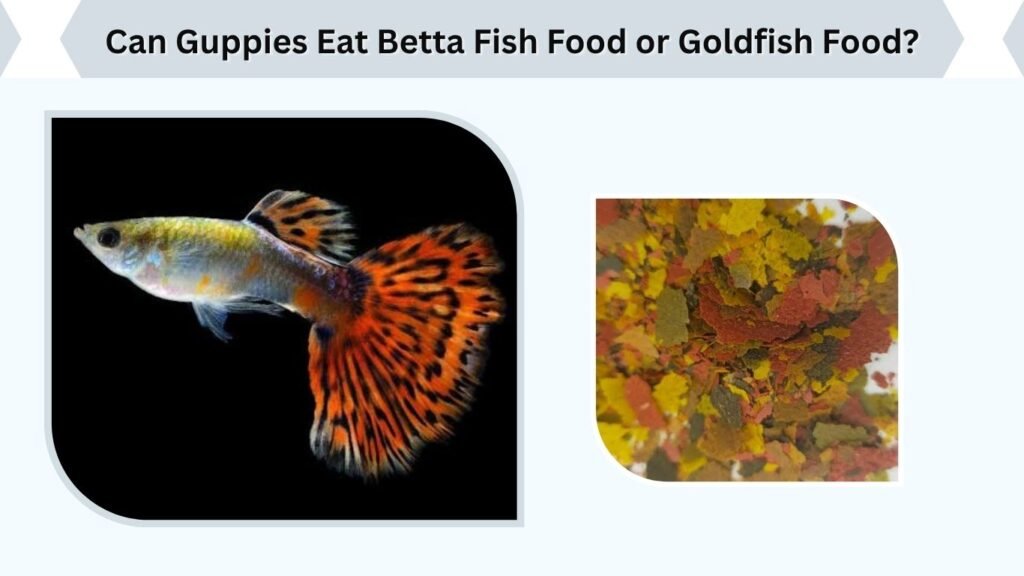
Guppies can occasionally consume certain foods formulated for other aquarium species. However, nutritional requirements vary between fish, so using another species’ food as a permanent diet may create nutritional imbalances. Understanding these differences helps aquarium owners make safer feeding decisions.
Can Guppies Eat Betta Fish Food?
Yes, guppies can occasionally eat appropriately sized betta pellets or flakes. Betta foods generally emphasize animal-based protein because bettas are primarily carnivorous.
However, guppies are omnivores and benefit from foods containing plant-based ingredients. Betta food should therefore be an occasional supplement, not their regular diet.
Can Guppies Eat Goldfish Food?
Guppies can eat some goldfish flakes or small pellets occasionally, provided the food is fresh and appropriately sized.
Nevertheless, goldfish foods are formulated for different nutritional requirements. A complete tropical fish diet is a better everyday choice for maintaining guppy health.
Can Guppies Eat Tropical Fish Flakes?
Yes, tropical fish flakes are among the best everyday foods for guppies when formulated as a complete diet for small omnivorous fish.
They provide convenient nutrition and are easy to portion. Select quality flakes containing a combination of animal and plant-based ingredients.
Do Guppy Fish Eat Algae and Other Fish?
Guppies naturally graze on some soft algae growing inside aquariums. However, algae alone cannot provide all the nutrients they require. They should still receive nutritious prepared food to maintain healthy growth and coloration.
Adult guppies may also eat newborn guppy fry when the opportunity arises. This behavior is relatively common, particularly in aquariums without enough hiding places.
Guppies are not normally predators of healthy adult fish. They may occasionally scavenge dead fish or other organic material, but decaying animals should be removed promptly to protect water quality.
Dense aquatic plants and separate nursery tanks can help protect vulnerable baby guppies.
Why Is My Guppy Fish Not Eating?
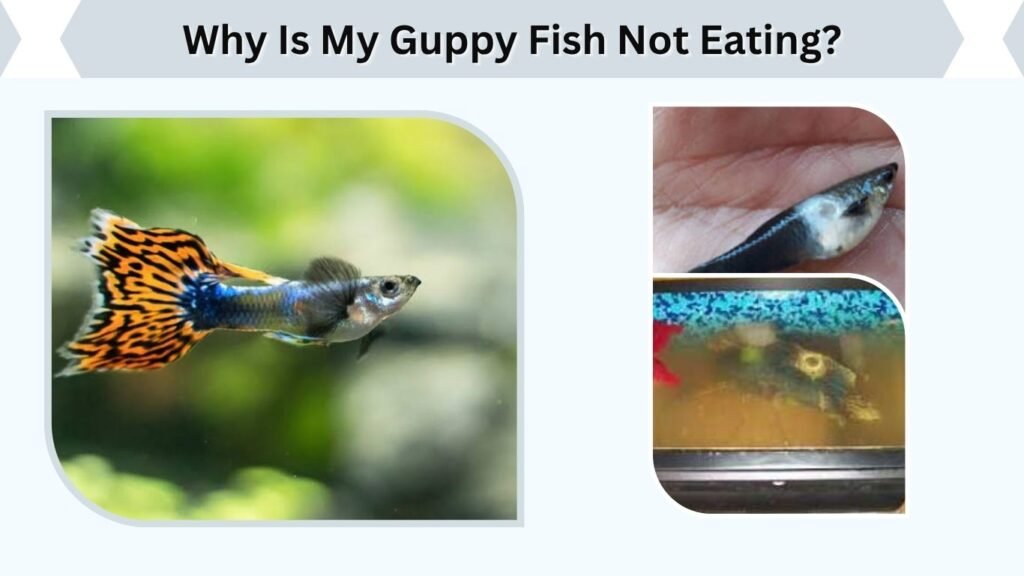
A guppy that suddenly refuses food may be experiencing environmental stress, poor water quality, illness, or problems related to unsuitable feeding conditions. Identifying the underlying cause is important before changing the fish’s diet.
Common reasons include:
- Poor water quality: Elevated ammonia or nitrite can affect appetite.
- Temperature problems: Unsuitable water temperatures may cause stress.
- Illness: Infections or other health conditions can reduce feeding.
- Aggressive tank mates: Bullying may prevent guppies from approaching food.
- Sudden changes: Moving fish or changing aquarium conditions may temporarily reduce appetite.
Check aquarium water parameters, observe the fish’s behavior, and remove uneaten food. Persistent loss of appetite or additional symptoms warrant advice from an aquatic veterinarian.
FAQs
Can Guppy Fish Eat Mosquito Larvae?
Yes, guppy fish naturally eat mosquito larvae, which provide protein and encourage hunting behavior. However, larvae collected from outdoor water may introduce contaminants or disease-causing organisms. Use safely cultured larvae from reliable sources rather than collecting them from unknown locations.
Do Guppies Eat Their Babies?
Yes, adult guppies sometimes eat newborn guppy fry, particularly when the babies cannot find shelter. Providing dense aquatic plants or a separate nursery aquarium can improve fry survival. Even well-fed adult guppies may occasionally consume their young.
Can Guppy Fish Eat Bread?
Bread is not recommended for guppy fish because it does not provide suitable balanced nutrition. It may also break apart and pollute aquarium water. Instead, feed complete tropical fish flakes, small pellets, and appropriately sized nutritious treats.
Do Guppy Fish Eat Aquarium Plants?
Guppies may occasionally nibble soft plant material or graze on algae covering aquarium leaves. However, they generally do not cause significant damage to healthy aquatic plants. A balanced diet helps ensure they receive sufficient plant-based nutrients without relying on aquarium vegetation.
What Is the Best Food for Guppy Fish?
High-quality tropical fish flakes or micro-pellets formulated for omnivorous fish are excellent everyday foods. Choose a complete diet containing both animal and plant ingredients. Supplement occasionally with brine shrimp, daphnia, and suitable vegetables to provide nutritional variety.