

Betta fish and guppies are among the most popular freshwater aquarium fish, but can betta fish live with guppies peacefully? Although both species enjoy warm water and similar aquarium environments, their personalities can make living together challenging. Bettas are territorial and may attack brightly colored guppies, especially males with long, flowing tails. However, some combinations can work in spacious, well-planted aquariums. Understanding their behavior, water requirements, feeding habits, and tank setup can help you determine whether keeping these colorful fish together is safe.
Can Betta Fish Live With Guppies?
Yes, betta fish can sometimes live with guppies, but they are generally not recommended as tank mates, especially for beginners. Bettas are known for their territorial behavior, while guppies are peaceful, active fish that prefer living in groups. Their different personalities can create conflicts, even when aquarium conditions are suitable.
Why Do Bettas Sometimes Attack Guppies?
Male bettas are particularly sensitive to fish with bright colors and flowing fins. Fancy male guppies often display large, colorful tails that may trigger aggressive behavior in certain bettas.
Several factors increase the likelihood of aggression:
- Bright colors: Colorful male guppies may attract unwanted attention from territorial bettas.
- Long fins: Fancy guppies can resemble rival fish, potentially triggering attacks.
- Limited swimming space: Small aquariums make avoiding aggressive fish difficult.
- Territorial behavior: Bettas may defend particular areas of the aquarium.
- Fin nipping: Guppies may occasionally nip at a betta’s long fins.
Repeated chasing or biting can cause stress, damaged fins, and injuries. Some bettas tolerate guppies, but peaceful behavior cannot be guaranteed.
Can Male and Female Betta Fish Live With Guppies?
Male bettas are generally the riskiest choice because of their territorial tendencies. They may chase or attack male guppies, especially varieties with long, decorative tails.
Female bettas sometimes behave more peacefully, making community aquariums possible. However, female bettas can also become aggressive toward guppies.
Female guppies have shorter fins and usually display less elaborate coloration than males, potentially reducing unwanted attention. Nevertheless, a female betta living with female guppies is not automatically a safe combination. Individual temperament remains the most important factor.
Betta Fish and Guppy Water Requirements

Water conditions play an important role in determining whether bettas and guppies can share an aquarium. Both are tropical freshwater fish, and their preferred temperature ranges overlap. However, guppies generally prefer harder, more alkaline water, while bettas are often maintained in softer conditions. These differences should be considered before introducing either species.
| Water parameter | Betta fish | Guppy fish |
| Temperature | 68–82°F | 68–82°F |
| pH level | 6.0–8.0 | 7.0–8.0 |
| Water hardness | 4–12 dGH | 8–18 dGH |
| Water movement | Gentle | Gentle to moderate |
| Ammonia and nitrite | 0 ppm | 0 ppm |
For a potential shared aquarium, a stable temperature around 75–79°F (24–26°C) and pH around 7.0–7.5 can be suitable, provided the water hardness also meets both species’ requirements.
Maintaining stable water conditions is more important than constantly adjusting the aquarium to achieve a particular number. Regular testing, filtration, and water changes help protect fish from unnecessary stress.
How to Keep Betta Fish and Guppies Together Safely

Although keeping bettas with guppies involves risks, certain aquarium arrangements may improve their chances of peaceful coexistence. Providing sufficient swimming space, choosing appropriate fish, and creating hiding areas can reduce territorial encounters. However, these precautions do not guarantee compatibility, and fish owners should always have a separate aquarium available.
1. Choose a Spacious Aquarium
A 20-gallon aquarium or larger is a reasonable starting point for an attempted betta-and-guppy community. Additional swimming space allows fish to establish separate areas and avoid unnecessary encounters.
A small tank or fish bowl is unsuitable for this combination because there is limited room to escape aggression.
2. Add Plenty of Live Plants
Aquatic plants provide hiding spots and break the direct line of sight between fish. Java fern, Anubias, Amazon sword plants, and floating plants can help create a comfortable environment.
Arrange plants around the aquarium while leaving open swimming areas.
3. Select Guppies Carefully
Avoid fancy male guppies with exceptionally large, colorful tails. Short-finned varieties or less colorful females may be less likely to trigger aggression.
However, choosing different guppies does not eliminate the possibility of fighting.
4. Introduce Fish Carefully
Introduce new fish gradually into a mature, fully cycled aquarium. Rearranging decorations before introductions may help reduce established territorial boundaries.
Observe interactions closely during the first several days, particularly during feeding.
5. Prepare a Separate Aquarium
Always have a properly heated, filtered backup aquarium available before attempting this combination.
If chasing, fin biting, or persistent intimidation develops, separate the fish immediately rather than expecting them to become friendly over time.
Signs Betta Fish and Guppies Are Not Getting Along
Not every aggressive interaction causes an obvious injury. Fish may experience ongoing stress when they cannot comfortably swim, eat, or rest. Recognizing behavioral changes early is important because continuous harassment can weaken fish and increase their vulnerability to health problems.
Common warning signs include:
- Constant chasing: A betta repeatedly pursues guppies around the aquarium.
- Damaged fins: Torn tails or missing fin tissue indicate possible biting.
- Excessive hiding: Guppies spend most of their time avoiding the betta.
- Loss of appetite: Stressed fish may stop eating normally.
- Unusual behavior: Clamped fins, erratic swimming, or persistent isolation may indicate distress.
If these symptoms appear, check water quality and observe the fish for aggression. Separate incompatible tank mates promptly.
What Fish Can Live With Guppies Instead?
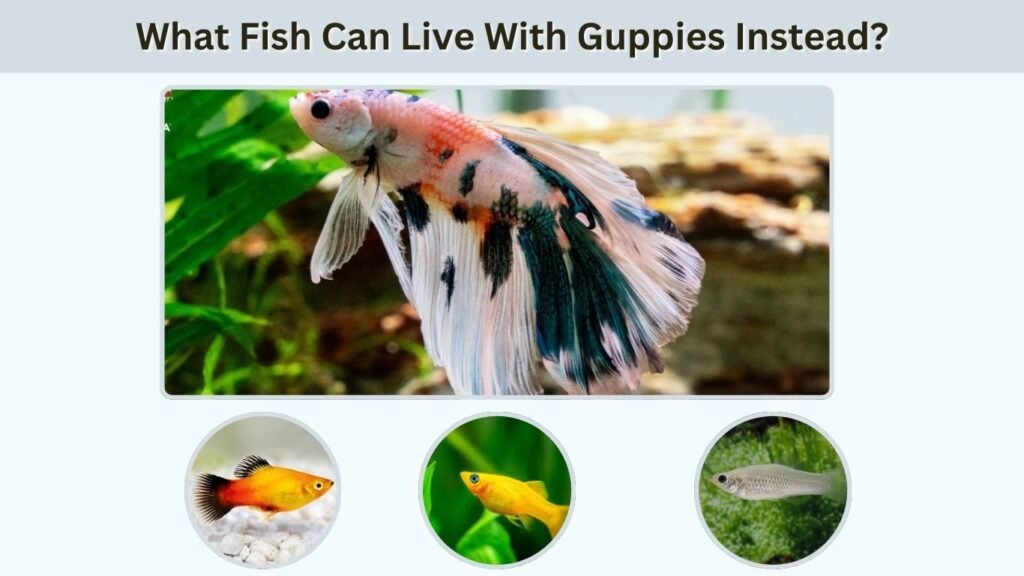
Guppies are generally peaceful community fish that can live successfully with several other freshwater species. Choosing suitable tank mates involves comparing adult size, temperament, water hardness, temperature, and swimming behavior. Peaceful species with similar environmental requirements are usually better choices than territorial bettas.
1. Platy Fish
Platies are colorful, peaceful livebearers that generally share similar water requirements with guppies. They are suitable for many community aquariums, although their breeding activity should be managed.
2. Molly Fish
Mollies can make suitable guppy companions in appropriately sized aquariums. They prefer relatively hard, alkaline water and need sufficient swimming space, particularly larger varieties.
3. Corydoras Catfish
Corydoras are peaceful bottom-dwelling fish that rarely bother guppies. Keep them in groups and choose species that tolerate the aquarium’s temperature and water hardness.
4. Endler’s Livebearers
Endler’s livebearers are small, active fish closely related to guppies. They can share similar aquarium conditions, although the two species may interbreed, which matters when maintaining pure breeding lines.
5. Peaceful Tetras
Certain peaceful tetra species can share aquariums with guppies when their water requirements overlap. Select species carefully, as some prefer softer water or may nip at long fins.
Avoid housing guppies with large predatory fish or aggressive fin-nippers. Goldfish and koi are also generally unsuitable because their size, environmental requirements, and care needs differ substantially.
Can Guppies Eat Betta Fish Food?
Guppies can occasionally eat betta fish food, but specialized betta pellets should not become their primary diet. Bettas benefit from protein-rich foods, while guppies are omnivorous and require a balanced diet that includes plant-based nutrients.
High-quality tropical flakes, suitable micro-pellets, and occasional foods such as daphnia or brine shrimp are good choices for guppies.
Likewise, bettas may eat some tropical fish flakes, but a properly formulated betta diet is preferable for their regular meals.
When keeping different fish species, distribute food carefully to ensure every fish receives appropriate nutrition.
FAQs
Can Male Betta Fish Live With Guppies?
Male bettas sometimes tolerate guppies, but the combination is risky. Brightly colored male guppies with flowing tails may provoke aggression. Even in spacious aquariums, territorial behavior can cause chasing or injuries. Keeping them separately is usually safer.
Can Female Betta Fish Live With Guppies?
Female bettas can sometimes coexist with guppies in larger, planted community aquariums. However, females can also display territorial aggression. Monitor interactions carefully and provide hiding places. Never assume that a female betta will automatically accept peaceful tank mates.
Can Betta Fish Kill Guppies?
Yes, a betta fish can seriously injure or kill guppies through repeated attacks. Guppies are particularly vulnerable when they cannot escape aggressive behavior. Damaged fins, constant chasing, and excessive hiding are warning signs that require immediate separation.
Can You Keep One Guppy With a Betta Fish?
Keeping a single guppy with a betta is not recommended. Guppies are social fish that generally thrive with other guppies. A lone guppy may experience additional stress, particularly when sharing an aquarium with a territorial betta.
Can Guppies and Bettas Live Together in a 10-Gallon Tank?
A 10-gallon aquarium is generally too restrictive for this risky combination. While some individual fish may tolerate each other, limited space increases territorial encounters. A larger, heavily planted tank offers more room, but separation remains the safer option.