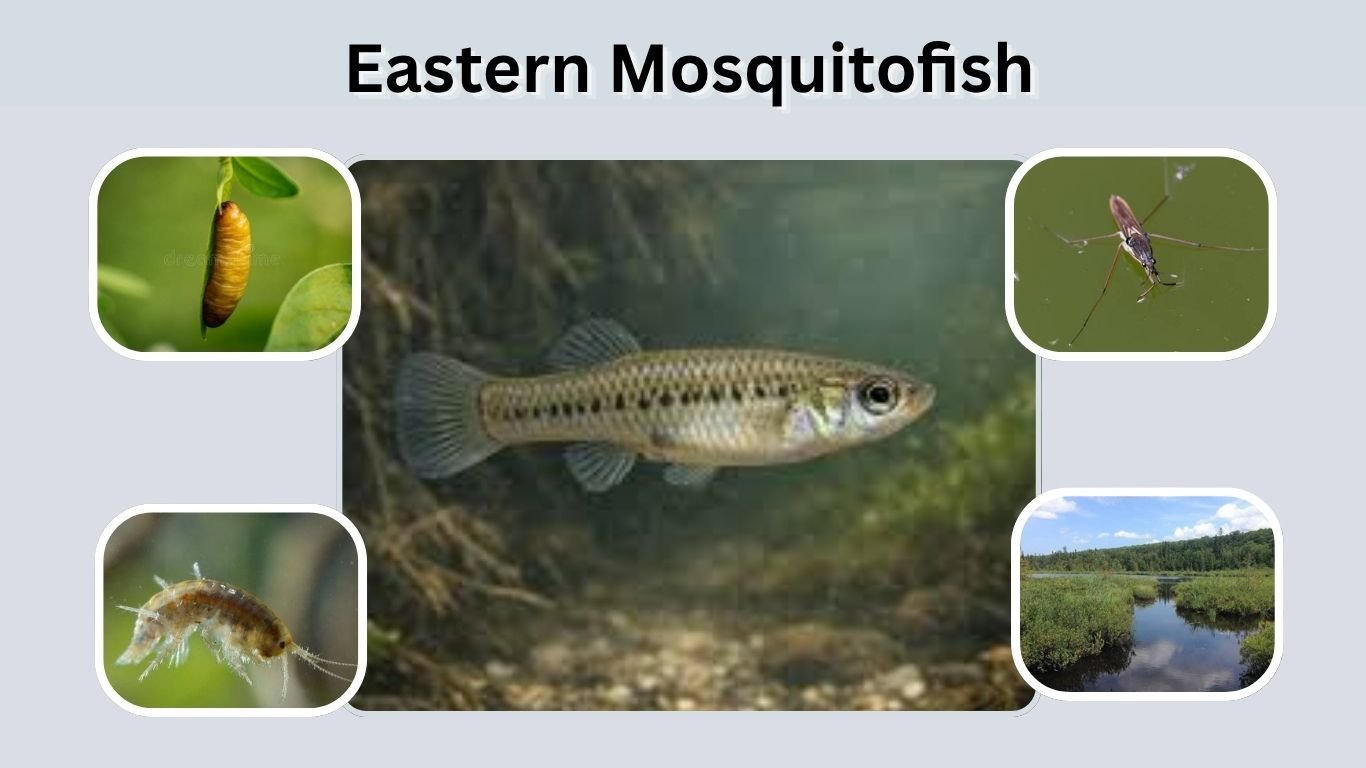
The eastern mosquitofish (Gambusia holbrooki) is a small freshwater fish known for eating mosquito larvae and surviving in different aquatic environments. Native to the eastern and southeastern United States, this hardy species inhabits ponds, wetlands, streams, and shallow lakes. Although eastern mosquitofish play a role in aquatic food webs and some mosquito-control programs, they can also become invasive outside their native range. Understanding their physical characteristics, habitat, diet, breeding behavior, lifespan, and aquarium requirements is important for anyone interested in these fascinating livebearing fish.
Eastern mosquitofish specimens showing a typical male, female, and dark-colored melanistic male. Florida Museum of Natural History.
What Is an Eastern Mosquitofish?
The eastern mosquitofish is a small freshwater species belonging to the livebearing fish family Poeciliidae. It is closely related to western mosquitofish, guppies, and other livebearers. Its adaptability and ability to consume small aquatic insects make it a familiar species in freshwater ecosystems.
Eastern Mosquitofish Facts
- Scientific name: Gambusia holbrooki
- Family: Poeciliidae
- Common name: Eastern mosquitofish
- Size: Typically 1–2.5 inches; large females can grow longer
- Color: Olive-gray, silver, or brown
- Diet: Omnivorous, primarily small invertebrates
- Lifespan: Usually around 1–2 years
- Reproduction: Livebearing
- Habitat: Freshwater and occasionally brackish water
The species was scientifically described in 1859 and is particularly abundant in Florida’s freshwater habitats.
Eastern Mosquitofish Identification and Size

Eastern mosquitofish have distinctive body structures that help them feed near the water’s surface. They generally display muted coloration and transparent fins, making them less colorful than ornamental aquarium fish.
Physical Appearance
An eastern mosquitofish has a slender, slightly compressed body, a flattened head, and a small upward-facing mouth. Its scales are commonly olive-gray or yellowish, sometimes with darker outlines that create a crosshatched pattern.
The rounded tail and small dorsal fin are additional identification features. Some males develop extensive black pigmentation, a color variation called melanism.
Male vs. Female Eastern Mosquitofish
Females are noticeably larger than males, often reaching approximately 2–2.5 inches. Males generally reach around 1–1.5 inches.
Mature females have fuller abdomens and frequently display a dark gravid spot near the anal fin. Males possess a modified anal fin called a gonopodium, which transfers sperm during reproduction.
These characteristics make identifying the sex of mature eastern mosquitofish relatively straightforward.
Eastern Mosquitofish Habitat and Natural Range
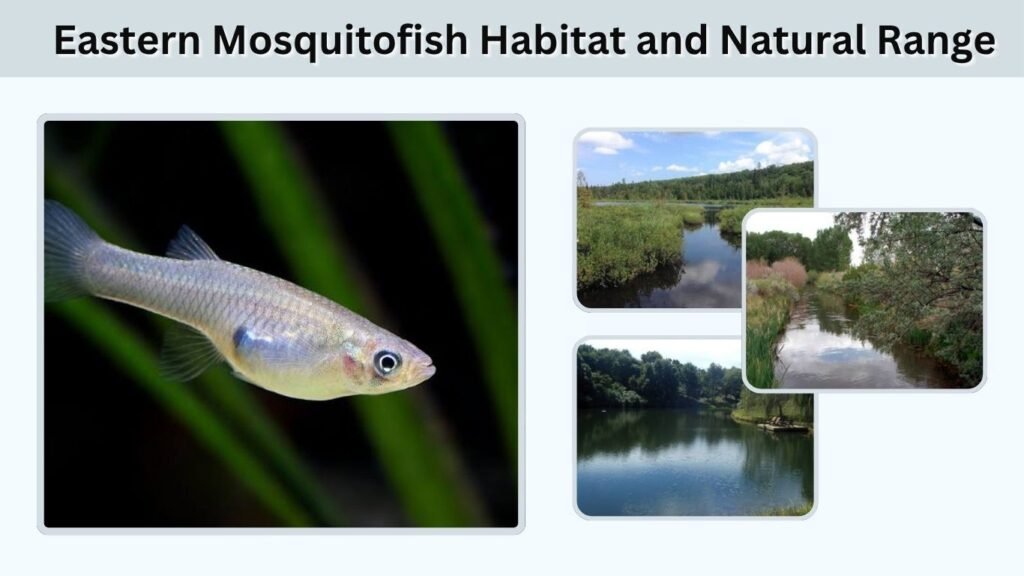
Eastern mosquitofish occupy a variety of freshwater environments across the eastern United States. Their ability to tolerate fluctuating water conditions allows them to survive in habitats where some fish species struggle.
Where Do Eastern Mosquitofish Live?
Their native range includes Atlantic and Gulf coastal drainages from the northeastern coastal United States south through Florida and west toward Alabama and southeastern Mississippi.
Eastern mosquitofish occur naturally in parts of Maryland, Georgia, North Carolina, South Carolina, and Florida.
Common habitats include:
- Freshwater ponds and lakes
- Slow-moving creeks and streams
- Marshes and wetlands
- Vegetated drainage channels
- Shallow pools and backwaters
They prefer shallow areas with abundant vegetation, where they can find small prey and shelter from larger predators.
Eastern Mosquitofish in Florida
Florida provides particularly suitable conditions for eastern mosquitofish. They occur in the Everglades, Lake Okeechobee drainage, coastal streams, and numerous freshwater wetlands.
These fish frequently gather near the surface and around aquatic plants, feeding on insects and other small organisms.
What Do Eastern Mosquitofish Eat?
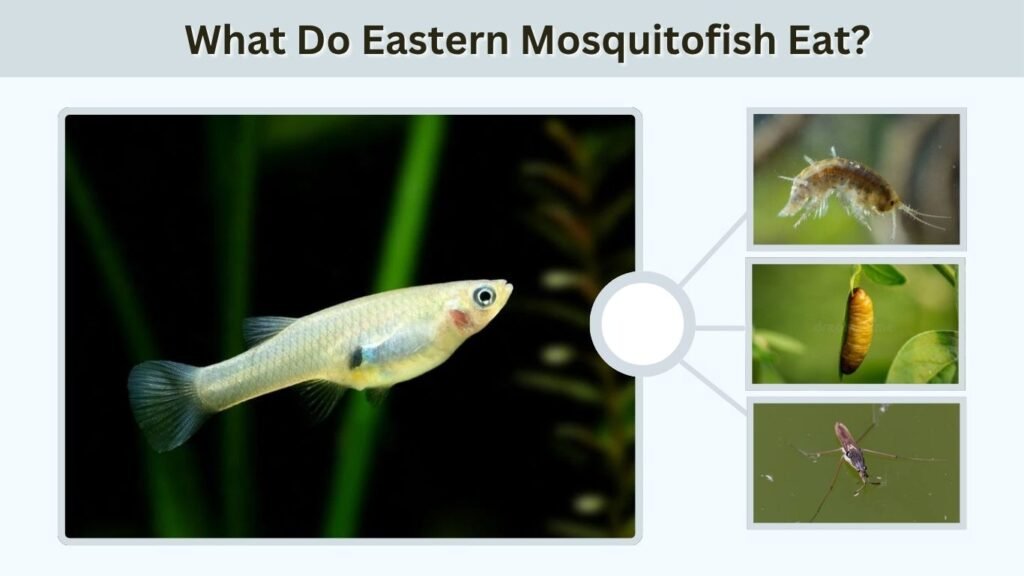
Eastern mosquitofish are opportunistic omnivores that consume various aquatic organisms. Although mosquito larvae are a recognized food source, these fish also eat many other small animals and occasionally plant material.
Eastern Mosquitofish Diet
Their natural diet includes:
- Mosquito larvae and pupae
- Small aquatic insects
- Zooplankton
- Tiny crustaceans
- Insect larvae and eggs
- Small amounts of algae and plant material
They may also consume newly hatched fish when the opportunity arises.
In aquariums, eastern mosquitofish can accept fine commercial fish food, frozen daphnia, brine shrimp, and other appropriately sized foods.
Feeding small amounts once or twice daily is generally sufficient for adult fish, provided they receive a balanced diet.
Eastern Mosquitofish Aquarium Care
Eastern mosquitofish are hardy, but keeping them successfully requires appropriate aquarium conditions. Their energetic behavior, rapid reproduction, and occasional aggression make them better suited to species-focused setups than delicate community aquariums.
Tank Size and Water Conditions
A 20-gallon aquarium is a practical starting point for a small group, with additional space needed as the population grows.
Provide effective biological filtration, stable water conditions, and aquatic plants for shelter.
Maintain ammonia and nitrite at undetectable levels and perform regular partial water changes. Although this species tolerates a broad temperature range in nature, sudden fluctuations and extreme temperatures should be avoided.
Tankmates and Behavior
Eastern mosquitofish can be aggressive toward smaller or slow-moving species. They sometimes nip fins and may consume their own fry.
Avoid overcrowding and monitor their interactions closely. The University of Florida notes that aggression and cannibalism can be important challenges when raising these fish in tanks.
Eastern Mosquitofish Breeding and Reproduction
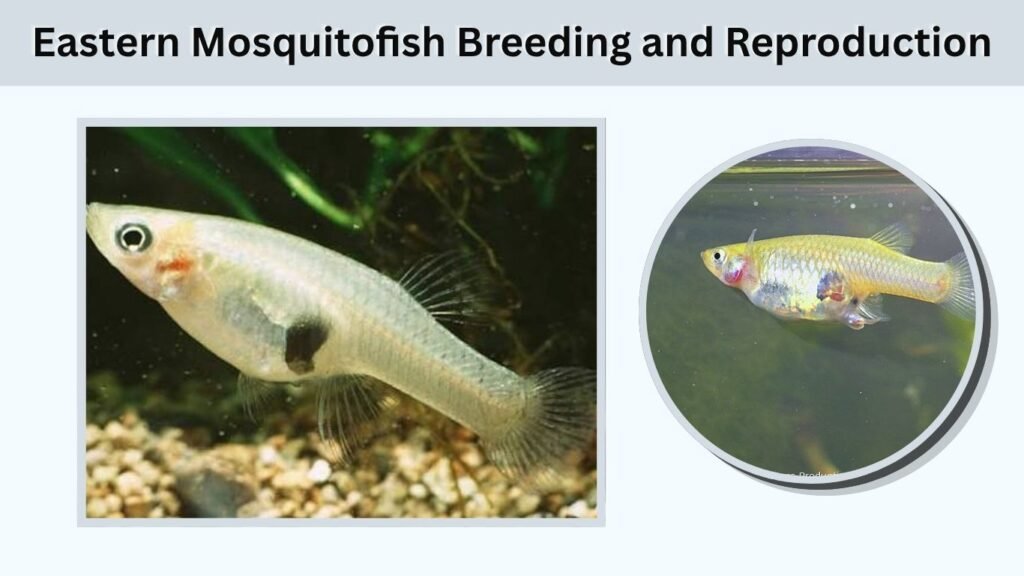
Eastern mosquitofish reproduce rapidly under favorable conditions. Their livebearing reproductive system allows females to deliver fully developed young without laying external eggs.
How Do Eastern Mosquitofish Breed?
During mating, the male uses his gonopodium to transfer sperm into the female.
Pregnancy generally lasts around three to four weeks, although temperature and other environmental conditions influence development.
Females can produce multiple broods during a breeding season. Brood size varies considerably, often reaching several dozen offspring.
Newborn mosquitofish are capable of swimming and feeding immediately. Dense aquatic plants improve fry survival by providing hiding places.
Eastern Mosquitofish Lifespan and Growth
Eastern mosquitofish generally live around one to two years, with females sometimes surviving longer than males. Lifespan varies depending on environmental conditions, predation, and water quality.
Young fish can mature rapidly, sometimes within four to six weeks under favorable temperatures and feeding conditions.
Does Temperature Affect Eastern Mosquitofish Growth?
Yes. Water temperature influences their growth, reproductive development, and overall life history.
Research has found relationships between temperature, individual growth rates, and genetic characteristics. However, faster growth at a particular experimental temperature does not necessarily mean that temperature is ideal for long-term aquarium care.
Eastern Mosquitofish vs. Western Mosquitofish
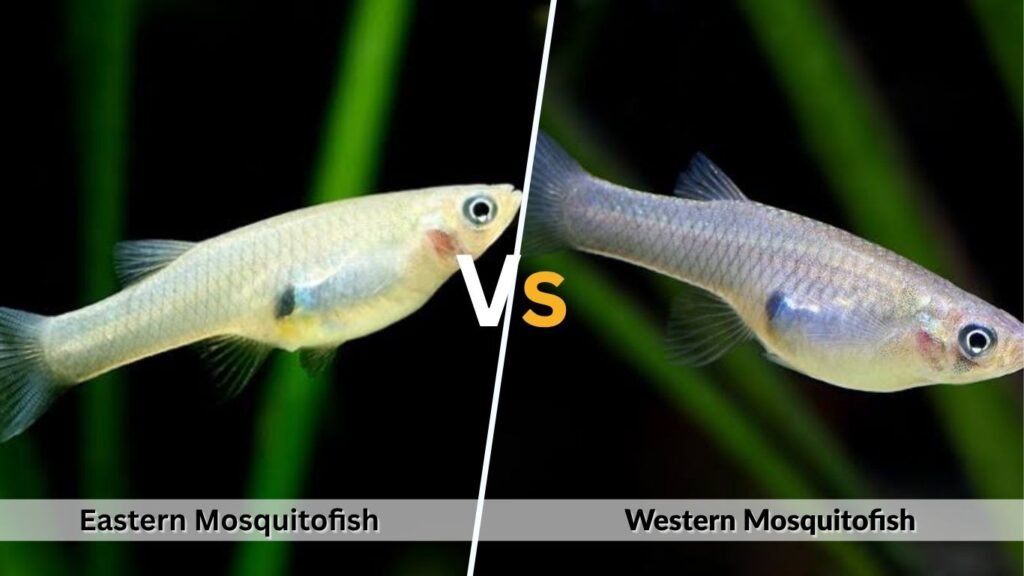
Eastern mosquitofish and western mosquitofish are closely related species with similar appearances and feeding habits. However, they differ in their original geographic ranges and certain anatomical characteristics.
| Feature | Eastern mosquitofish | Western mosquitofish |
| Scientific name | Gambusia holbrooki | Gambusia affinis |
| Native range | Atlantic and eastern Gulf drainages | Mississippi basin and western Gulf drainages |
| Body appearance | Gray or olive | Gray or brown |
| Dorsal fin rays | Usually 7 | Usually 6 |
| Reproduction | Livebearing | Livebearing |
| Primary food | Small invertebrates | Small invertebrates |
Fin-ray counts and the structure of the male gonopodium help distinguish these fish, although identifying individuals can be difficult where populations overlap or hybridize.
Are Eastern Mosquitofish Invasive?
Eastern mosquitofish are native to portions of the United States but have been introduced elsewhere, including Australia and several European countries.
Outside their natural range, they can compete with native fish and prey on aquatic invertebrates, amphibian eggs, and tadpoles.
Although eastern mosquitofish consume mosquito larvae, their mosquito-control benefits are not consistently greater than those of native fish. Introducing them into natural waters can create ecological problems.
The Australian Museum identifies eastern gambusia as a major invasive pest in Australia.
Eastern Mosquitofish for Sale: Where to Buy
Eastern mosquitofish may be available through specialty fish suppliers, approved pond-fish sellers, and some mosquito-control programs.
Before purchasing, confirm the exact species and check whether possession, transport, or stocking is permitted in your location.
Buy only from reputable sources, avoid collecting fish from protected habitats, and never release unwanted aquarium fish into natural waterways.
FAQs
1. Are eastern mosquitofish good pets?
Eastern mosquitofish can be interesting aquarium pets for experienced fishkeepers. They are hardy and active but may nip other fish and reproduce rapidly. A properly maintained species-only aquarium is often the most practical option.
2. Do eastern mosquitofish lay eggs?
No. Eastern mosquitofish are livebearers. Females retain developing embryos internally and give birth to free-swimming fry. Their reproductive strategy helps young fish begin feeding and avoiding predators shortly after birth.
3. Can eastern mosquitofish survive in cold water?
Eastern mosquitofish tolerate cooler conditions, but cold tolerance varies among populations. Extended freezing conditions can be dangerous, particularly in shallow ponds. Stable temperatures and suitable shelter improve survival during winter.
4. Are eastern mosquitofish native to Maryland?
Yes. Eastern mosquitofish naturally occur in Maryland and are documented in several watersheds. However, their presence does not mean they should be introduced into every pond or stream because stocking can affect sensitive aquatic species.
5. Why are eastern mosquitofish important?
Eastern mosquitofish are part of aquatic food webs, consuming small invertebrates and serving as prey for larger animals. They also contribute to scientific studies of reproduction, environmental adaptation, invasive species, and aquatic ecology.