
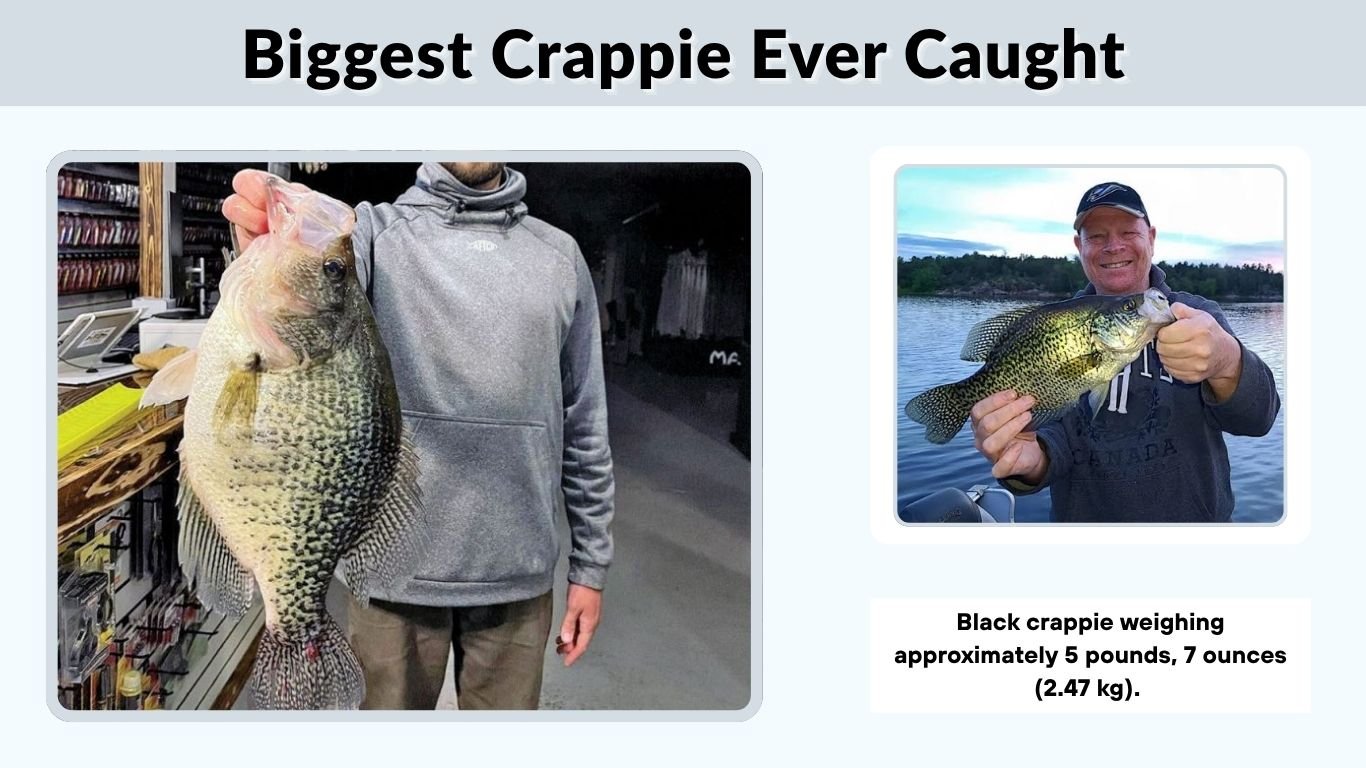
The biggest crappie ever caught is an extraordinary example of how large this popular freshwater fish can grow. Most crappie weigh less than two pounds, but a few remarkable catches have exceeded five pounds. The officially recognized record belongs to a massive black crappie caught in Tennessee in 2018. Another historic white crappie record dates back to 1957 in Mississippi. These catches continue to fascinate anglers across the United States. This guide explores their weights, lengths, locations, and the stories behind these remarkable fishing achievements.
What Is the Biggest Crappie Ever Caught?
The largest crappie officially recognized by the International Game Fish Association (IGFA) is a black crappie weighing approximately 5 pounds, 7 ounces (2.47 kg). Lionel “Jam” Ferguson caught the fish on May 15, 2018, in a private Tennessee pond. It measured 19.25 inches long and became a historic achievement in freshwater fishing.
The record fish stood out because of its exceptional weight and unusually thick body.
World Record Crappie Details
- Species: Black crappie (Pomoxis nigromaculatus)
- Angler: Lionel “Jam” Ferguson
- Weight: 5 pounds, 7 ounces
- Length: 19.25 inches
- Location: Richeison Pond, Tennessee
- Date caught: May 15, 2018
- Record organization: International Game Fish Association (IGFA)
Biggest Black Crappie Ever Caught
The biggest black crappie ever caught under IGFA rules was landed by Lionel Ferguson in Tennessee. His record-breaking fish was significantly heavier than most crappie caught by recreational anglers. The catch received attention because it surpassed the previous IGFA black crappie record of five pounds.
How Lionel Ferguson Caught the Record Crappie
On May 15, 2018, Ferguson was fishing at Richeison Pond, a privately owned pond in Loudon County, Tennessee. He was using a small artificial jig when the enormous crappie struck.
The fish reportedly attacked a two-inch Kalin’s Triple Threat soft plastic grub mounted on a 1/8-ounce jig head. Ferguson successfully landed the fish after a short fight.
Wildlife officials verified the catch using certified scales, and genetic testing helped confirm the species. The IGFA officially approved the record on October 10, 2018.
Biggest White Crappie Ever Caught
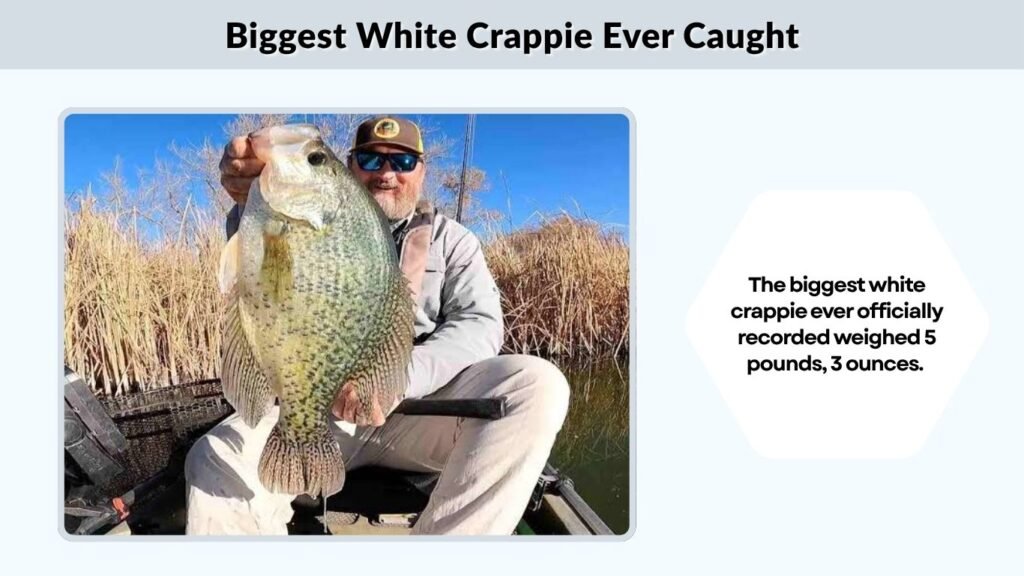
The biggest white crappie ever officially recorded weighed 5 pounds, 3 ounces. Fred Bright caught the fish in Enid Lake, Mississippi, on July 31, 1957. It measured approximately 21 inches long, making it an impressive example of the species.
Fred Bright’s Historic World Record
Bright’s catch became the benchmark for white crappie fishing and has remained a recognized record for decades.
Enid Lake is a popular fishing destination in Mississippi, particularly for anglers targeting large crappie. The Mississippi Department of Wildlife, Fisheries, and Parks confirms that Bright’s catch holds both the state and world record for white crappie.
Black Crappie vs. White Crappie World Records
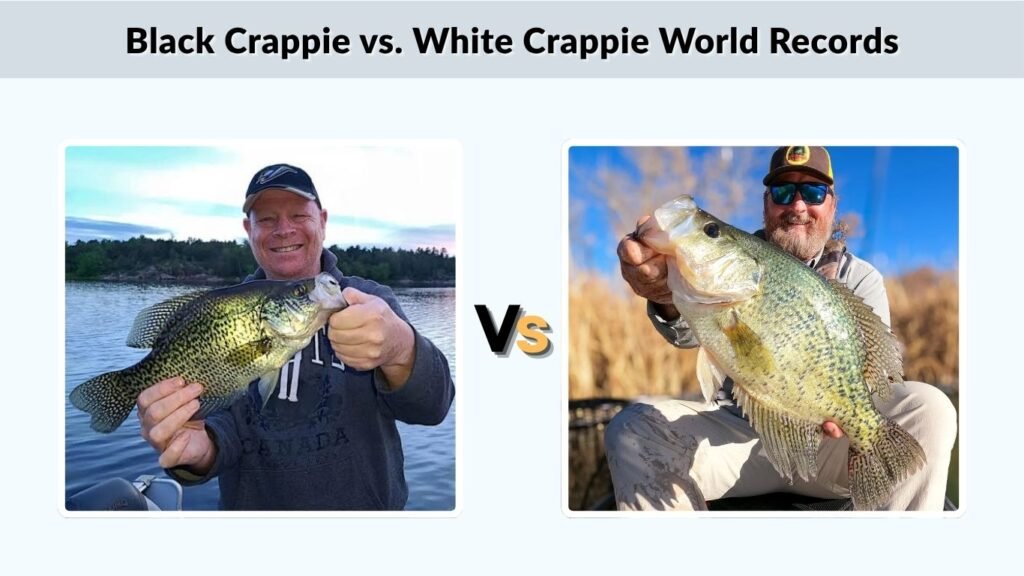
Although black and white crappie look similar, they are separate species with different markings and body characteristics. Both can reach impressive sizes under favorable environmental conditions. Comparing their world records helps explain why Ferguson’s catch is considered the largest officially recognized crappie by weight.
| Record detail | Black crappie | White crappie |
| World-record weight | 5 lb 7 oz | 5 lb 3 oz |
| Angler | Lionel Ferguson | Fred Bright |
| Year | 2018 | 1957 |
| State | Tennessee | Mississippi |
| Length | 19.25 inches | 21 inches |
| Location | Richeison Pond | Enid Lake |
Which Crappie Species Grows Bigger?
Both species can grow beyond three pounds, although such catches are uncommon. Black crappie currently hold the heavier IGFA all-tackle record, while the record white crappie was longer.
Black crappie typically have irregular dark spots and seven or eight dorsal spines. White crappie usually display vertical bars and have five or six dorsal spines.
Was a Six-Pound Crappie Ever Caught?
A famous historical catch suggests that an even larger crappie may have been landed in Louisiana. In November 1969, Lettie Robertson reportedly caught a six-pound crappie in the Westwego Canal.
The National Freshwater Fishing Hall of Fame has recognized this catch, but the IGFA does not currently accept it as the all-tackle black or white crappie record.
The primary issue involves incomplete documentation and uncertainty about the fish’s species. Therefore, Ferguson’s 2018 catch remains the largest crappie recognized by the IGFA.
Biggest Crappie Ever Caught in Different States
Several American states have produced crappie weighing four pounds or more. These exceptional catches demonstrate that trophy-sized crappie are not limited to Mississippi and Tennessee.
Notable State Record Crappie
- Tennessee: Lionel Ferguson’s 5-pound, 7-ounce black crappie from 2018.
- Mississippi: Fred Bright’s 5-pound, 3-ounce white crappie from Enid Lake in 1957.
- Minnesota: A 5-pound black crappie caught in the Vermillion River in 1940.
- Texas: A 4-pound black crappie caught by Hazel Bolton at Toledo Bend in 2002.
- Texas: A 4.56-pound white crappie caught by G. G. Wooderson at Navarro Mills in 1968.
These records come from state wildlife agencies. Minnesota’s historic 1940 record is classified as a non-certified-weight record under its current program.
Why Are Five-Pound Crappie So Rare?

Crappie generally grow much smaller than their record-breaking counterparts. Reaching five pounds requires exceptional conditions over several years. Food availability, habitat quality, competition, and fishing pressure can influence their growth.
Factors That Help Crappie Grow Larger
Several conditions may contribute to exceptional crappie growth:
- Abundant food: Healthy populations of minnows, shad, and aquatic insects support growth.
- Favorable habitat: Suitable water temperatures, oxygen levels, and protective cover help fish survive.
- Low competition: Balanced fish populations may allow individual crappie access to more food.
- Long-term survival: Fish must survive predators, fishing pressure, and environmental challenges to reach trophy size.
Even in productive waters, a five-pound crappie is an extremely unusual achievement.
How to Verify a Potential World Record Crappie
Anglers who catch unusually large crappie should understand how fishing records are verified. A large fish cannot automatically qualify for an official record without proper identification, weight documentation, and compliance with fishing rules.
Steps for Documenting a Record Catch
Photograph the fish clearly and record its length, girth, and catch location. Contact the appropriate state fisheries agency before transporting or releasing a fish intended for weight-record submission.
Certified weighing equipment and reliable witnesses are important. Officials may also need to examine the fish to confirm its species.
The IGFA has specific documentation and equipment requirements for world-record applications. Anglers should review these rules before submitting a claim.
FAQs
What is the biggest crappie ever caught in the world?
The largest crappie recognized by the IGFA weighed 5 pounds, 7 ounces. Lionel Ferguson caught this black crappie in Tennessee on May 15, 2018. It measured 19.25 inches long.
Who caught the biggest crappie ever?
Lionel “Jam” Ferguson caught the biggest IGFA-recognized crappie. He landed the record-breaking black crappie at Richeison Pond in Tennessee using a small artificial jig in May 2018.
How long was the biggest crappie ever caught?
The IGFA record black crappie measured 19.25 inches long. The world-record white crappie caught by Fred Bright in Mississippi measured approximately 21 inches, despite weighing slightly less.
Has anyone caught a six-pound crappie?
Lettie Robertson reportedly caught a six-pound crappie in Louisiana in 1969. Although the catch has historical recognition, the IGFA does not currently recognize it as the official black or white crappie weight record.
What is the biggest crappie ever caught in Minnesota?
Minnesota’s historical black crappie record is a five-pound fish caught in the Vermillion River in 1940. The Minnesota Department of Natural Resources lists it among older records established before certified weights became mandatory.