

Crappie and bluegill are two popular freshwater panfish found in lakes, ponds, and rivers throughout North America. Although these fish belong to the same sunfish family, they differ in appearance, size, feeding habits, and fishing techniques. Crappie generally have larger mouths and longer bodies, while bluegill are more rounded and often display colorful markings. Both are enjoyable to catch and delicious to eat. Understanding the differences between crappie vs bluegill helps anglers identify their catches, select suitable fishing equipment, and target each species more effectively.
Crappie vs Bluegill: Quick Comparison
Crappie and bluegill share several characteristics, including flattened bodies, spiny dorsal fins, and freshwater habitats. However, their physical features and behavior make them relatively easy to distinguish once you know what to look for.
| Feature | Crappie | Bluegill |
| Scientific name | Pomoxis species | Lepomis macrochirus |
| Family | Centrarchidae | Centrarchidae |
| Typical length | 8–12 inches | 6–10 inches |
| Body shape | Deep but somewhat elongated | Deep, rounded |
| Mouth size | Relatively large | Small |
| Color | Silvery with dark markings | Olive-green, blue, and orange |
| Main diet | Small fish and aquatic invertebrates | Insects and small invertebrates |
| Habitat | Brush piles and submerged structures | Weeds and shallow cover |
| Meat texture | Soft and flaky | Slightly firmer |
| Popular bait | Minnows and small jigs | Worms and insects |
1. Crappie vs Bluegill Appearance
Appearance is one of the easiest ways to identify crappie and bluegill. Although both have laterally compressed bodies, their coloration, mouth size, and overall shape are noticeably different. Learning these physical characteristics helps anglers distinguish them from other freshwater sunfish.
What Does a Crappie Look Like?
Crappie usually have silvery-green bodies with dark markings. Black crappie display irregular spots, while white crappie generally have faint vertical bars.
Their bodies are relatively thin and deep, with a large mouth and prominent dorsal fin. Crappie also have larger eyes compared with many similarly sized sunfish.
What Does a Bluegill Look Like?
Bluegill have rounded, deep bodies with olive-green backs and blue-green coloring around their heads. Their bellies may appear yellow or orange, particularly during breeding season.
A distinctive black ear flap behind the eye and a dark spot near the rear of the dorsal fin are useful identification features. Bluegill also have relatively small mouths.
2. Crappie vs Bluegill Size

Size is another important difference between these popular panfish. Crappie generally grow longer and heavier than bluegill, although growth varies considerably depending on habitat, food availability, and population conditions.
How Big Do Crappies Get?
Many crappie caught by anglers measure approximately 8–12 inches long. Larger individuals may exceed 15 inches and weigh several pounds.
The world-record black crappie weighed 5 pounds, 7 ounces and was caught in Tennessee in 2018. However, fish approaching that size are exceptionally rare.
How Big Do Bluegill Get?
Adult bluegill commonly measure 6–10 inches long and weigh less than one pound. Larger individuals can exceed 10 inches in productive waters.
The recognized all-tackle bluegill record weighs 4 pounds, 12 ounces. Despite their smaller average size, large bluegill remain prized catches among panfish anglers.
3. Crappie vs Bluegill Mouth Size
Mouth size is one of the most reliable identification features separating crappie from bluegill. Their different mouth structures also influence the prey they consume and the fishing methods used to catch them.
Crappie Mouth
Crappie have relatively large mouths that allow them to swallow small minnows and other fish.
Their thin mouth membranes can tear when anglers set the hook too forcefully. This characteristic explains the popular nickname “papermouth.”
Bluegill Mouth
Bluegill have much smaller mouths designed for feeding on insects, larvae, and small aquatic organisms.
Their compact mouths make tiny fishing hooks and smaller bait presentations particularly effective.
4. Crappie vs Bluegill Habitat
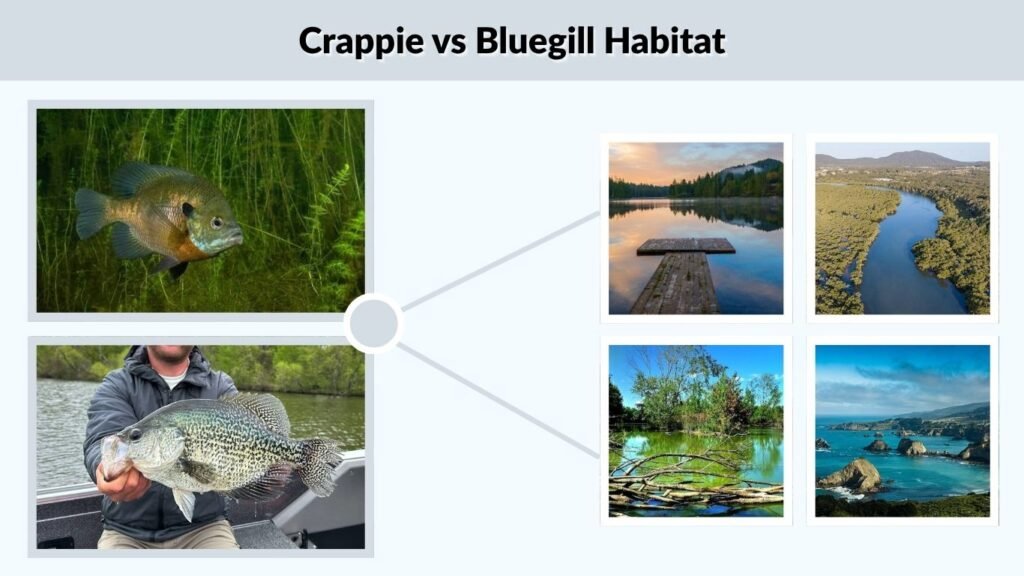
Both fish inhabit freshwater lakes, ponds, reservoirs, and slow-moving rivers. However, their preferred locations often differ depending on the season, water temperature, and available food. Understanding these habitat differences makes locating each species easier.
Where Do Crappie Live?
Crappie often gather around submerged structures and underwater cover. They frequently form schools and may suspend above deep brush piles.
Common crappie habitats include:
- Submerged trees and fallen branches
- Deep brush piles
- Creek channels
- Fishing docks
- Underwater ledges
During spring, crappie move toward shallow spawning areas. In summer and winter, they frequently occupy deeper water.
Where Do Bluegill Live?
Bluegill commonly inhabit shallow areas with vegetation and protective cover. They are frequently found along shorelines, around docks, and near submerged plants.
Bluegill often remain accessible to bank anglers throughout the warmer months. During spawning, they gather around shallow nests in sandy or gravel-covered areas.
5. Crappie vs Bluegill Diet

Crappie and bluegill both feed on aquatic organisms, but their preferred foods differ as they mature. Crappie are more likely to consume small fish, while bluegill generally depend more heavily on insects and invertebrates.
What Do Crappies Eat?
Adult crappie commonly feed on small fish, including minnows and young shad. Their diet also includes aquatic insects, crustaceans, and zooplankton.
Young crappie rely heavily on smaller aquatic organisms before gradually consuming larger prey.
What Do Bluegill Eat?
Bluegill primarily feed on aquatic insects, insect larvae, zooplankton, and small crustaceans.
They may also consume snails, fish eggs, and occasionally tiny fish. Their small mouths are well suited for capturing insects and other small prey.
6. Crappie vs Bluegill Fishing
Crappie and bluegill provide enjoyable fishing opportunities for beginners and experienced anglers. However, different bait sizes, locations, and fishing presentations can improve your chances of catching each species.
Best Fishing Techniques for Crappie
Crappie frequently gather in schools around underwater structures. Small artificial jigs and live minnows are particularly effective for targeting these fish.
Recommended techniques include:
- Fishing small jigs near submerged brush
- Using live minnows beneath slip bobbers
- Vertical jigging around underwater structures
- Slowly retrieving soft plastic lures
- Targeting shallow spawning areas in spring
Best Fishing Techniques for Bluegill
Bluegill are excellent targets for beginners because they readily bite small baits and frequently inhabit accessible shoreline areas.
Small hooks baited with worms, insect larvae, or crickets work well. Lightweight spinning equipment and simple bobber rigs are usually sufficient.
Bluegill often provide strong fights relative to their size, especially when caught using ultralight tackle.
7. Crappie vs Bluegill Taste
Taste is an important consideration for anglers who enjoy eating freshwater fish. Both crappie and bluegill have mild, white flesh, but their textures and flavors differ slightly. Personal preference and cooking methods ultimately determine which fish tastes better.
What Does Crappie Taste Like?
Crappie have a mild, slightly sweet flavor with soft, delicate flesh. Their meat flakes easily when cooked, making it suitable for frying, baking, and pan-searing.
Larger crappie generally produce bigger fillets, which can make preparing meals more convenient.
What Does Bluegill Taste Like?
Bluegill also have a mild, slightly sweet flavor, but their flesh is often somewhat firmer than crappie.
Many anglers enjoy bluegill fried whole or prepared as small boneless fillets. Both species are excellent at eating fish when handled and cooked properly.
Crappie vs Bluegill vs Sunfish: Are They the Same?

The terms crappie, bluegill, and sunfish sometimes create confusion. Both crappie and bluegill belong to the freshwater sunfish family, Centrarchidae. However, they belong to different genera and are distinct types of fish.
Crappie belong to the genus Pomoxis, while bluegill belong to the genus Lepomis.
Other members of the sunfish family include pumpkinseed, redear sunfish, and largemouth bass.
Therefore, all bluegill and crappie are members of the sunfish family, but not all sunfish are bluegill or crappie.
Crappie vs Bluegill vs Perch: What’s the Difference?
Crappie, bluegill, and yellow perch are commonly grouped together as panfish, but they do not all belong to the same fish family.
Crappie and bluegill belong to Centrarchidae, while yellow perch belong to Percidae.
Yellow perch typically have yellowish bodies with dark vertical stripes and two separate dorsal fins. Crappie have larger mouths and silvery bodies, while bluegill display rounded bodies with distinctive dark ear flaps.
Regional names such as “perch,” “bream,” and “sunperch” sometimes refer to bluegill or other sunfish, but these names do not necessarily reflect scientific classification.
FAQs
Are crappie and bluegill the same fish?
No, crappie and bluegill are different freshwater fish. Both belong to the sunfish family, but crappie belong to the genus Pomoxis, while bluegill belong to Lepomis. They differ in appearance, mouth size, and feeding habits.
Which tastes better, crappie or bluegill?
Both fish have mild, slightly sweet flesh. Crappie generally have softer, more delicate meat, while bluegill often have a slightly firmer texture. Taste preferences vary among anglers, and proper handling and cooking influence flavor.
Which is bigger, crappie or bluegill?
Crappie generally grow longer and heavier than bluegill. Many adult crappie measure 8–12 inches, while bluegill commonly measure 6–10 inches. However, both species can produce unusually large individuals under favorable conditions.
Are crappie harder to catch than bluegill?
Crappie can be more challenging to locate because they frequently move between depths and gather around underwater structures. Bluegill often remain in accessible shallow areas and readily strike small baits, making them popular beginner fishing targets.
Can crappie and bluegill live together?
Yes, crappie and bluegill frequently inhabit the same lakes, ponds, and reservoirs. They use some similar habitats but have different feeding preferences. Their population balance depends on available food, predators, and environmental conditions.