
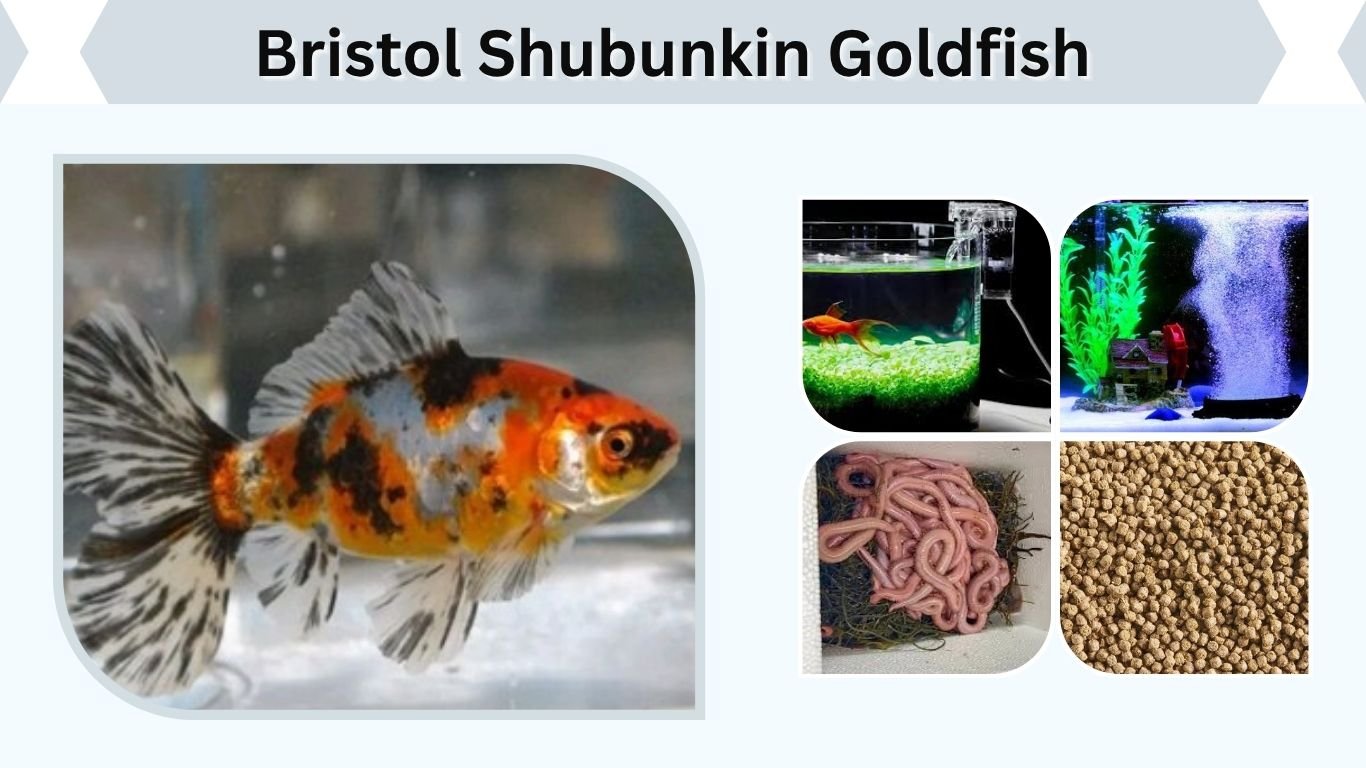
The Bristol Shubunkin is a beautiful goldfish variety known for its colorful body, elegant swimming style, and distinctive heart-shaped tail. Originally developed in Bristol, England, this fish has become popular among goldfish enthusiasts who appreciate unusual patterns and graceful fins. Bristol Shubunkins can thrive in spacious aquariums and outdoor ponds when provided with proper care. Their attractive blue, orange, black, and white coloration makes every fish unique. This guide explores Bristol Shubunkin identification, size, lifespan, feeding, breeding, pond requirements, and essential care tips for beginners and experienced fishkeepers.
What Is a Bristol Shubunkin Goldfish?
The Bristol Shubunkin is a selectively bred variety of goldfish (Carassius auratus). It belongs to the single-tailed goldfish group and has a streamlined body with a broad, rounded tail. Unlike ordinary goldfish, its coloration includes a combination of transparent and reflective scales, producing beautiful calico patterns.
Origin and History
The Bristol Shubunkin was developed in Bristol, England, by dedicated goldfish breeders during the early twentieth century.
Breeders worked to produce fish with stronger coloration and an attractive, unusually shaped tail. Over generations, the distinctive Bristol tail became the variety’s defining characteristic.
Today, Bristol Shubunkins remain especially valued among specialist breeders and ornamental pond enthusiasts.
Bristol Shubunkin vs. Other Shubunkins
Bristol Shubunkins differ mainly in their tail shape.
London Shubunkins resemble common goldfish with relatively short tails, while American Shubunkins have longer, deeply forked tails.
The Bristol variety features a broad tail with rounded lobes. Its outline is often described as heart-shaped or resembling the letter B.
Bristol Shubunkin Appearance and Identification

Bristol Shubunkins have slender, streamlined bodies and long, attractive fins. Their appearance combines the swimming ability of common goldfish with striking ornamental coloration.
Healthy specimens have smooth body outlines, upright dorsal fins, and balanced tails. Their distinctive coloration becomes more noticeable as they mature, although individual patterns can change with age.
Distinctive Heart-Shaped Tail
The most recognizable feature is the broad, rounded tail that creates a heart-like appearance when fully spread.
A high-quality Bristol Shubunkin has a symmetrical tail supported by strong fin rays. It should remain upright during swimming rather than folding or drooping.
The classic heart-shaped tail and the more pronounced B-shaped tail are both associated with Bristol breeding lines.
Body Colors and Patterns
Bristol Shubunkins display beautiful calico coloration, combining blue, orange, red, black, and white.
Their nacreous scales create unusual combinations of metallic, translucent, and matte-looking areas.
No two fish have identical patterns. Some display large blue patches, while others have stronger orange markings or dark speckles.
Bristol Shubunkin Size and Lifespan
Bristol Shubunkins are active goldfish capable of becoming considerably larger than many beginners expect. Their growth depends on genetics, feeding, water quality, available swimming space, and overall care.
These fish need long-term accommodation rather than temporary housing in small aquariums.
How Big Do Bristol Shubunkins Get?
Adult Bristol Shubunkins commonly reach approximately 8–12 inches in length, including their tails.
Some well-maintained pond specimens may reach around 15 inches.
Growth is generally faster in spacious, well-filtered environments with consistent feeding and regular water changes. Small containers cannot safely accommodate their adult size.
How Long Do Bristol Shubunkins Live?
Bristol Shubunkins can live approximately 10–15 years with appropriate care.
Their lifespan depends on environmental conditions, nutrition, genetics, and disease prevention.
Clean water, appropriate stocking levels, and protection from sudden temperature changes help maintain long-term health.
Bristol Blue Shubunkin and Other Color Variations
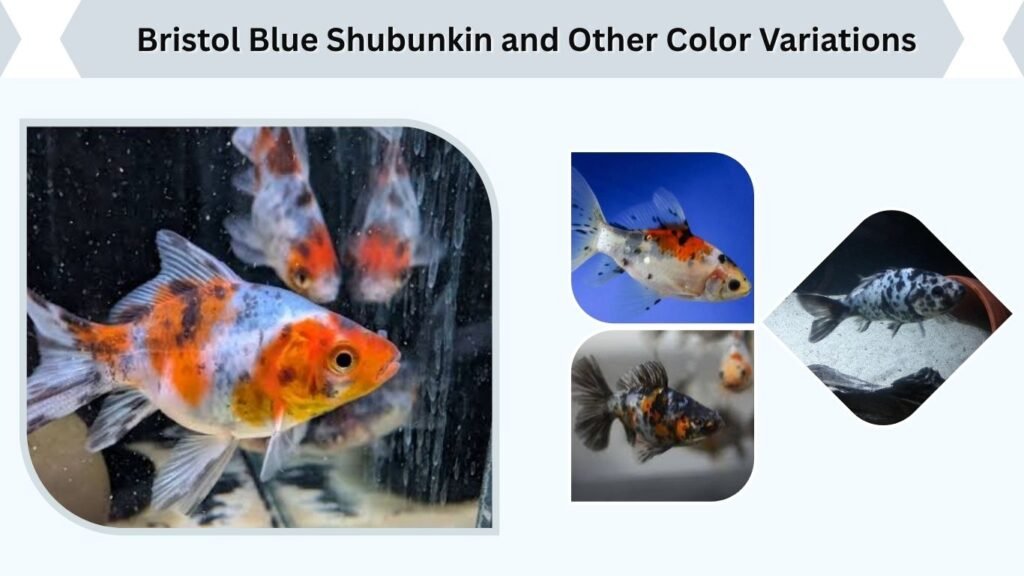
Color variation is one of the most attractive characteristics of Bristol Shubunkins. Their unusual pigmentation results from different arrangements of colored and reflective cells beneath their scales.
Although enthusiasts sometimes use special names for individual patterns, these names do not always represent formally recognized varieties.
Bristol Blue Shubunkin
The Bristol blue Shubunkin is admired for its pale or rich blue background, often combined with black speckles and bright red-orange patches.
Strong blue coloration is especially desirable among breeders because it creates an attractive contrast with the fish’s other markings.
Blue coloration can vary as the fish grows and matures.
Ghost and Other Unusual Patterns
The term ghost Bristol Shubunkin may be used by sellers to describe unusually pale or translucent-looking fish.
These fish may display subdued coloration, transparent scales, or lighter body markings.
Names such as ghost, marble, or pinkie are sometimes used descriptively, but buyers should examine the actual fish rather than relying entirely on marketing labels.
Bristol Shubunkin Pond and Aquarium Care

Bristol Shubunkins are hardy fish, but proper housing is essential for their health and growth. They require swimming space, oxygen-rich water, and effective biological filtration.
Outdoor ponds are particularly suitable because they provide room for movement and natural seasonal changes. Large indoor aquariums can also work when correctly maintained.
Aquarium and Pond Requirements
A spacious aquarium or pond should provide enough room for the fish’s adult size and broad tail.
For indoor housing, a tank at least four feet long provides useful swimming space, although larger accommodation may be necessary as the fish matures.
Important requirements include:
- Swimming space: Provide generous horizontal swimming room.
- Filtration: Use an established biological filtration system.
- Aeration: Maintain adequate dissolved oxygen.
- Pond depth: Provide sufficient depth for seasonal temperature protection.
- Safety: Avoid sharp decorations that could damage the tail.
Outdoor ponds should also provide shade and protection from predators.
Ideal Water Conditions
Bristol Shubunkins thrive in stable, clean freshwater conditions.
They are temperate-water fish and generally do well in cooler water rather than permanently heated tropical aquariums. A stable, slightly alkaline pH around 7–8 is usually suitable.
Ammonia and nitrite should remain at zero. Regular water testing and partial water changes help prevent waste accumulation.
Avoid sudden changes in temperature or water chemistry.
What Do Bristol Shubunkins Eat?

Bristol Shubunkins are omnivorous goldfish that eat both plant and animal-based foods. A varied diet supports growth, healthy digestion, strong coloration, and normal activity.
High-quality commercial goldfish food should form the foundation of their diet, supplemented with suitable vegetables and occasional protein-rich treats.
Best Foods for Bristol Shubunkins
A balanced diet can include:
- Goldfish pellets: Provide essential daily nutrients.
- Blanched vegetables: Offer peas without skins, spinach, or zucchini.
- Daphnia: Supply occasional animal protein.
- Bloodworms: Serve as an occasional treat.
- Aquatic vegetation: Encourage natural grazing behavior.
Choose food appropriate for the fish’s size and avoid excessive feeding.
Feeding Schedule
Feed adult Bristol Shubunkins small portions once or twice daily during periods of normal activity.
Offer only what they can consume within a few minutes and remove leftover food.
Outdoor pond fish naturally reduce their activity as temperatures fall. Their feeding requirements also decrease, so adjust feeding according to water temperature and activity.
How to Breed Bristol Shubunkins
Breeding Bristol Shubunkins requires mature, healthy fish and appropriate spawning conditions. Like other goldfish, they reproduce by scattering adhesive eggs among aquatic plants or spawning materials.
Breeding generally becomes more likely during spring as water temperatures rise and daylight hours increase.
Spawning and Egg Production
During spawning, males actively chase females, encouraging them to release eggs.
The eggs attach to plants, spawning mops, and other suitable surfaces. Males then fertilize the eggs externally.
Adult goldfish may eat their eggs, so breeders often transfer spawning materials to a separate, appropriately maintained hatching container.
Raising Bristol Shubunkin Fry
Newly hatched fry initially depend on their yolk sacs before becoming free-swimming.
Once free-swimming, they need appropriately sized foods, such as infusoria or newly hatched brine shrimp.
As young fish grow, breeders assess coloration, body proportions, and developing tail shape. Not every offspring develops the characteristic Bristol tail.
Where to Buy Bristol Shubunkins
Bristol Shubunkins are less common than ordinary goldfish and may be difficult to find in general aquarium stores.
Specialist breeders, goldfish societies, and ornamental pond suppliers are often the best places to search for healthy, accurately identified specimens.
Availability varies by location, season, and breeding success.
How to Choose Healthy Fish
Before purchasing a Bristol Shubunkin, examine its appearance and behavior carefully.
Look for the following characteristics:
- Active, balanced swimming without unusual movements.
- Clear eyes and smooth, healthy scales.
- A well-spread tail without tears or damage.
- Natural coloration without suspicious lesions.
- Normal breathing and no visible parasites.
Quarantine newly purchased fish before introducing them to an established aquarium or pond.
Bristol Shubunkin Prices
Bristol Shubunkin prices vary according to age, size, coloration, tail quality, breeder reputation, and local availability.
Young fish with ordinary patterns are generally less expensive than mature, exhibition-quality specimens.
Buyers searching for Bristol Shubunkins for sale in the USA or UK should compare reputable breeders and consider shipping conditions before ordering.
FAQs
1. Are Bristol Shubunkins Rare?
Bristol Shubunkins are relatively uncommon compared with ordinary goldfish and other Shubunkin varieties. Their specialized breeding requirements and distinctive tail shape make them particularly popular among collectors and experienced goldfish enthusiasts.
2. Can Bristol Shubunkins Live in an Aquarium?
Yes, Bristol Shubunkins can live in large, properly filtered aquariums. However, they require generous swimming space and regular maintenance. Small tanks and fishbowls are unsuitable for their long-term health and growth.
3. Are Bristol Shubunkins Good Pond Fish?
Yes, Bristol Shubunkins are excellent ornamental pond fish. They tolerate seasonal temperatures, swim actively, and display beautiful coloration. A properly maintained pond should provide adequate depth, filtration, oxygen, and predator protection.
4. Can Bristol Shubunkins Live With Koi?
Bristol Shubunkins can coexist with koi in sufficiently large ponds. However, koi become much larger and may compete aggressively for food. Provide adequate space and monitor feeding to ensure the goldfish receive enough nutrition.
5. What Makes a Bristol Shubunkin Special?
The Bristol Shubunkin is distinguished by its broad, heart-shaped or B-shaped tail and colorful calico scales. Its elegant appearance, active swimming behavior, and unusual breeding history make it a favorite among ornamental goldfish enthusiasts.