
Learning how to fish for crappie is a great starting point for beginners who enjoy freshwater fishing. Crappie are popular panfish found in lakes, ponds, reservoirs, and slow-moving rivers. They respond well to small jigs, live minnows, and properly presented artificial lures. However, successful crappie fishing requires more than choosing the right bait. Understanding fishing rigs, water depth, seasonal movements, and retrieval techniques can improve your results. This guide explains how to set up your fishing gear and target crappie throughout the year.
Best Fishing Gear for Crappie
Choosing the right equipment makes crappie fishing easier and more enjoyable. Since crappie have relatively soft mouths and often strike lightly, lightweight rods and sensitive fishing lines are especially useful. Beginners can catch plenty of fish with affordable spinning equipment.
Best Rod, Reel, and Fishing Line
A light or ultralight spinning rod measuring 5–7 feet is ideal for most crappie fishing situations. Pair it with a 1000–2000-size spinning reel and lightweight fishing line.
Recommended equipment includes:
- Fishing rod: 5–7-foot light or ultralight spinning rod.
- Fishing reel: Small spinning reel with a smooth drag.
- Fishing line: 4–6-pound monofilament or fluorocarbon.
- Hooks: Size 4–8 hooks for live minnows.
- Jig heads: 1/32–1/8 ounce for different fishing depths.
- Floats: Fixed or slip bobbers for controlling bait depth.
A lightweight setup improves bite detection while making it easier to cast small lures.
How to Rig for Crappie Fishing
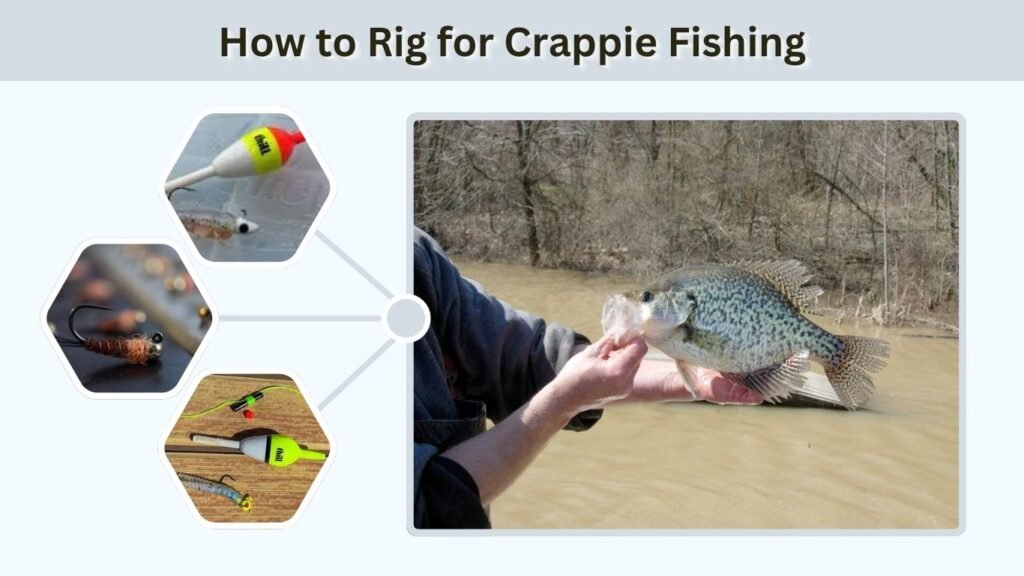
Setting up the correct fishing rig is essential for presenting bait naturally. Different rigs work better in different water depths and around specific structures. Beginners should start with simple setups before trying more advanced fishing methods.
Basic Bobber Rig for Crappie
A traditional bobber rig is one of the easiest setups for crappie fishing. Attach a small float to your main line, then tie a size 4–8 hook below it. Place a small split-shot weight roughly 12 inches above the hook.
Attach a live minnow and adjust the bobber so the bait remains near the fish. This setup works particularly well around shallow docks, submerged branches, and vegetation.
How to Rig a Slip Bobber for Crappie
A slip bobber is useful when crappie are holding in deeper water. Thread a bobber stop onto your line, followed by a small bead and slip float. Add a split-shot weight if needed, then tie on a hook or jig.
Slide the bobber stop to control the fishing depth. This setup allows you to cast easily while presenting bait several feet below the surface.
How to Fish for Crappie With Minnows
Live minnows are among the most dependable baits for crappie because they closely resemble the fish’s natural prey. Minnows work well with bobber rigs, vertical fishing techniques, and deeper presentations. Keeping the bait alive and swimming naturally increases its effectiveness.
How to Hook a Minnow for Crappie Fishing
Hook the minnow lightly through both lips or through the back just below the dorsal fin, avoiding the spine. Either method can keep the minnow swimming naturally when done correctly.
Lower the bait near submerged brush, dock posts, or standing timber. Allow the minnow to move freely beneath the bobber.
When the float moves or disappears, gently raise your rod to set the hook. Avoid pulling too aggressively because crappies have delicate mouths.
How to Fish for Crappie With a Jig

Jig fishing is one of the most versatile crappie fishing techniques. Small jigs imitate minnows, insects, and other aquatic prey. Anglers can cast them, retrieve them slowly, or lower them vertically beside underwater structures.
Best Jig Fishing Techniques
For casting, throw a small jig near submerged trees or dock edges. Let it sink to the desired depth, then reel slowly with occasional pauses.
For vertical jigging, lower your jig beside submerged brush and gently lift and lower the rod tip. Avoid excessive movement when fish are inactive.
Use white, chartreuse, pink, or natural baitfish colors. Experiment with lure sizes and colors until you find what crappie prefers.
How Deep to Fish for Crappie
Fishing at the right depth is often more important than using a particular bait. Crappie frequently suspend above underwater structures rather than staying directly on the bottom. Their preferred depth changes with water temperature, oxygen levels, and food availability.
Crappie Fishing Depth by Season
| Season | Starting depth to try |
| Spring | 2–8 feet |
| Summer | 8–20 feet |
| Fall | 5–15 feet |
| Winter | 10–25 feet |
These ranges are starting points, not fixed rules. Crappie may occupy much shallower or deeper water depending on the lake.
Use a slip bobber or depth finder to adjust your bait position. Once you catch a fish, keep fishing at the same depth because crappie often gather in schools.
How to Fish for Crappie From the Bank
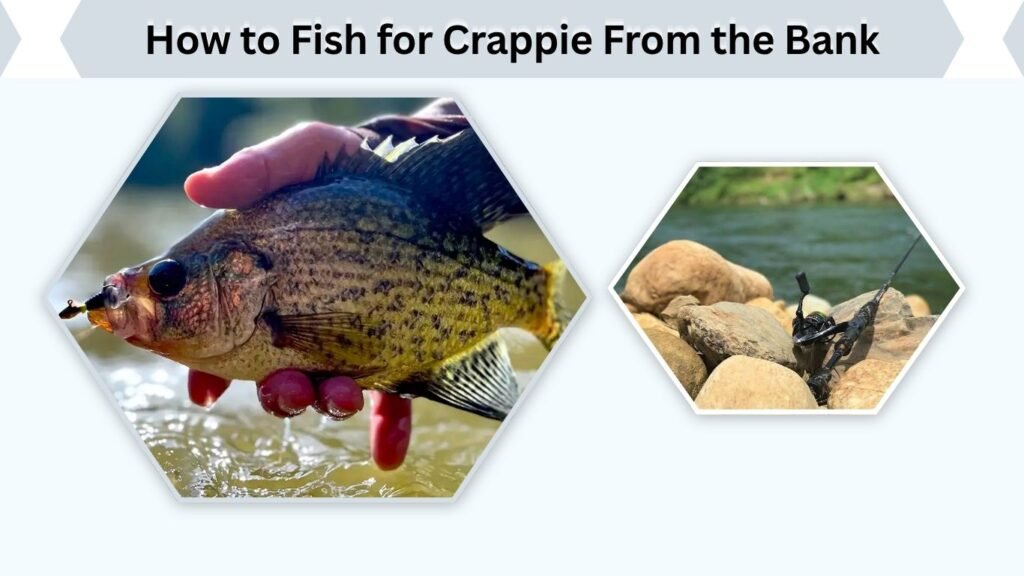
Bank fishing provides an excellent opportunity to catch crappie without needing a boat. Shoreline anglers can target shallow spawning areas, fishing piers, creek mouths, and underwater cover accessible from land.
Best Bank Fishing Methods
Start by fishing around docks, bridge supports, fallen trees, and vegetation edges. Use a small jig beneath a bobber or a live minnow suspended near the structure.
During spring, focus on shallow coves where crappie may gather before and during spawning. In summer, try deeper shoreline areas and steep banks.
Move between fishing spots if you do not receive bites, and experiment with different depths.
How to Fish for Crappie From a Boat
Boat fishing provides access to deeper brush piles, submerged timber, and offshore schools that shoreline anglers may struggle to reach. Electronics can help identify underwater structures and suspended fish.
Vertical Jigging From a Boat
Position your boat near submerged brush or a marked school of fish. Lower a small jig vertically toward the fish and gently raise and lower it.
Keep the presentation slow and controlled. When you receive a bite, remember the depth so you can repeat the successful presentation.
Drifting with minnows beneath floats can also work well when searching larger areas.
How to Fish for Crappie in Different Seasons
Crappie change locations throughout the year as water temperatures rise and fall. Successful anglers adapt their bait presentation, fishing depth, and location to these seasonal changes rather than relying on the same method year-round.
How to Fish for Crappie in Spring
During spring, crappie move toward shallow spawning areas. Fish around protected coves, submerged branches, and shallow vegetation.
Present small jigs or live minnows beneath a bobber. Slow, controlled presentations are particularly useful when fish are close to spawning habitat.
How to Fish for Crappie in Summer
Summer crappie frequently occupy deeper water near brush piles, creek channels, and submerged structures.
Use slip bobbers, vertical jigs, or small artificial lures to reach suspended fish. Early morning and evening can provide productive fishing conditions.
How to Fish for Crappie in Fall
As temperatures cool, crappie often follow baitfish into shallower areas.
Fish around submerged timber, docks, creek channels, and vegetation edges. Small marabou jigs and live minnows are excellent choices for targeting feeding schools.
How to Fish for Crappie in Winter
Winter crappie often gather around deeper structures and may become less willing to chase moving lures.
Use small jigs or live minnows and keep your presentation slow. Allow the bait to remain nearly motionless with occasional gentle movements.
When ice fishing, check ice conditions and follow local safety recommendations.
How to Fish for Crappie at Night
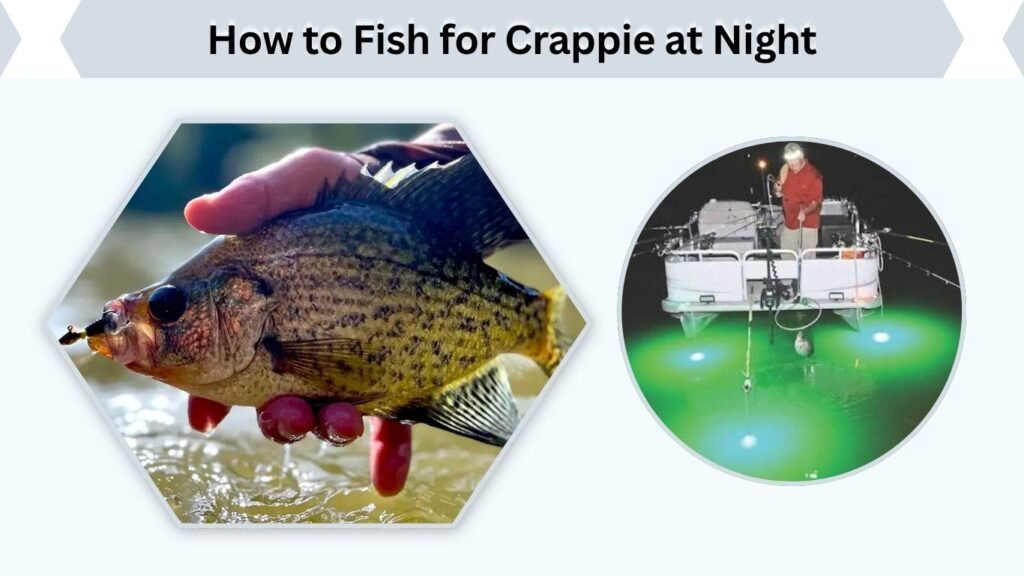
Night fishing can be productive when crappie gather around illuminated docks or areas where baitfish concentrate. During warmer months, these locations may attract feeding fish after sunset.
Best Night Fishing Techniques
Use small minnows or jigs suspended beneath a bobber near illuminated structures where fishing is allowed.
Start at different depths until you locate active fish. Avoid excessive rod movement and allow your bait to remain within the feeding area.
Carry reliable lighting and take additional precautions when fishing near deep water.
Common Crappie Fishing Mistakes to Avoid
Even experienced anglers sometimes struggle with crappie fishing because of incorrect bait presentation or poor location selection. Avoiding common mistakes helps improve your chances of finding active fish.
Mistakes Beginners Should Avoid
- Fishing too quickly: Slow retrieves often produce more bites.
- Using oversized hooks: Smaller hooks usually suit crappie fishing.
- Ignoring water depth: Adjust your bait depth regularly.
- Fishing only the bottom: Crappie frequently suspend above structures.
- Staying in one location: Move when fish are not responding.
Paying attention to small changes in fishing conditions can make a noticeable difference.
FAQs
What is the easiest way to fish for crappie?
The easiest method is using a live minnow or small jig beneath a bobber. Cast near docks, submerged brush, or vegetation and adjust your bait depth until you locate feeding crappie.
What is the best fishing rig for crappie?
A bobber rig is excellent for beginners, while a slip bobber rig is useful for deeper water. Both setups allow anglers to keep minnows or jigs at a controlled fishing depth.
How do you fish a jig for crappie?
Cast a lightweight jig near underwater cover and let it sink. Retrieve slowly with occasional pauses. You can also lower the jig vertically and use gentle rod movements to imitate natural prey.
What is the best time to fish for crappie?
Early morning and late evening are often productive, especially during summer. However, crappie can be caught throughout the day when anglers locate feeding schools around suitable underwater structures.
Should you fish for crappie near the bottom?
Not always. Crappie frequently suspend above brush piles, submerged timber, or deeper structures. Experiment with different depths and keep your bait slightly above the fish when possible.