

Learning how to catch crappie is easier when you understand where these fish live, what they eat, and how their behavior changes throughout the year. Crappie are popular freshwater fish found in lakes, ponds, reservoirs, and slow-moving rivers. They often gather around submerged trees, docks, and underwater structures. Whether you are fishing from a boat or the bank, choosing the right bait and technique can improve your success. This guide explains the best ways to catch crappie in different seasons and conditions.
Where to Find Crappie in Lakes and Ponds
Finding the right fishing spot is one of the most important parts of catching crappie. These fish usually gather around underwater cover that provides protection and attracts smaller baitfish. Their preferred depth changes with water temperature, food availability, and seasonal conditions.
Best Places to Find Crappie
- Submerged trees: Fallen branches and standing timber provide excellent hiding places.
- Fishing docks: Shaded areas around docks frequently hold crappie.
- Brush piles: Underwater brush attracts baitfish and feeding crappie.
- Creek channels: Deeper channels provide productive fishing during colder months.
- Weed edges: Aquatic vegetation offers food and shelter, especially in shallower water.
How Deep Do Crappie Usually Stay?
Crappie can occupy shallow or deep water depending on the season. During spring spawning, they may move into water just a few feet deep. In summer and winter, schools often gather around deeper brush piles and creek channels.
Rather than fishing at one depth, experiment until you discover where the fish are holding.
Best Baits and Fishing Gear for Crappie
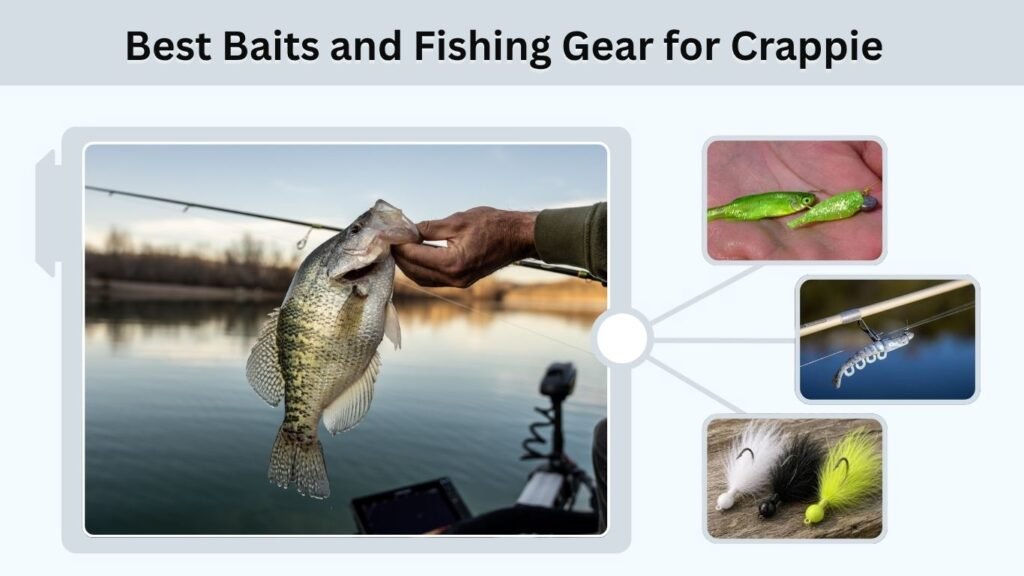
Crappie have relatively small mouths and often feed on minnows, insects, and other small aquatic animals. Lightweight fishing equipment and smaller baits usually work best. Beginners do not need expensive gear to catch these fish successfully.
Best Baits for Catching Crappie
- Live minnows: One of the most reliable natural baits for crappie.
- Soft plastic jigs: Small minnow-shaped plastics work well with a slow retrieve.
- Marabou jigs: Their soft feathers create natural movement underwater.
- Small spinners: Useful for searching larger areas when fish are active.
- Worms: Small pieces can catch crappie, although they also attract bluegill.
White, chartreuse, pink, and natural baitfish colors are good options to test.
Best Rod, Reel, and Line
A light or ultralight spinning rod around 5–7 feet long is suitable for crappie fishing. Pair it with a small spinning reel and 4–6-pound test fishing line.
Jig heads weighing 1/32 to 1/16 ounce are excellent starting choices. Light equipment helps detect subtle bites and makes smaller fish enjoyable to catch.
How to Catch Crappie Step by Step
Catching crappie requires patience, accurate casting, and proper bait presentation. These fish sometimes strike aggressively, but they can also bite very lightly. A simple jig-and-bobber setup is particularly useful for beginners because it keeps the bait at a controlled depth.
Step 1: Choose a Productive Location
Start near docks, submerged brush, standing timber, or vegetation edges. Look for locations where shallow water connects to deeper areas.
Step 2: Set Up Your Fishing Rig
Attach a small jig or bait hook to your line. Add a bobber above the bait if you want to maintain a specific fishing depth. Use a slip bobber when fishing deeper water.
Step 3: Cast Near Underwater Cover
Cast close to submerged branches, dock posts, or vegetation. Avoid casting directly into heavy cover where your hook could become tangled.
Step 4: Retrieve Your Bait Slowly
Let your jig sink to the desired depth, then retrieve it slowly with occasional pauses. Crappie frequently strike when the lure is falling or hovering.
Step 5: Detect the Bite and Reel In
Watch for subtle bobber movement or unusual line movement. Lift the rod smoothly to set the hook because crappie have delicate mouths. Reel steadily without pulling excessively hard.
How to Catch Crappie From the Bank

Bank fishing is an affordable and effective way to catch crappie without owning a boat. Shoreline anglers can target many of the same underwater structures used by boat anglers, especially during spring when crappie often move closer to shore.
Best Bank Fishing Techniques
Look for fishing piers, rocky shorelines, creek mouths, and banks with submerged timber. A longer rod can help you reach cover farther from shore.
Use a jig beneath a bobber or cast a live minnow near visible structure. Experiment with different depths until you receive bites.
During spring, focus on shallow coves and sheltered shorelines. In summer, search for deeper water accessible from docks, bridges, or steep banks.
How to Catch Crappie in Different Seasons
Crappie fishing techniques change throughout the year because water temperature influences spawning, feeding, and fish movement. Understanding these seasonal patterns helps anglers find productive areas instead of repeatedly fishing empty water.
How to Catch Crappie in Spring
Spring is often the easiest season for catching crappie. As water warms, fish move toward shallow spawning areas.
Target gravel banks, shallow coves, submerged brush, and vegetation. Use small jigs or live minnows beneath a bobber. Fish slowly and quietly because crappie can become cautious in shallow water.
How to Catch Crappie in Summer
During hot weather, many crappie move toward deeper cover and cooler, oxygenated water.
Target brush piles, standing timber, bridge supports, and creek channels. Vertical jigging is particularly effective when fish gather around deep structures. Early morning and evening can also provide productive fishing opportunities.
How to Catch Crappie in Fall
As water temperatures cool, crappie often follow baitfish toward shallower areas.
Fish around docks, submerged timber, points, and brush piles. Small jigs retrieved slowly can attract feeding fish. Continue experimenting with depth because crappie frequently change positions during fall.
How to Catch Crappie in Winter
Winter crappie often form concentrated schools around deeper structures. Fishing slowly becomes especially important because cold-water fish may avoid chasing fast-moving lures.
Use small jigs or minnows near deep brush piles and creek channels. Watch your fishing line carefully for light strikes. During ice fishing, follow local ice-safety guidance and regulations.
How to Catch Big Crappie

Catching large crappie requires slightly different tactics than targeting smaller fish. Bigger crappie may feed on larger prey and often occupy specific structures where food is readily available.
Best Tips for Catching Bigger Crappie
- Use slightly larger jigs: Try 2–3-inch soft plastics when smaller lures attract only little fish.
- Target deeper structures: Larger fish may hold around brush piles, ledges, and submerged timber.
- Look for baitfish: Schools of minnows or shad can indicate nearby feeding crappie.
- Change locations: If one spot consistently produces small fish, investigate different cover or depths.
A larger lure does not guarantee a bigger crappie, but experimenting with bait size can help identify what larger fish prefer.
How to Catch Crappie at Night
Night fishing can be particularly productive during warm summer months. Crappie may gather around dock lights and other illuminated areas where insects and small baitfish concentrate.
Best Night Fishing Methods
Use small live minnows or jigs beneath a lighted dock or around illuminated bridge structures where fishing is permitted.
Start at different depths until you locate feeding fish. Retrieve artificial lures slowly and maintain a consistent bait presentation.
Carry a headlamp, follow boating safety rules, and avoid fishing near restricted structures.
Common Mistakes to Avoid When Catching Crappie
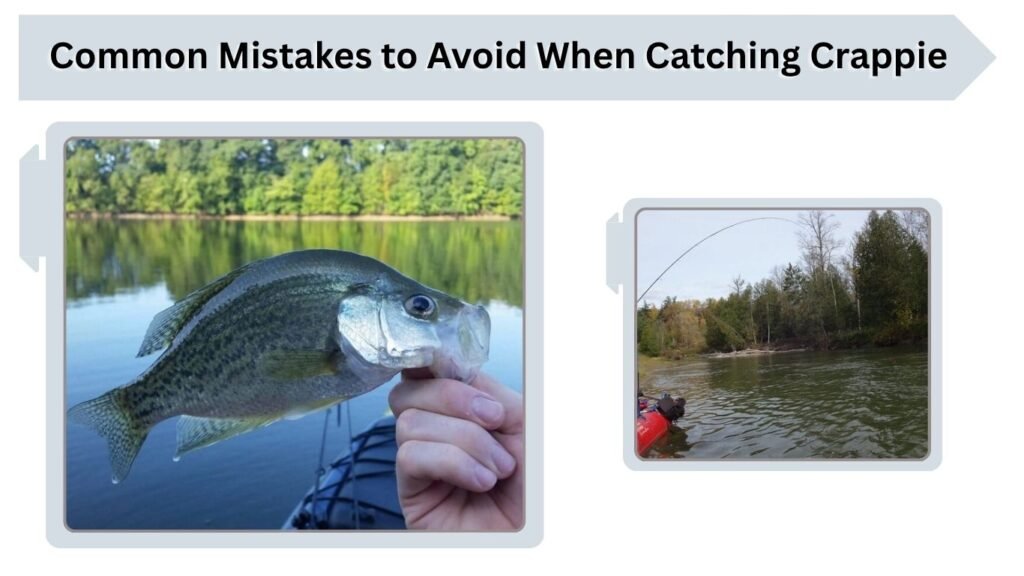
Many beginners struggle because they fish too quickly or spend too much time in unproductive locations. Small adjustments to bait size, fishing depth, and presentation often improve results.
- Retrieving too quickly: Slow down your lure to give crappie time to strike.
- Ignoring fishing depth: Experiment with shallow and deep presentations.
- Using oversized hooks: Smaller hooks are often better suited to crappie.
- Staying in one location: Move when fish are not responding.
- Setting the hook too hard: Use a gentle hookset to avoid tearing the fish’s mouth.
FAQs
What is the easiest way to catch crappie?
The easiest method is fishing a live minnow or small jig beneath a bobber. Cast near docks, brush piles, or submerged trees, and adjust your bait depth until you locate fish.
What time of day is best for catching crappie?
Early morning and late evening can be productive, particularly during warmer months. However, crappie can feed throughout the day, especially when they gather around shaded cover or deeper structures.
What is the best bait for catching crappie?
Live minnows and small artificial jigs are among the most effective crappie baits. Both imitate natural prey and can be presented slowly near underwater structures where crappie feed.
Can you catch crappie all year round?
Yes, crappie can be caught throughout the year. Spring often offers easier shallow-water fishing, while summer and winter usually require anglers to search deeper structures and adjust their techniques.
How do you catch more crappies in one spot?
Once you catch a crappie, continue fishing at the same depth because these fish often gather in schools. If the bites stop, change your presentation or search nearby cover.