
The Albino Bristlenose Pleco is a beautiful freshwater aquarium fish recognized by its pale yellow body, reddish eyes, and distinctive facial bristles. This peaceful bottom-dwelling catfish is popular among aquarium enthusiasts because of its manageable size and algae-grazing habits. Unlike larger plecos, it can thrive in moderately sized home aquariums with proper care. However, maintaining healthy Albino Bristlenose Plecos requires suitable water conditions, balanced nutrition, and adequate hiding places. This guide explains their adult size, lifespan, tank requirements, feeding habits, breeding behavior, and common varieties.
What Is an Albino Bristlenose Pleco?
The Albino Bristlenose Pleco is a captive-bred color variation of the Bristlenose Catfish, commonly associated with Ancistrus cf. cirrhosus. Its wild ancestors originated in South America, where bristlenose catfish inhabit freshwater rivers and streams.
Unlike darker Bristlenose Plecos, albino varieties lack much of their normal pigmentation. Their pale appearance and pinkish-red eyes make them particularly attractive in planted aquariums.
Albino Bristlenose Pleco Identification
- Scientific Name: Ancistrus spp., commonly Ancistrus cf. cirrhosus
- Family: Loricariidae
- Origin: Captive-bred variety of South American catfish
- Adult Size: Usually 4–5 inches
- Body Color: Pale yellow, cream, or golden
- Eye Color: Pinkish or reddish
- Lifespan: Approximately 5–10 years
- Temperament: Peaceful
- Diet: Primarily algae, biofilm, and plant-based foods
- Care Level: Beginner-friendly
Albino Bristlenose Pleco Size and Growth Rate
Albino Bristlenose Plecos remain relatively small compared with common plecos. Their compact bodies make them suitable for home aquariums without requiring exceptionally large tanks.
However, adult size depends on genetics, feeding quality, and aquarium conditions.
How Big Do Albino Bristlenose Plecos Get?
A full-grown Albino Bristlenose Pleco typically reaches 4–5 inches in length. Some individuals may grow slightly larger, occasionally approaching 6 inches.
Juveniles usually grow faster during their first year. Growth gradually slows as they mature, with many reaching close to adult size within one to two years.
Providing nutritious food and adequate swimming space supports healthy development.
Albino Bristlenose Pleco Lifespan
Albino Bristlenose Plecos generally live around 5–10 years under suitable aquarium conditions. Some well-maintained individuals may survive longer.
Their longevity depends on stable water parameters, proper nutrition, and regular aquarium maintenance.
Poor water quality, overcrowding, and inadequate feeding can shorten their lifespan.
Albino Bristlenose Pleco Tank Size and Setup
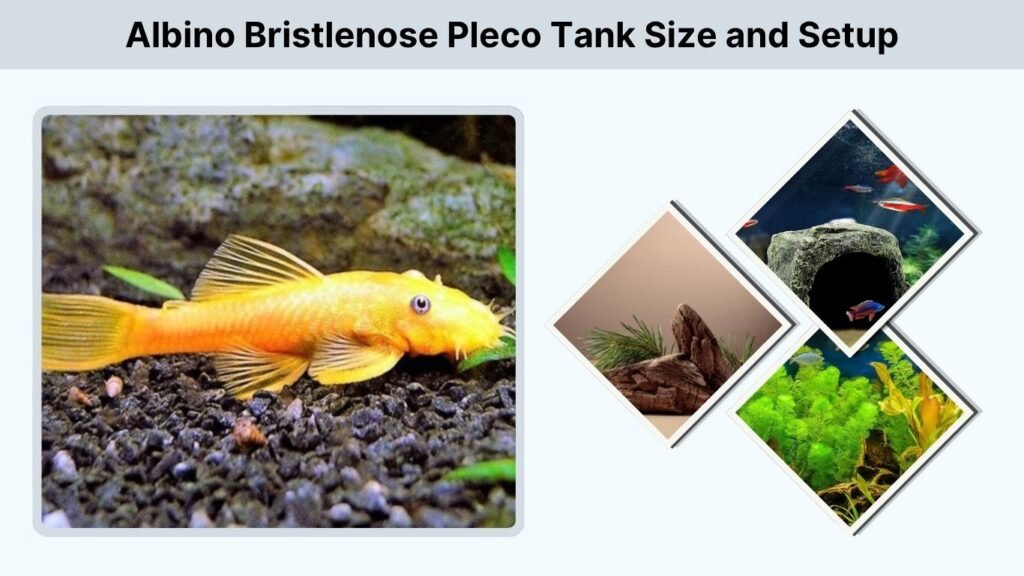
A well-designed aquarium is important for maintaining healthy Albino Bristlenose Plecos. These fish spend much of their time exploring the bottom, resting inside caves, and grazing on submerged surfaces.
They prefer aquariums with natural decorations, moderate lighting, and protected hiding areas.
Minimum Tank Size
A 20-gallon aquarium is generally considered a practical minimum for one adult Albino Bristlenose Pleco. However, a 29–30-gallon aquarium provides more room and greater water stability.
Keeping multiple adults requires additional space, particularly when males establish territories.
Ideal Aquarium Setup
- Substrate: Choose smooth gravel or fine aquarium sand.
- Driftwood: Add aquarium-safe wood for shelter and natural grazing.
- Hiding Caves: Provide secure caves where fish can rest.
- Aquatic Plants: Use hardy plants such as Anubias or Java fern.
- Filtration: Install an efficient filter that maintains clean water.
- Lighting: Use moderate lighting with shaded areas for resting.
Avoid sharp decorations that could damage their bodies or fins.
Albino Bristlenose Pleco Water Temperature
Albino Bristlenose Plecos are tropical freshwater fish that require consistent water conditions. Although they tolerate a reasonable range of temperatures, sudden fluctuations can cause stress.
A fully cycled aquarium and effective filtration are essential for their health.
Recommended Water Parameters
- Temperature: 72–80°F (22–27°C)
- pH Level: Approximately 6.5–7.5
- Water Hardness: Roughly 2–18 dGH
- Ammonia: 0 ppm
- Nitrite: 0 ppm
- Nitrate: Maintain low levels through water changes
Perform regular partial water changes and monitor aquarium parameters. Stable conditions are generally more important than constantly adjusting water chemistry.
What Do Albino Bristlenose Plecos Eat?
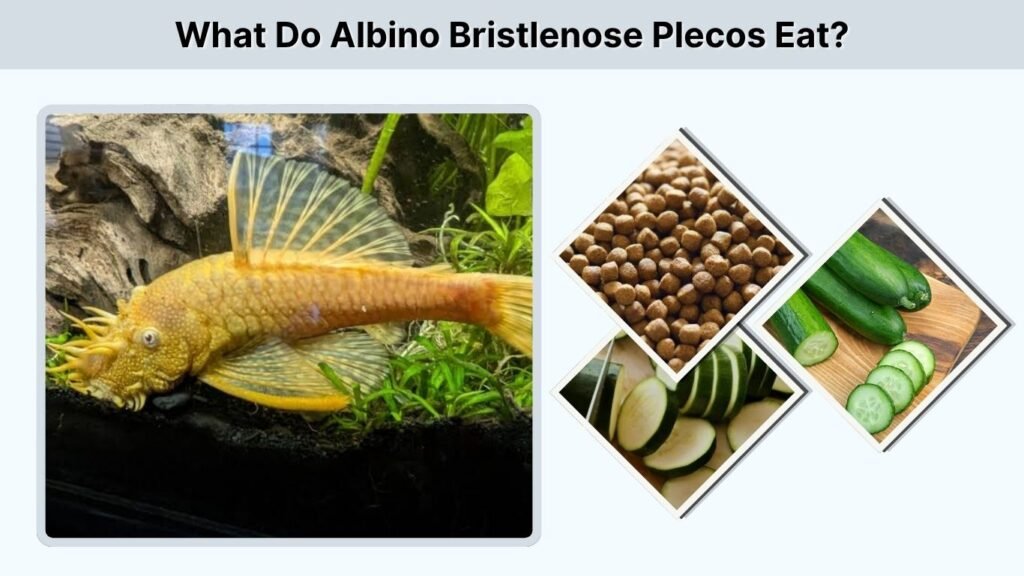
Albino Bristlenose Plecos are primarily grazing fish that feed on algae, biofilm, and plant-based materials. However, aquarium algae alone rarely provides sufficient nutrition.
A balanced diet supports healthy growth, coloration, and overall well-being.
Best Foods for Albino Bristlenose Plecos
- Algae Wafers: Provide balanced nutrition for algae-grazing catfish.
- Zucchini: Offer lightly blanched slices as a vegetable supplement.
- Cucumber: Feed occasionally for additional variety.
- Spinach: Provide small portions of softened leaves.
- Sinking Pleco Pellets: Choose high-quality, plant-focused formulations.
- Protein Supplements: Offer small amounts of suitable protein-rich fish food occasionally.
Feeding Schedule
Albino Bristlenose Plecos are often more active during the evening and nighttime. Feeding after the aquarium lights dim can help them eat without competition.
Offer manageable portions and remove leftover vegetables before they spoil.
A noticeably sunken belly may indicate insufficient feeding or an underlying health problem.
Albino Bristlenose Pleco Male vs Female
Male and female Albino Bristlenose Plecos have similar body colors, but their facial bristles become noticeably different as they mature.
Adult males typically develop large, branching bristles across their snouts and heads. Females usually have smaller bristles concentrated around the edges of their mouths.
Males may also become territorial around caves, particularly during breeding.
Young fish can be difficult to identify by sex because their distinguishing features have not fully developed.
Albino Longfin Bristlenose Pleco

The Albino Longfin Bristlenose Pleco is an attractive variety known for its extended, flowing fins and pale body coloration.
It generally has similar adult size, dietary requirements, and water preferences to standard albino varieties.
However, its delicate fins require additional attention. Sharp decorations and aggressive tank mates can cause injuries.
The terms longfin albino bristlenose pleco and albino longfin bristlenose pleco describe the same general ornamental form.
Blue-Eyed Lemon Bristlenose Plecos are sometimes confused with albinos. However, blue-eyed lemon fish are generally leucistic rather than true albinos, which have pinkish or reddish eyes.
Albino Bristlenose Pleco Breeding
Breeding Albino Bristlenose Plecos is possible in home aquariums when mature fish receive proper nutrition and suitable spawning areas.
These catfish are cave spawners. The male usually selects and guards a sheltered cavity where the female deposits her eggs.
After fertilization, the male protects the eggs and fans them to maintain water circulation.
The yellow-orange eggs commonly hatch within approximately 4–7 days, depending on temperature. Newly hatched fry absorb their yolk sacs before becoming free-swimming.
Young plecos can then receive finely prepared sinking foods and soft vegetables. Maintaining clean water is particularly important during early development.
Albino Bristlenose Pleco Tank Mates

Albino Bristlenose Plecos are peaceful bottom dwellers that generally coexist with nonaggressive aquarium fish.
Suitable companions include small tetras, rasboras, guppies, and other peaceful community species with compatible water requirements.
Avoid aggressive cichlids, fin-nipping species, and large predatory fish.
Although they are peaceful toward many tank mates, adult males may defend territories against other plecos.
Provide separate shelters when keeping multiple bottom-dwelling fish.
Common Albino Bristlenose Pleco Health Problems
Albino Bristlenose Plecos are relatively hardy, but improper aquarium conditions can cause illness.
Poor water quality, nutritional deficiencies, parasites, and bacterial infections are potential health concerns.
Warning signs include unusual inactivity, loss of appetite, damaged fins, abnormal breathing, or a sunken abdomen.
Prevent problems by maintaining stable water conditions, feeding balanced meals, and introducing new fish carefully.
FAQs
1. Are Albino Bristlenose Plecos Good for Beginners?
Yes, Albino Bristlenose Plecos are suitable for beginners who understand basic aquarium maintenance. They are generally peaceful, relatively hardy, and smaller than many other pleco species. However, they still require a properly cycled tank, nutritious food, and regular water changes.
2. Can Albino Bristlenose Plecos Live Alone?
Yes, an Albino Bristlenose Pleco can live alone successfully. These fish do not require a school or group for social interaction. A single adult can thrive in an appropriately sized aquarium with sufficient hiding places, clean water, and regular feeding.
3. Do Albino Bristlenose Plecos Eat Algae?
Yes, Albino Bristlenose Plecos naturally graze on algae and biofilm growing on aquarium surfaces. However, algae should not be their only food source. Supplement their grazing with algae wafers, sinking pellets, and suitable vegetables to prevent nutritional deficiencies.
4. How Much Does an Albino Bristlenose Pleco Cost?
Albino Bristlenose Pleco prices vary depending on fish size, age, location, breeder, and availability. Longfin specimens often cost more than standard short-fin varieties. Before purchasing, check that the fish is active, feeding normally, and showing no visible signs of illness.
5. Can Albino Bristlenose Plecos Live With Bettas?
Albino Bristlenose Plecos can sometimes live with peaceful bettas in spacious, properly maintained aquariums. Compatibility depends on the betta’s temperament and available hiding places. Monitor both fish for aggression, stress, and feeding difficulties, especially during the first few weeks.