
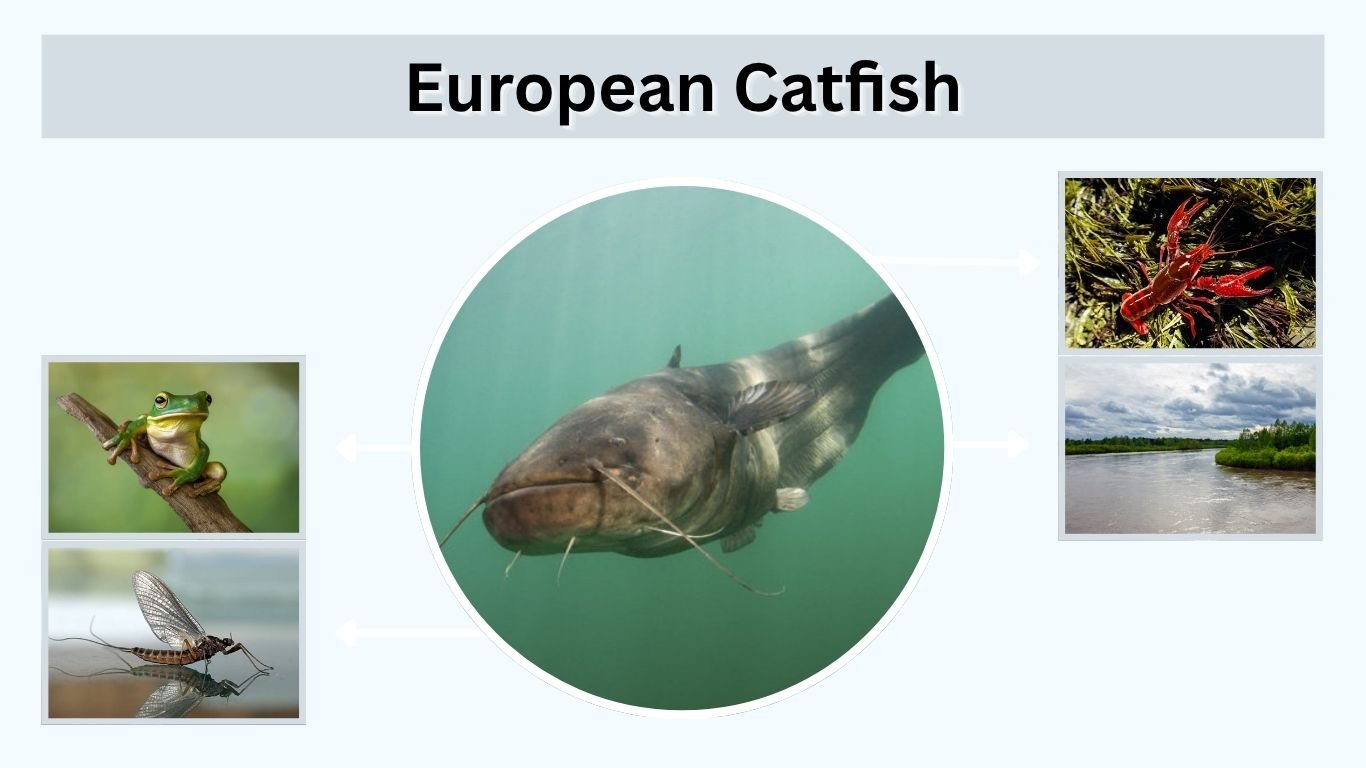
The European catfish (Silurus glanis), better known as the Wels catfish, is Europe’s largest freshwater fish. It has an enormous flattened head, a wide mouth, smooth scaleless skin, and long whisker-like barbels. Native to parts of Europe and western Asia, it has also been introduced into many new rivers and lakes for fishing. This adaptable nocturnal predator usually eats fish and aquatic animals, although some individuals have learned to capture pigeons and other birds near the water’s edge.
European Catfish Quick Facts
The European catfish belongs to the sheatfish family, Siluridae. It is commonly called Wels, Waller, European river catfish, or giant European catfish.
| Feature | Description |
| Scientific name | Silurus glanis |
| Family | Siluridae |
| Maximum evidence-based length | About 2.73 m or 8 ft 11 in |
| Maximum evidence-based weight | About 130 kg or 287 lb |
| Longest rod-caught specimen | 2.92 m or 9 ft 6.9 in |
| Maximum reported age | About 80 years |
| Habitat | Rivers, lakes, reservoirs and backwaters |
| Diet | Fish, crayfish, amphibians, birds and small mammals |
| Activity | Mainly nocturnal |
| Global status | Least Concern |
Historical reports of five-meter-long, 306-kilogram Wels catfish are not considered reliable. FishBase gives 2.73 meters and 130 kilograms as the largest measurements supported by evidence.
What Does a European Catfish Look Like?
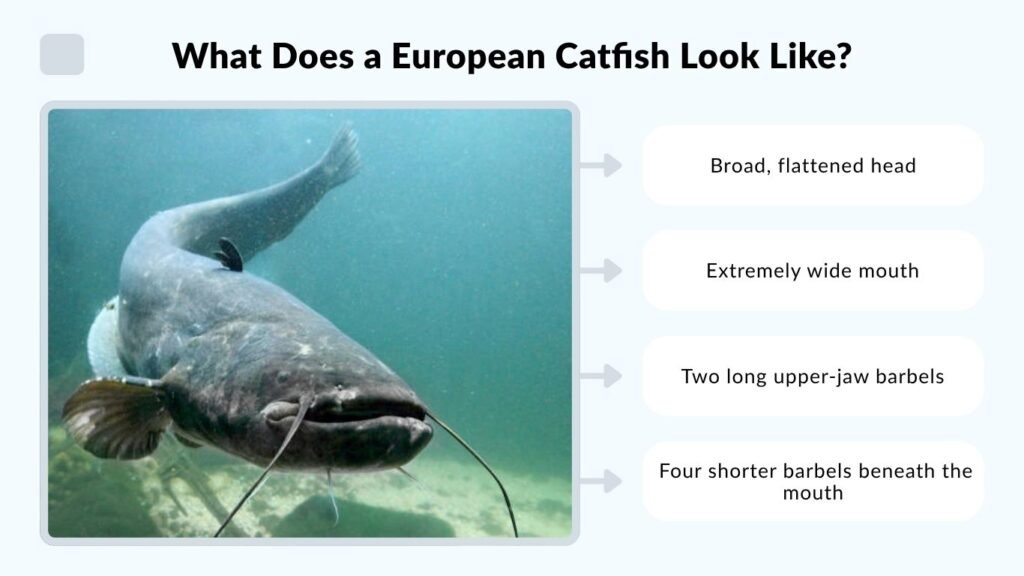
The Wels catfish has an elongated body that becomes narrower toward the tail. Its head is broad and flattened, while its mouth is large enough to swallow surprisingly substantial prey.
Identification Features
- Broad, flattened head
- Extremely wide mouth
- Two long upper-jaw barbels
- Four shorter barbels beneath the mouth
- Small eyes positioned high on the head
- Smooth, scaleless skin
- Dark olive, grey or brown upper body
- Pale, mottled underside
- Very small dorsal fin
- Long anal fin extending toward the tail
Its barbels contain sensitive taste and touch receptors that help it locate food in deep, dark or muddy water. The small eyes are less important than its senses of smell, vibration and taste when hunting at night.
How Big Can a European Catfish Get?
The European catfish is the largest-bodied freshwater fish native to Europe. Most individuals are much smaller than the famous record catches, but specimens exceeding two meters are possible in productive waters with warm temperatures and abundant food.
Largest Verified Size
The largest evidence-supported measurements listed by FishBase are:
- Length: 2.73 meters or about 8 feet 11 inches
- Weight: 130 kilograms or about 287 pounds
- Maximum reported age: 80 years
The species was previously claimed to reach five meters and more than 300 kilograms. Researchers concluded that those figures probably resulted from measurement errors, incorrect unit conversions or unreliable historical accounts.
Current European Catfish Length Record
On October 19, 2025, Adrian Gontarz and Krzysztof Pyra caught a Wels catfish measuring 2.92 meters at Poland’s Rybnik Reservoir. Its estimated weight was between 120 and 130 kilograms. The fish was measured and released, making it the longest widely documented Wels catfish caught with rod and line, although it was not officially weighed.
This distinction matters because record length and record weight are different categories. A very long fish may be relatively lean, while a shorter specimen can weigh more because of its body condition.
Where Do European Catfish Live?
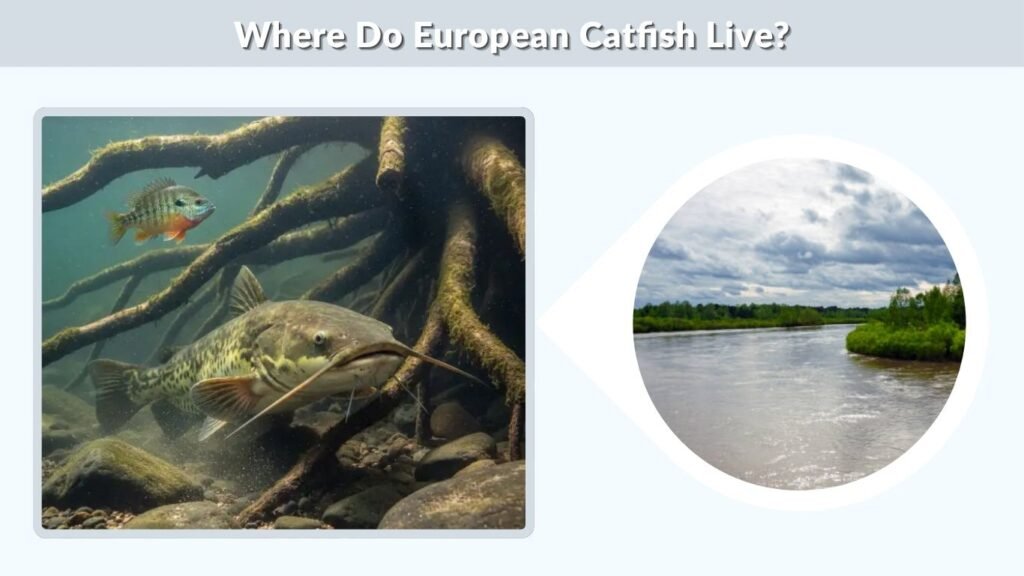
The natural distribution includes European and Asian river systems connected to the North, Baltic, Black, Caspian and Aral Sea basins. Native populations extend north into southern Sweden and Finland and east through parts of western and central Asia.
Preferred Habitat
European catfish commonly occupy:
- Large, slow-moving rivers
- Deep river channels
- Backwaters and oxbow lakes
- Warm reservoirs
- Well-vegetated lakes
- Areas around submerged trees and structures
- Deep holes below dams
- Occasional brackish waters
They usually rest in deep, sheltered locations during daylight and become more active after sunset. They may hunt close to the bottom or move through the open water column while searching for food.
Catfish Introductions Across Europe
People have introduced Wels catfish into many waters outside their original range, particularly to create recreational fisheries. Established populations now occur in countries and river systems where the fish was historically absent, including parts of France, Spain and Italy.
Warm water, abundant invasive prey and human-assisted stocking have helped some populations expand. In introduced areas, the ecological effects depend on the habitat, prey community and density of catfish.
What Do European Catfish Eat?
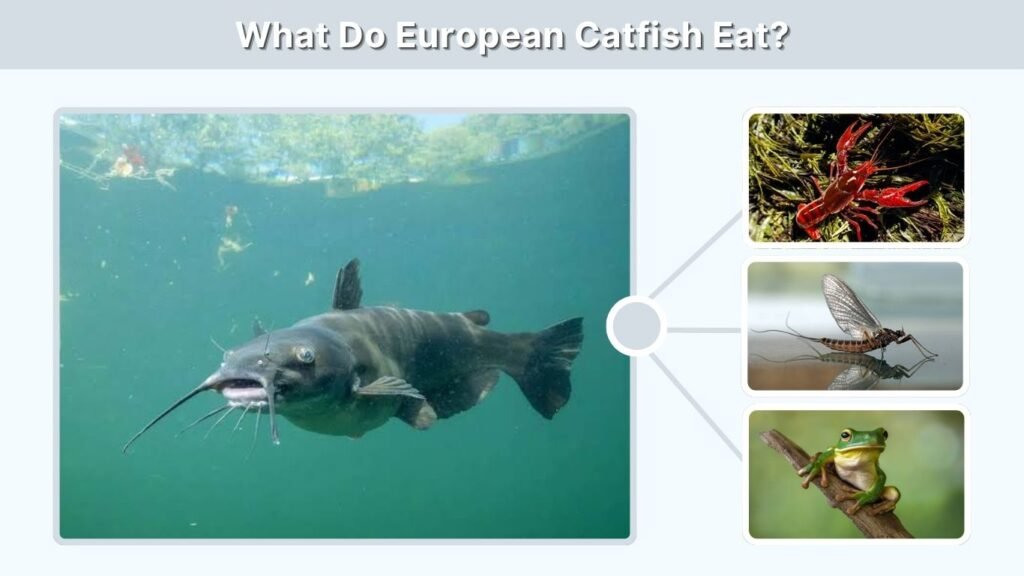
Catfish are opportunistic predators with highly flexible diets. Young fish begin with aquatic invertebrates and small fish. As they grow, they can capture larger fish and other vertebrates.
Common Foods
Their diet can include:
- Roach, bream and other fish
- Crayfish
- Aquatic insects
- Frogs and other amphibians
- Waterbirds
- Small mammals near the water
- Other catfish
- Fish eggs and spawning fish
Individual catfish do not necessarily eat the same things. Scientific research found that some specialize mainly in fish, while others use amphibians, birds, mammals or other locally abundant food sources.
Do European Catfish Eat Pigeons?
Yes, but this behavior occurs only in particular locations and should not be considered normal for every Wels catfish.
Researchers in France’s Tarn River recorded catfish intentionally swimming into very shallow water, partially stranding themselves and grabbing pigeons standing along the bank. The fish then returned to deeper water with their prey.
A separate northern Italian study found that birds contributed an estimated 12.2% of the diet of large catfish in one nature reserve. The importance of birds therefore varies greatly between populations and individual fish.
How Do European Catfish Hunt?
Catfish whales usually hunt at night. Their barbels, skin and sensory systems help them detect chemical signals and vibrations when visibility is poor.
They may wait near underwater cover, patrol open water or move into shallow areas where prey is concentrated. Their wide mouths create powerful suction when they strike, pulling fish and other animals inward. Research has shown that they are flexible apex predators capable of learning to exploit newly available food sources.
Breeding and Life Cycle
European catfish generally reproduce when the water becomes warm. A male selects a shallow spawning location, clears or prepares the area and may arrange plant material around the nest.
After the female deposits her sticky eggs, the male guards the nest until they hatch. Under warm conditions, hatching may occur in approximately two to three days. The larvae remain around the nest until their yolk sacs have been absorbed.
Young fish grow more rapidly in warm, productive environments. Lifespan and growth vary considerably according to temperature, food availability, fishing pressure and habitat quality.
Are European Catfish Invasive?
The answer depends on location. Wels catfish are native to many areas of central, eastern and southeastern Europe, where they are a natural part of freshwater ecosystems. They are non-native in numerous western and southern European waters.
Introduced populations can affect native fish, amphibians and waterbirds, especially when catfish become abundant. However, ecological effects are not identical everywhere. Some research identifies strong food-web effects, while other observations show catfish consuming large numbers of invasive crayfish and non-native fish. Management decisions should therefore be based on evidence from the specific river or lake.
Are European Catfish Dangerous to Humans?
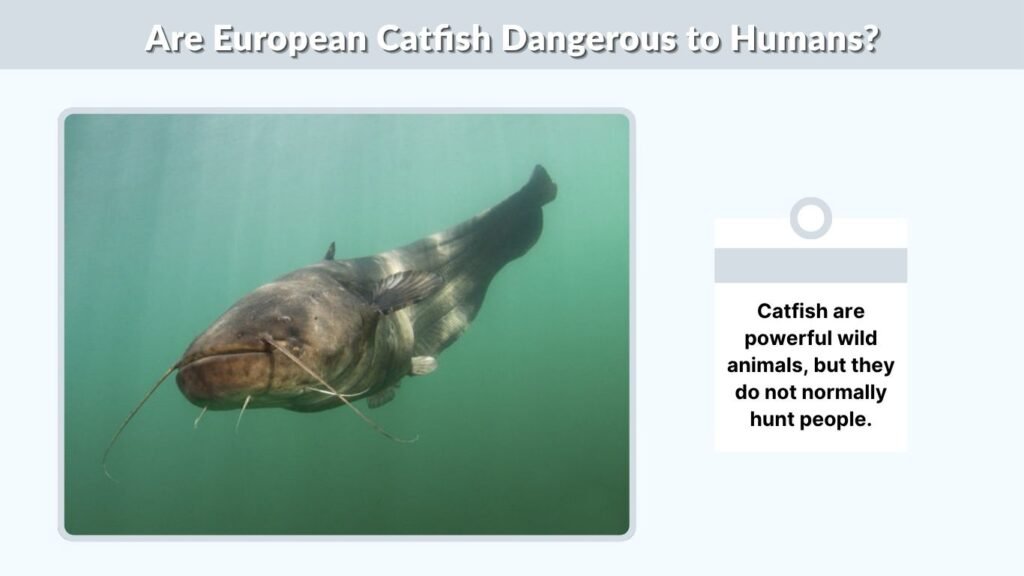
Catfish are powerful wild animals, but they do not normally hunt people. Their mouths contain rows of small gripping teeth rather than the cutting teeth found in sharks.
Very large specimens can injure an angler through their weight, strength and rough mouth surfaces. People should avoid placing hands near the mouth or attempting to lift a giant fish without assistance. Stories claiming that Wels catfish regularly kill or swallow people are not supported by reliable modern evidence.
European Catfish Fishing
The Wels catfish is one of Europe’s most sought-after freshwater game fish. Anglers target it because of its exceptional size, strength and long fights.
Common locations include the River Po in Italy, the Ebro system in Spain and large rivers and reservoirs across central and eastern Europe. Local fishing licenses, seasons, permitted baits and catch-and-release rules vary, so anglers must follow the regulations governing each waterway.
FAQs
Is the European catfish the same as the Wels catfish?
Yes. European catfish and Wels catfish are common names for Silurus glanis. The fish is also called Waller in some German-speaking regions and European river catfish in general descriptions.
What is the biggest catfish in Europe?
The European or Wels catfish is Europe’s largest freshwater fish. Evidence-supported specimens reach approximately 2.73 meters and 130 kilograms, while a rod-caught fish measuring 2.92 meters was recorded in Poland in 2025.
How long do European catfish live?
FishBase reports a maximum age of approximately 80 years. Most individuals probably live shorter lives because of fishing, disease, environmental conditions and other natural pressures.
Do European catfish eat birds?
They can eat birds, but fish and aquatic prey are generally more typical. Some introduced catfish in France learned to beach themselves temporarily to capture pigeons, while large catfish in an Italian reserve also consumed waterbirds.
Are European catfish found throughout Europe?
They now occur across much of Europe, but not every population is native. Their original distribution was concentrated in northern, central, eastern and southeastern river basins, while people introduced them into many western and southern waters.