
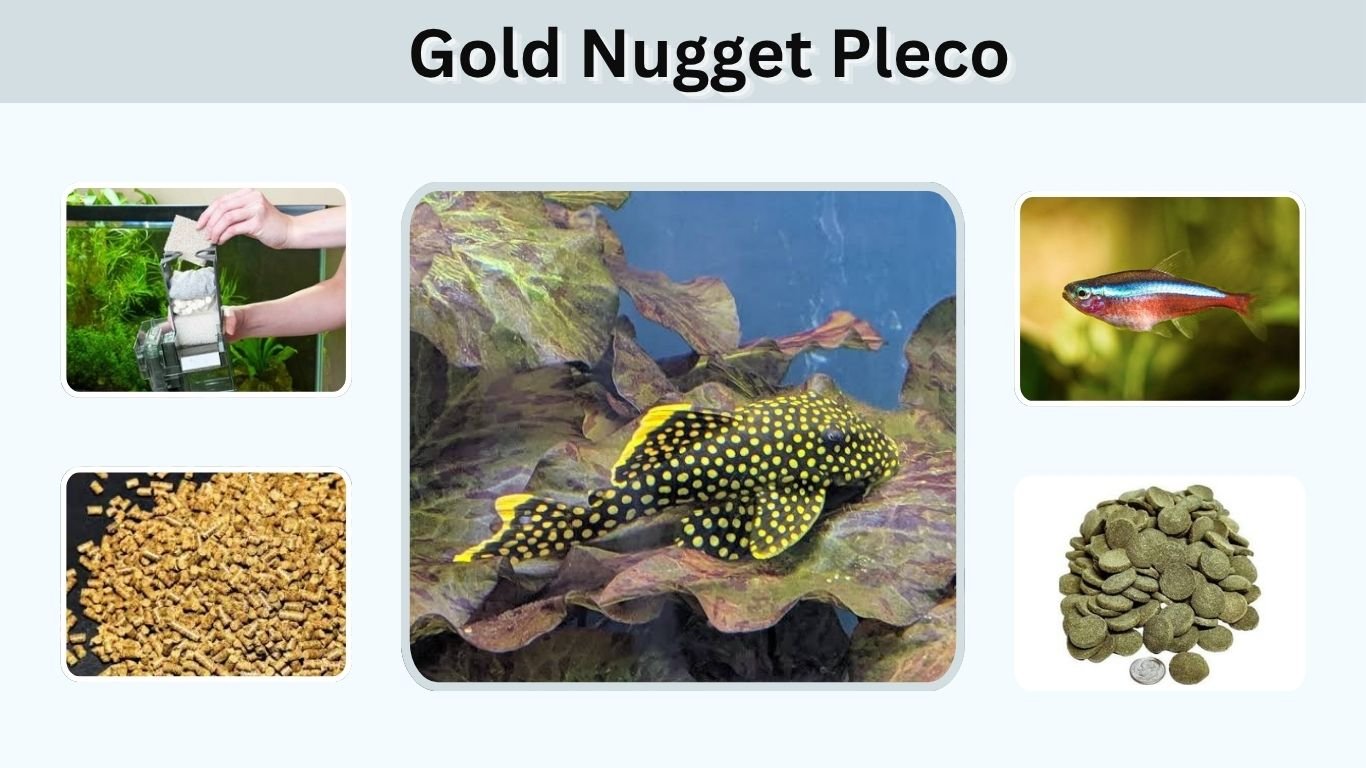
The Gold Nugget Pleco is a beautiful freshwater catfish known for its dark body, bright yellow spots, and golden-edged fins. Scientifically called Baryancistrus xanthellus, this attractive fish originates from the fast-flowing rivers of Brazil. Popular varieties include L018, L081, and L177, each displaying distinctive spotting patterns. Although Gold Nugget Plecos are admired for their appearance and algae-grazing behavior, they require excellent water quality and specialized care. Understanding their adult size, diet, lifespan, tank requirements, and behavior helps aquarium enthusiasts create a healthy environment for these fascinating South American fish.
What Is a Gold Nugget Pleco?
The Gold Nugget Pleco is a freshwater armored catfish belonging to the family Loricariidae. It naturally inhabits the Xingu River basin in Brazil, where warm, fast-flowing water provides oxygen-rich conditions.
The species was formally described in 2011, although it had already been popular in the aquarium trade under several L-number designations.
Gold Nugget Pleco Identification
Gold Nugget Plecos have several distinctive characteristics.
- Scientific Name: Baryancistrus xanthellus
- Common Names: Gold Nugget Pleco, Golden Nugget Pleco
- Family: Loricariidae
- Origin: Xingu River basin, Brazil
- Adult Size: Up to approximately 9 inches in standard length
- Body Color: Dark brown or nearly black
- Markings: Numerous yellow or golden spots
- Fin Color: Yellow edging, particularly prominent in juveniles
- Diet: Algae, biofilm, and small invertebrates
- Temperament: Territorial toward other bottom-dwelling fish
Their flattened bodies and sucker-shaped mouths allow them to cling to submerged rocks in powerful river currents.
How Big Do Gold Nugget Plecos Get?

Gold Nugget Plecos commonly reach around 7 to 9 inches in aquarium conditions, although size varies by individual and population.
Scientifically documented specimens have reached approximately 9 inches (22.4 cm) in standard length, measured without the tail fin.
They require significantly more space than smaller pleco species, such as bristlenose plecos.
Gold Nugget Pleco Growth Rate
Gold Nugget Plecos generally grow gradually, with their development influenced by genetics, nutrition, and environmental conditions.
Juveniles may be sold at just 2 to 3 inches long, but they can eventually become substantial bottom-dwelling fish.
Providing nutritious food, adequate space, and excellent water quality supports healthy development.
Their growth often slows as they approach maturity.
Different Types of Gold Nugget Plecos
Several Gold Nugget Pleco varieties are identified using L-numbers. These designations originally helped aquarium enthusiasts distinguish different populations and appearances before formal scientific classification.
Most commonly traded forms belong to Baryancistrus xanthellus, although the identity of certain highly spotted trade variants remains debated.
1. L018 Gold Nugget Pleco
The L018 Gold Nugget Pleco is one of the most recognizable varieties.
It has a dark body covered with bright yellow spots and striking golden borders along its dorsal and tail fins.
L018 fish originate from the Xingu River system and are popular among aquarium collectors.
2. L081 Gold Nugget Pleco
The L081 Gold Nugget Pleco commonly displays smaller, more numerous spots than some other trade forms.
Certain fish marketed as L081 or Stardust Gold Nugget Plecos have unusually fine spotting patterns.
Although L081 is generally associated with Baryancistrus xanthellus, the classification of some Stardust forms remains uncertain.
3. L177 Gold Nugget Pleco
The L177 Gold Nugget Pleco is associated with the Iriri River, a major tributary of the Xingu.
This variety is often recognized by its comparatively large yellow spots.
Its yellow fin markings and impressive body coloration make it highly desirable among pleco enthusiasts.
Gold Nugget Pleco Tank Requirements

Gold Nugget Plecos require spacious aquariums containing warm, highly oxygenated water.
Their natural habitats consist of rocky river sections with strong currents, so maintaining appropriate water circulation is particularly important.
These fish are best introduced into mature aquariums with stable biological filtration.
Ideal Water Parameters
| Parameter | Recommended Conditions |
| Tank Size | Approximately 75 gallons or larger, with a 48 × 18-inch footprint |
| Temperature | 81–90°F (27–32°C) |
| pH Level | 6.0–8.0 |
| Water Hardness | 3–15 dGH |
| Water Flow | Strong |
| Oxygenation | High |
| Ammonia | 0 ppm |
| Nitrite | 0 ppm |
| Substrate | Sand or smooth gravel |
The aquarium should prioritize bottom space, water movement, and reliable filtration rather than capacity alone.
Best Aquarium Setup
A suitable Gold Nugget Pleco aquarium should include:
- Large Rocks: Create natural grazing and resting surfaces.
- Caves: Provide secure hiding places.
- Strong Filtration: Maintain clear water and remove waste.
- Water Movement: Reproduce natural river currents.
- Additional Aeration: Maintain sufficient dissolved oxygen.
- Driftwood: Offer shelter and surfaces for biofilm development.
- Open Bottom Space: Allow natural movement and territorial separation.
All rocks should be securely positioned to prevent accidental collapse.
What Do Gold Nugget Plecos Eat?

Gold Nugget Plecos feed primarily on algae-rich biofilm, also called aufwuchs, which develops on submerged rocks and other surfaces.
Their natural diet contains diatoms, filamentous algae, microorganisms, and small aquatic invertebrates.
Despite their reputation as algae eaters, they require a varied diet in captivity.
Best Foods for Gold Nugget Plecos
Suitable foods include:
- Quality sinking algae wafers
- Spirulina-based pellets
- Natural aquarium biofilm
- Blanched zucchini
- Cucumber slices
- Suitable leafy vegetables
- Frozen bloodworms
- Small portions of shrimp
- Balanced sinking omnivore pellets
Food should be offered in quantities appropriate to the fish’s size and appetite.
How Often Should You Feed Them?
Gold Nugget Plecos should have regular access to suitable food.
Adult fish generally benefit from daily supplemental feeding, while recently imported specimens may require more frequent meals to recover from nutritional stress.
Feeding during the evening may encourage shy individuals to eat.
Remove uneaten food before it decomposes and reduces water quality.
Gold Nugget Pleco Lifespan
Gold Nugget Plecos are potentially long-lived aquarium fish.
Aquarium care guides commonly suggest lifespans of around 10 years or longer, although reliable species-specific longevity records are limited.
Their long-term survival depends on consistent water quality, proper nutrition, and suitable environmental conditions.
How to Increase Their Lifespan
Maintaining stable aquarium conditions is essential.
Avoid sudden temperature changes, provide adequate filtration, and perform regular partial water changes.
Ensure the fish receives varied nutrition and has access to suitable shelter.
Recently imported Gold Nugget Plecos may be undernourished, making careful acclimation and observation especially important.
Gold Nugget Pleco Behavior and Tank Mates
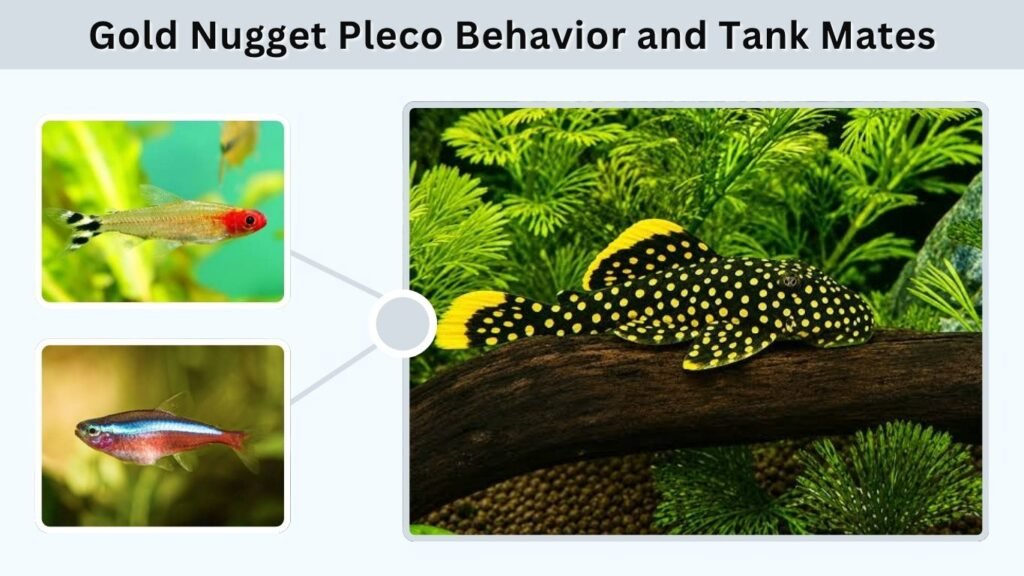
Gold Nugget Plecos are generally peaceful toward unrelated fish occupying the middle and upper levels of the aquarium.
However, they can become territorial toward other plecos, particularly as they mature.
Adult males may defend caves and feeding locations aggressively.
Best Gold Nugget Pleco Tank Mates
Potentially compatible species include:
- Cardinal tetras
- Rummy-nose tetras
- Other peaceful, warm-water characins
- Suitable peaceful rainbowfish
- Discus in carefully managed aquariums
- Other nonaggressive fish with compatible water requirements
Avoid overcrowding the aquarium with territorial bottom-dwelling species.
Discus compatibility requires particular care because both fish need warm, clean water, while Gold Nugget Plecos also require strong circulation.
Can Two Gold Nugget Plecos Live Together?
Keeping multiple Gold Nugget Plecos is possible in very large aquariums, but territorial aggression can become serious.
Adult males are particularly likely to compete for hiding places.
A single Gold Nugget Pleco is generally the safest choice for an ordinary home aquarium.
Gold Nugget Pleco Breeding
Breeding Gold Nugget Plecos in captivity is extremely challenging, and confirmed successful breeding reports are rare.
These fish are believed to use sheltered cavities for reproduction, as do many related armored catfish.
However, detailed breeding information remains limited.
Male vs. Female Gold Nugget Pleco
Adult males typically develop broader, flatter heads and relatively longer pectoral-fin spines.
Females may appear rounder when carrying eggs.
These differences become more noticeable as fish mature, but identifying the sex of juveniles can be difficult.
Successful breeding may require a spacious aquarium, carefully selected partners, highly oxygenated water, and excellent nutrition.
Common Gold Nugget Pleco Health Problems
Gold Nugget Plecos may develop health problems when kept in unsuitable aquarium conditions.
Poor oxygenation, unstable water quality, inadequate nutrition, and overcrowding can cause significant stress.
Warning signs include reduced appetite, rapid breathing, weight loss, unusual inactivity, and damaged fins.
Newly imported individuals deserve particular attention because they may arrive underweight.
If a fish shows persistent symptoms, test the water and seek advice from an experienced aquatic veterinarian.
FAQs
1. How big do Gold Nugget Plecos get?
Gold Nugget Plecos can reach approximately 9 inches in standard length, excluding the tail fin. Their eventual size depends on genetics, nutrition, and environmental conditions. Because they grow relatively large, they require spacious aquariums with adequate bottom space.
2. Are Gold Nugget Plecos good algae eaters?
Gold Nugget Plecos naturally graze on algae and biofilm, but they should not be considered a complete algae-control solution. They require supplemental sinking foods, vegetables, and some animal-based nutrition. Regular aquarium cleaning remains essential for maintaining healthy conditions.
3. Can Gold Nugget Plecos live in a 30-gallon tank?
A 30-gallon aquarium is not recommended as a permanent home for an adult Gold Nugget Pleco. These fish require substantial bottom space, strong water circulation, and excellent filtration. A larger aquarium with approximately 48 inches of length is preferable.
4. Are Gold Nugget Plecos aggressive?
Gold Nugget Plecos are usually peaceful toward unrelated community fish but can become aggressive toward other plecos. Adult males often defend caves and feeding territories. Keeping one individual or providing substantial space and separate shelters helps prevent territorial conflicts.
5. What is the difference between L018 and L177 Gold Nugget Plecos?
L018 and L177 are trade designations for populations of Baryancistrus xanthellus. L177 is associated with the Iriri River and often has larger yellow spots. L018 commonly displays smaller spots, although individual patterns vary and cannot always identify geographic origin.