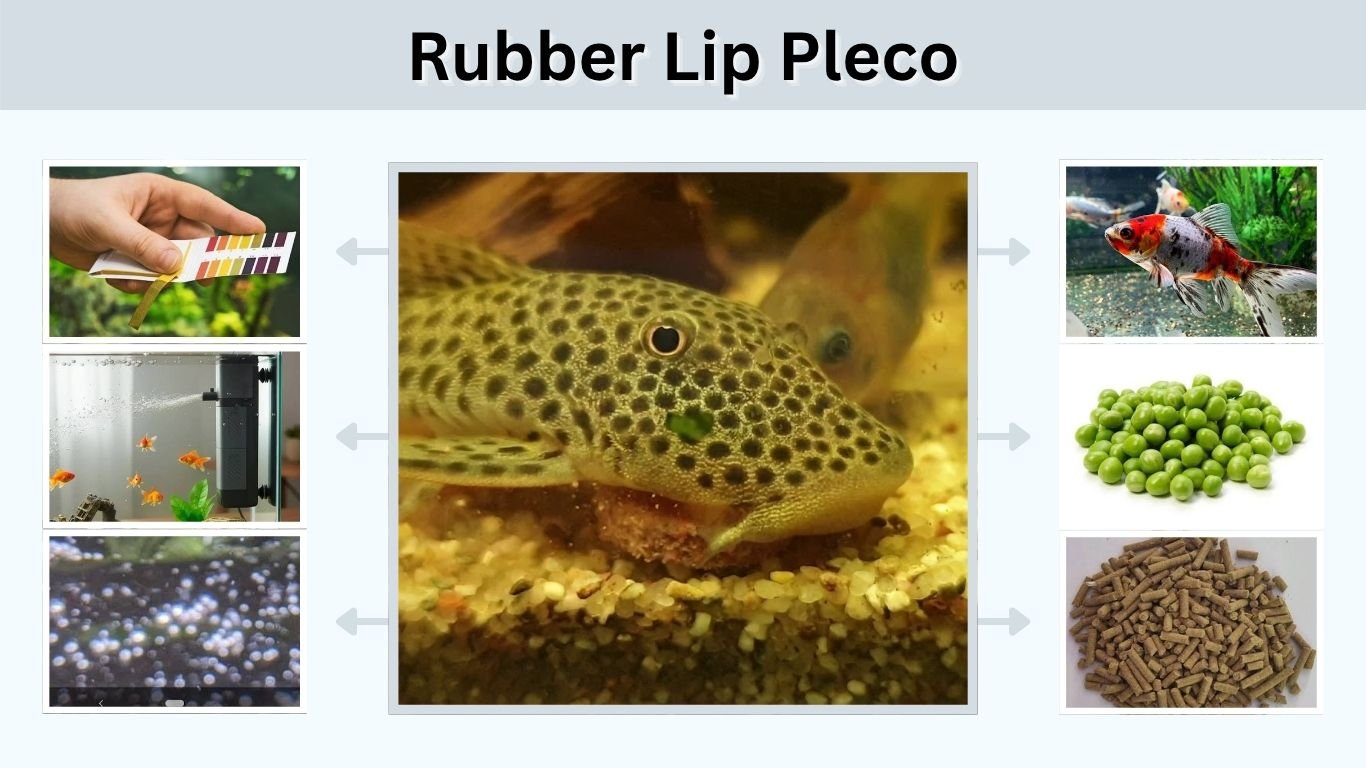
The Rubber Lip Pleco is a small freshwater catfish popular among aquarium enthusiasts for its algae-eating habits and distinctive appearance. Also called the rubbernose or bulldog pleco, this peaceful fish belongs to the genus Chaetostoma and originates from fast-flowing South American rivers. Unlike larger pleco species, Rubber Lip Plecos typically remain around 4 to 5 inches long, making them suitable for appropriately maintained home aquariums. Understanding their tank requirements, diet, lifespan, and behavior is essential for keeping them healthy. This guide explains everything you need to know about Rubber Lip Pleco care.
What Is a Rubber Lip Pleco?
The Rubber Lip Pleco is a freshwater armored catfish belonging to the family Loricariidae. Several closely related species are sold under this common name, including Chaetostoma formosae.
These fish naturally inhabit rocky rivers and streams in South America, particularly Colombia and nearby Andean drainage systems. Their flattened bodies and specialized mouths allow them to cling to surfaces in flowing water.
Rubber Lip Pleco Identification
Rubber Lip Plecos have several recognizable physical characteristics.
- Scientific Name: Chaetostoma spp., including C. formosae
- Common Names: Rubber Lip Pleco, Rubbernose Pleco, Bulldog Pleco
- Family: Loricariidae
- Origin: South America
- Adult Size: Typically 4–5 inches
- Body Color: Gray, brown, olive, or spotted
- Body Shape: Flattened with a broad head
- Mouth: Wide, downward-facing suction mouth
- Temperament: Generally peaceful
- Diet: Primarily algae, biofilm, and small aquatic organisms
Some Rubber Lip Plecos display dark stripes, while others have spotted or mottled patterns.
How Big Do Rubber Lip Plecos Get?

A fully grown Rubber Lip Pleco typically reaches approximately 4 to 5 inches (10–13 cm) in length, although maximum size depends on the exact species.
The commonly traded Chaetostoma formosae reaches approximately 4 inches in standard length, excluding its tail fin.
This relatively small size makes Rubber Lip Plecos more manageable than common plecos, which can grow considerably larger.
Rubber Lip Pleco Growth Rate
Young Rubber Lip Plecos gradually increase in size as they mature. Their growth rate depends on genetics, food availability, water conditions, and overall health.
Unlike some rapidly growing aquarium fish, these catfish may require considerable time to reach adult dimensions.
Providing a nutritious diet and stable water conditions supports normal development.
Rubber Lip Pleco Full-Grown Size
Adult Rubber Lip Plecos have broad heads, muscular bodies, and relatively large pectoral fins.
Males may become slightly larger or more robust than females in some species.
Because several Chaetostoma species appear in aquarium stores, buyers should confirm the fish’s identification rather than relying entirely on its common name.
Rubber Lip Pleco Tank Requirements

Rubber Lip Plecos require clean, highly oxygenated freshwater with moderate to strong water movement.
Unlike many tropical aquarium fish, several commonly traded Chaetostoma species prefer relatively cool conditions.
Their natural habitat consists of flowing streams with rocky bottoms, making water circulation particularly important.
Ideal Water Parameters
| Parameter | Recommended Conditions |
| Tank Size | 30 gallons or larger, preferably a long aquarium |
| Temperature | 68–75°F (20–24°C) |
| pH Level | Approximately 6.5–7.8 |
| Water Hardness | Species-dependent; moderate hardness is often tolerated |
| Water Flow | Moderate to strong |
| Ammonia | 0 ppm |
| Nitrite | 0 ppm |
| Substrate | Sand or smooth gravel |
For C. formosae, an aquarium with approximately 48 inches of length is a well-supported long-term recommendation. Tank footprint and water movement are more important than gallon capacity alone.
Best Aquarium Setup
A suitable Rubber Lip Pleco aquarium should include:
- Smooth Rocks: Provide grazing surfaces and resting locations.
- Strong Filtration: Maintain clean water and remove organic waste.
- Water Circulation: Recreate the current found in natural river habitats.
- Oxygenation: Use appropriate filtration, water movement, or additional aeration.
- Hiding Places: Include caves and shaded areas.
- Driftwood: Provide additional shelter and surfaces for biofilm.
- Stable Substrate: Use smooth gravel or sand to protect the fish’s underside.
A well-established aquarium containing natural algae growth is particularly beneficial for these fish.
What Do Rubber Lip Plecos Eat?

Rubber Lip Plecos primarily graze on algae and aufwuchs, the mixture of microorganisms and organic material growing on underwater surfaces.
Their natural diet also includes small aquatic invertebrates and insect larvae.
Although they are effective algae grazers, they require supplemental feeding in captivity.
Best Foods for Rubber Lip Plecos
Suitable foods include:
- Natural green algae
- Biofilm growing on rocks
- Quality algae wafers
- Spirulina-based sinking foods
- Blanched zucchini
- Shelled peas
- Blanched spinach
- Small portions of frozen bloodworms
- Small aquatic invertebrates
Many individuals prefer natural algae to prepared vegetables, particularly when newly imported.
How Often Should You Feed Them?
Rubber Lip Plecos should have regular access to suitable algae and biofilm.
Offer supplemental foods according to the individual’s appetite and nutritional condition.
Feeding during the evening may help shy fish eat without competition from active community tank mates.
Remove uneaten vegetables before they decompose and affect water quality.
A noticeably sunken belly can indicate inadequate feeding or illness and should be investigated promptly.
Rubber Lip Pleco Lifespan
Rubber Lip Plecos are relatively long-lived fish when maintained under suitable aquarium conditions.
Aquarium care estimates often suggest a lifespan of approximately 5 to 10 years, with some sources reporting longer periods.
However, reliable species-specific lifespan data are limited because multiple Chaetostoma species are sold under the same name.
How to Increase Rubber Lip Pleco Lifespan
Excellent water quality is particularly important for these fish.
Keep temperatures appropriate for the identified species and maintain strong oxygenation throughout the aquarium.
Provide varied foods, regular water changes, and sufficient natural grazing surfaces.
Avoid sudden changes in temperature, pH, or water chemistry.
Rubber Lip Plecos should be introduced only to established aquariums with stable biological filtration.
Rubber Lip Pleco Behavior and Tank Mates

Rubber Lip Plecos are generally peaceful toward unrelated aquarium fish.
They spend much of their time resting on rocks, exploring submerged surfaces, and grazing on algae.
However, they may become territorial toward other bottom-dwelling fish, particularly when competing for suitable resting locations.
Best Rubber Lip Pleco Tank Mates
Potentially compatible aquarium fish include:
- Zebra danios
- White cloud mountain minnows
- Peaceful small barbs suited to cooler water
- Compatible rasboras
- Peaceful tetras with overlapping temperature requirements
- Other nonaggressive community fish
Always compare the temperature, water movement, and oxygen requirements of every species before introducing tank mates.
Are Rubber Lip Plecos Aggressive?
Rubber Lip Plecos are not generally aggressive toward peaceful community fish.
However, males may defend preferred rocks or shelter areas from other plecos.
Keeping multiple individuals requires sufficient space, separate territories, and ample food.
They are not schooling fish and can live alone without experiencing the social deprivation associated with schooling species.
Rubber Lip Pleco vs. Bristlenose Pleco
Rubber Lip Plecos and bristlenose plecos are popular smaller alternatives to the common pleco.
However, they belong to different genera and have different environmental preferences.
| Feature | Rubber Lip Pleco | Bristlenose Pleco |
| Genus | Chaetostoma | Ancistrus |
| Adult Size | Usually 4–5 inches | Usually 4–6 inches |
| Facial Bristles | No prominent branching snout tentacles | Common in adult males |
| Preferred Water | Cooler, strongly oxygenated | Generally warmer tropical conditions |
| Natural Habitat | Fast-flowing rocky streams | Varies by species |
| Diet | Algae, biofilm, small invertebrates | Algae, vegetables, mixed foods |
| Behavior | Peaceful, sometimes territorial | Peaceful, sometimes territorial |
Bristlenose plecos are generally more adaptable to conventional tropical community aquariums.
Rubber Lip Plecos require more attention to water flow, oxygenation, and natural grazing opportunities.
Rubber Lip Pleco Breeding
Breeding Rubber Lip Plecos in home aquariums is relatively uncommon and can be challenging.
Successful spawning reports are limited compared with those of popular bristlenose plecos.
Several Chaetostoma species are believed to use sheltered cavities for reproduction, with males protecting their eggs.
Male vs. Female Rubber Lip Pleco
Sexual differences can be difficult to recognize, especially in young fish.
Mature males of some species develop broader heads, more prominent odontodes, or differences in fin structure.
Females may have rounder bodies, particularly when carrying eggs.
Because characteristics vary between species, identifying the exact Chaetostoma species is important before attempting breeding.
Common Rubber Lip Pleco Health Problems
Rubber Lip Plecos may develop health problems when exposed to unsuitable water conditions.
Low oxygen, excessive heat, poor nutrition, and unstable water chemistry are particularly concerning.
Warning signs include rapid breathing, reduced appetite, unexplained inactivity, weight loss, and damaged fins.
Hiding during daylight is generally normal, but persistent distress or unusual changes in behavior should prompt immediate water testing.
Avoid treating unexplained symptoms with medication before checking aquarium conditions and identifying the likely cause.
FAQs
1. Are Rubber Lip Plecos good algae eaters?
Yes, Rubber Lip Plecos are effective grazers of certain natural algae and biofilm. However, they do not consume every algae species and cannot replace regular aquarium maintenance. They also require supplemental nutrition, particularly when natural grazing surfaces are limited.
2. Can Rubber Lip Plecos live with goldfish?
Rubber Lip Plecos and goldfish are not automatically suitable tank mates. Some temperature requirements overlap, but goldfish produce considerable waste and may compete for food or disturb smaller fish. A spacious, well-oxygenated aquarium is essential, and separate housing is often preferable.
3. Do Rubber Lip Plecos need driftwood?
Driftwood is useful but not strictly essential for Rubber Lip Plecos. It provides shelter and additional biofilm surfaces. Unlike specialized wood-eating plecos, Rubber Lip Plecos primarily graze on algae and microorganisms growing on rocks and other submerged materials.
4. Can Rubber Lip Plecos live in a 10-gallon tank?
A 10-gallon aquarium is not recommended as a permanent home for an adult Rubber Lip Pleco. These fish need substantial bottom space, strong water circulation, and stable conditions. A larger, preferably long aquarium provides a more appropriate environment.
5. Are Rubber Lip Plecos nocturnal?
Rubber Lip Plecos are often more active during low-light periods, although they can also graze during daylight. Their behavior depends on aquarium lighting, available hiding places, feeding schedules, and disturbances. Providing sheltered locations encourages more natural activity.