
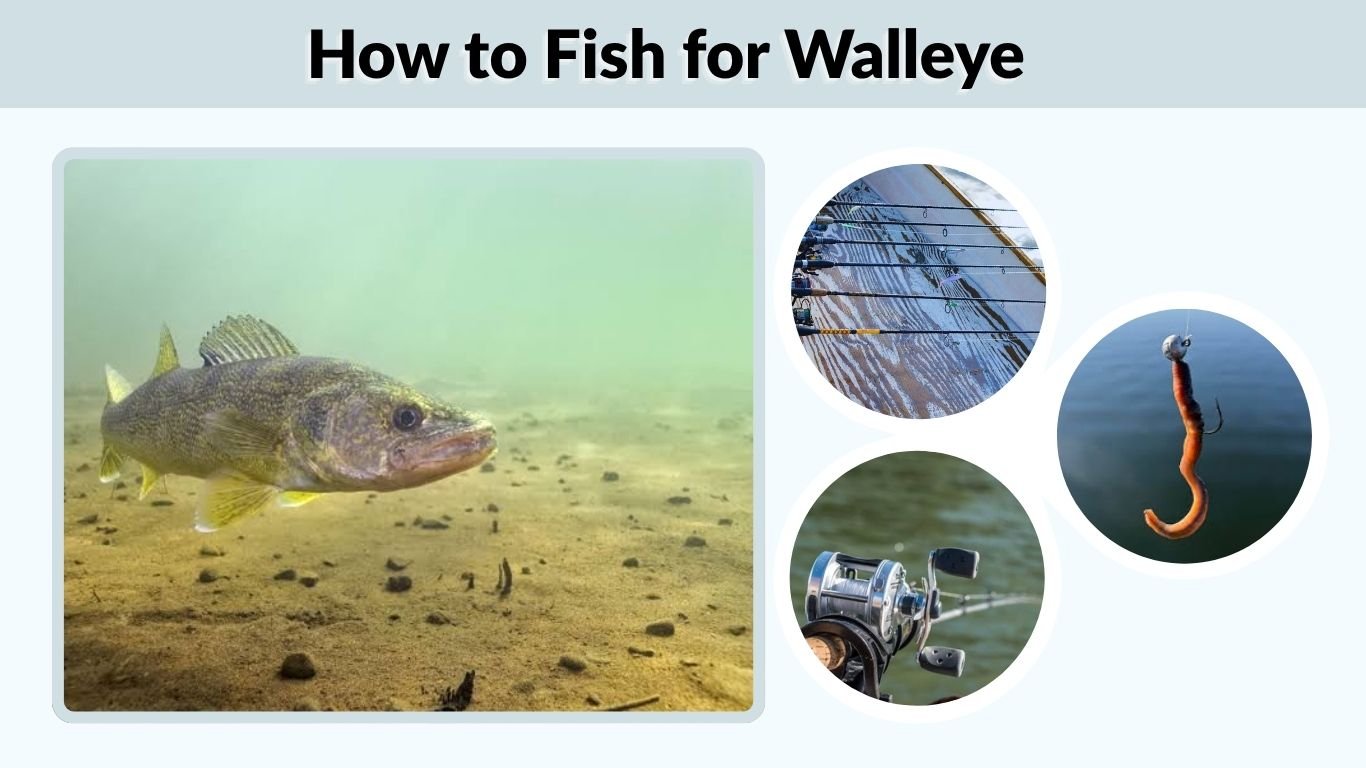
Walleye can be challenging to catch because they constantly change depth and location with light, water temperature, prey movement, and season. The key is to find structure and keep your bait close to the depth where fish are feeding. Jigs tipped with minnows, slip bobbers, crawler harnesses, crankbaits, and live-bait rigs are among the most reliable approaches. Spring often produces excellent shallow-water fishing, while summer fish frequently move deeper. Dawn, dusk, cloudy conditions, and nighttime can bring walleyes into shallower feeding areas.
Best Setup for Walleye Fishing
You do not need unusually heavy tackle to catch walleyes. A sensitive spinning setup makes it easier to feel light bites while providing enough power for larger fish.
Basic Walleye Fishing Setup
- 6½–7½-foot medium or medium-light spinning rod
- Spinning reel
- 6–10 lb monofilament or fluorocarbon
- Or light braid with a fluorocarbon leader
- Jigs from about 1/8 to 3/8 ounce
- Live minnows, nightcrawlers, and leeches
- Slip bobbers
- Crankbaits
- Soft-plastic swimbaits
Minnesota DNR recommends a medium-action spinning outfit with roughly 6–10-pound line as a versatile starting point.
How to Fish With a Jig for Walleye
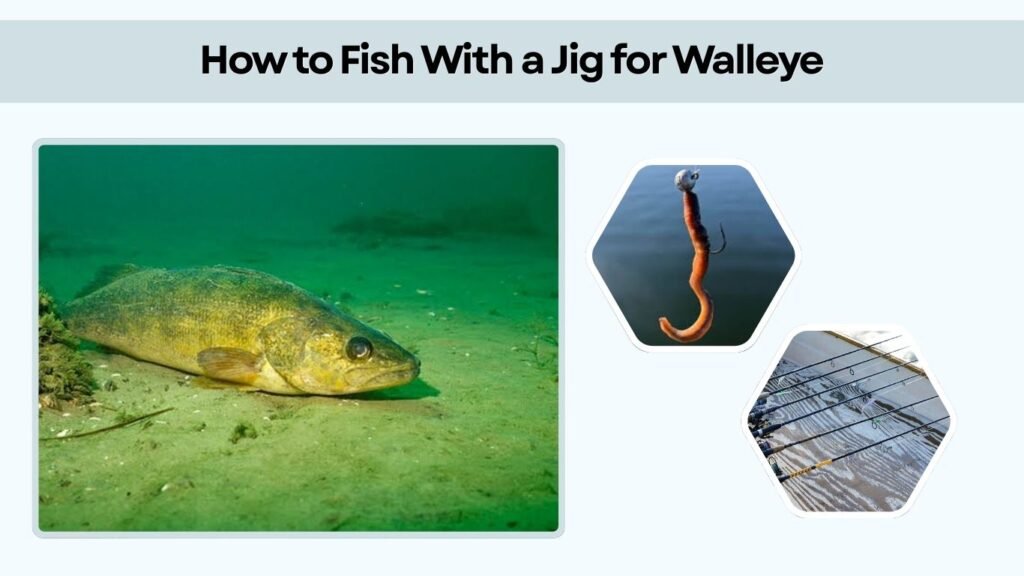
Jig fishing is one of the simplest and most productive walleye methods, particularly during spring.
Choose a jig heavy enough to maintain contact with the bottom without being unnecessarily heavy.
Jig and Minnow Technique
Hook a minnow onto the jig and cast beyond the target area. Allow the jig to reach bottom, lift the rod tip gently, and let the lure fall again.
Most strikes occur as the jig falls.
Try working around:
- Rocky points
- Gravel flats
- Weed edges
- Drop-offs
- River channels
- Bridge pilings
- Submerged humps
Early in the season, Michigan DNR identifies lead-head jigs tipped with minnows or soft plastics as a top walleye technique.
How to Fish for Walleye From Shore
Shore anglers can catch excellent walleyes, especially during spring, fall, dusk, and nighttime when fish move toward shallow feeding areas.
Look for places where deep water comes reasonably close to shore.
Best Shore Fishing Spots
- Rocky points
- Riprap
- Piers
- Dams
- River mouths
- Bridges
- Current breaks
- Gravel shorelines
Cast crankbaits, jerkbaits, jigs, or live minnows along these areas.
Spring is particularly productive because walleyes often occupy shallow and semi-shallow areas near shore before moving deeper as summer progresses.
How to Fish for Walleye in a River
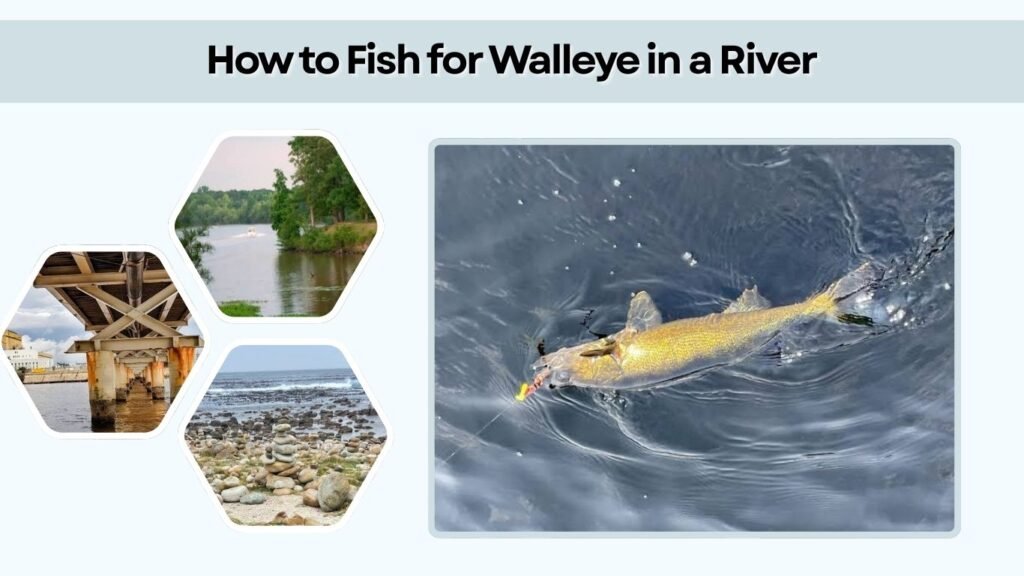
River walleyes frequently hold where they can avoid strong current while waiting for prey to pass nearby.
Look for Walleye Around
- Current seams
- Wing dams
- Bridge pilings
- Deep holes
- River bends
- Rock piles
- Dam tailwaters
Use enough jig weight to reach bottom while maintaining control.
Cast slightly upstream and allow the jig to move naturally downstream while periodically contacting the bottom.
On the Detroit River, Michigan DNR specifically recommends crankbaits or minnow rigs for shore anglers and jigging minnows while drifting from a boat.
How to Fish for Walleye in a Lake
Lake fishing requires finding structure rather than randomly covering open water.
During spring, check shallow flats and shoreline structure. As water warms, fish may move toward deeper points, humps, saddles, drop-offs, and offshore structure.
Productive Lake Structure
Use maps or electronics to locate:
- Underwater points
- Humps
- Reefs
- Saddles
- Drop-offs
- Weedlines
- Gravel bars
- Submerged islands
Minnesota DNR notes that summer walleyes commonly move toward deeper offshore structure, although individual fish can remain shallow or suspend away from the bottom.
How Deep Should You Fish for Walleye?
There is no single correct walleye depth.
Instead of choosing one fixed number, use seasonal patterns as your starting point.
Seasonal Depth Guide
Spring: Start shallow, particularly around points, flats, gravel, and spawning areas.
Summer: Search deeper points, humps, weed edges, and drop-offs. Also check suspended fish.
Fall: Walleyes may return toward shallower weedlines, rocky points, and gravel bars as water cools.
Winter: Fish structure near the bottom. Shallow water can be excellent around dawn and dusk, while deeper water may be more productive during bright daylight.
These are starting points rather than strict rules. Baitfish location often determines the actual depth.
How to Slip Bobber Fish for Walleye
A slip bobber is excellent when walleyes are concentrated around a specific reef, rock pile, weed edge, or hump.
Attach a bobber stop, slip float, weight, swivel, leader, and hook. Set the stop so your bait hangs just above the fish.
Best Slip Bobber Baits
- Leeches
- Minnows
- Nightcrawlers
Slip bobbers can effectively present bait even in water 20 feet deep or more because the line slides through the float during casting.
How to Fish a Crawler Harness for Walleye
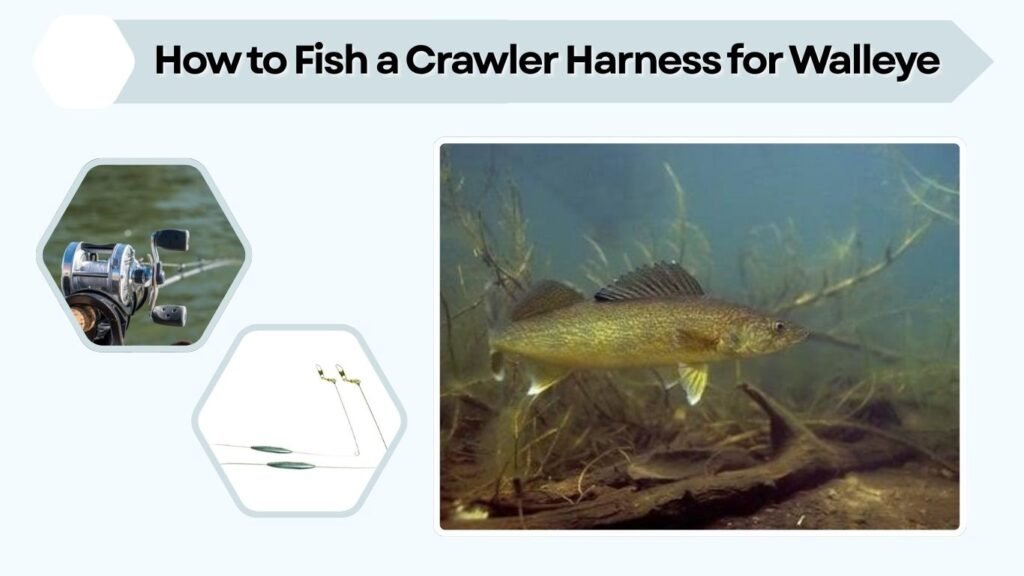
Crawler harnesses are particularly useful when walleyes are spread across large areas.
A typical harness includes a spinner blade, beads, hooks, and a nightcrawler.
Using a Bottom Bouncer
Attach the crawler harness behind a bottom bouncer and slowly troll or drift.
The bottom bouncer helps keep the presentation near the lake floor while reducing snagging.
Move slowly enough that the spinner rotates naturally.
Crawler harnesses become particularly useful as the season progresses and trolling replaces some of the early-season jigging approach.
How to Fish Crankbaits and Jerkbaits
Crankbaits let anglers cover large areas quickly.
Select a lure that resembles common prey such as perch, shad, or minnows and choose a model designed to reach the target depth.
Best Places for Crankbaits
Cast or troll them around:
- Rocky shorelines
- Points
- Weed edges
- Flats
- Reefs
- Open-water baitfish
Hard-bodied lures become particularly effective during fall when walleyes move toward shallower feeding areas.
How to Fish for Walleye at Night
Night fishing can be extremely productive because walleyes have eyes specialized for low-light feeding.
After sunset, fish that spent daylight hours deeper may move onto shallow flats, reefs, points, and rocky shorelines.
Night Fishing Tips
- Retrieve crankbaits slowly.
- Work shallow-running jerkbaits over rocks.
- Cast parallel to shore.
- Concentrate on points and weed edges.
- Avoid unnecessary lights on the water.
- Fish slowly and quietly.
Early morning and evening are also traditional peak feeding periods.
How to Ice Fish for Walleye
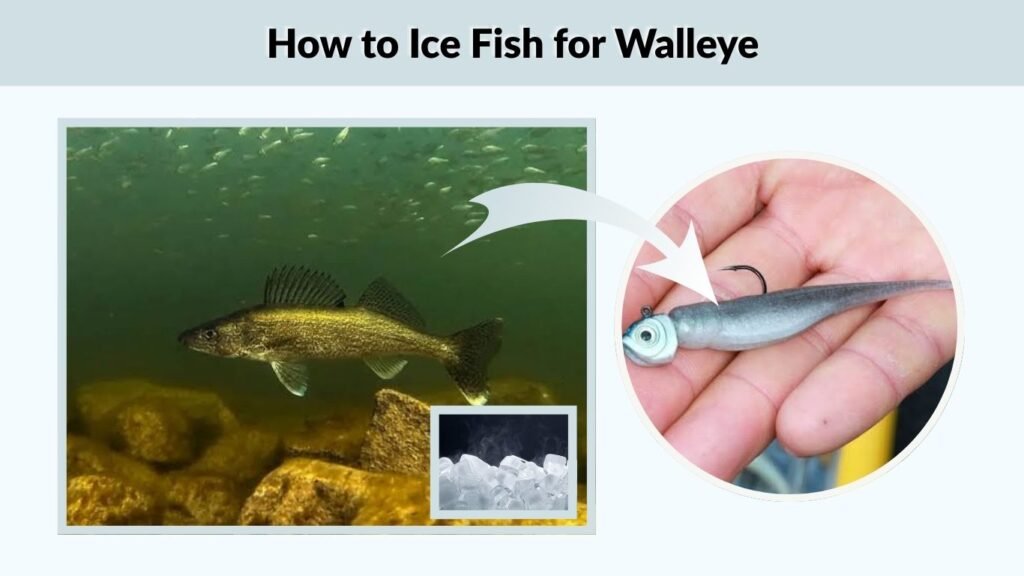
Winter walleyes often continue using points, humps, saddles, narrows, and drop-offs.
Drill several holes across different depths instead of waiting all day in one location.
Ice Fishing Technique
Lower a jigging spoon, jig, or minnow-style lure until it is close to bottom. Lift it several inches, allow it to fall, then pause.
Tip the lure with:
- Minnow head
- Minnow tail
- Small live minnow
Most winter walleyes are caught within a few feet of the bottom, although suspended fish also occur. Minnesota DNR notes that anglers commonly find shallow fish around dawn and dusk and deeper fish during brighter periods.
How to Fish for Walleye by Season
Walleye behavior changes considerably throughout the year, so changing techniques with the season often improves results.
Spring
Fish shallow flats, river mouths, rocky areas, and points. Jigs and minnows are excellent choices.
Summer
Move toward deeper structure and suspended baitfish. Try crawler harnesses, bottom bouncers, slip rigs, and trolling crankbaits.
Fall
Search rocky points, weedlines, reefs, and areas holding baitfish. Crankbaits, minnows, and jigs can all work.
Winter
Concentrate around drop-offs, points, humps, and other structure. Jig near bottom while checking several depths.
Best Bait for Walleye
Three live baits have remained especially popular because they can be adapted to many fishing methods.
Minnows
Use minnows with jigs, slip bobbers, live-bait rigs, and ice-fishing setups.
Leeches
Leeches work particularly well beneath slip bobbers or on live-bait rigs.
Nightcrawlers
Nightcrawlers are excellent behind spinner harnesses and bottom bouncers during warmer months.
Michigan DNR recommends all three approaches, including crawlers along the bottom, leeches below slip bobbers, and minnows fished on tight lines.
FAQs
1. What is the easiest way to fish for walleye?
Start with a jig tipped with a minnow. Cast around points, weed edges, rocks, and drop-offs while keeping the jig close to bottom.
2. What depth should I fish for walleye?
Start shallow during spring and low-light periods and move deeper during bright summer conditions. Always adjust based on structure and baitfish location.
3. Can you catch walleye from shore?
Yes. Spring, fall, dusk, and nighttime can provide excellent shore fishing around rocky points, dams, river mouths, bridges, and riprap.
4. What is the best time to fish for walleye?
Dawn and dusk are consistently productive because walleyes commonly feed aggressively under low-light conditions.
5. What lure catches the most walleye?
There is no single best lure, but jigs, crankbaits, jerkbaits, crawler harnesses, swimbaits, and jigging spoons are all proven options. Start with a jig and minnow if you are new to walleye fishing.