
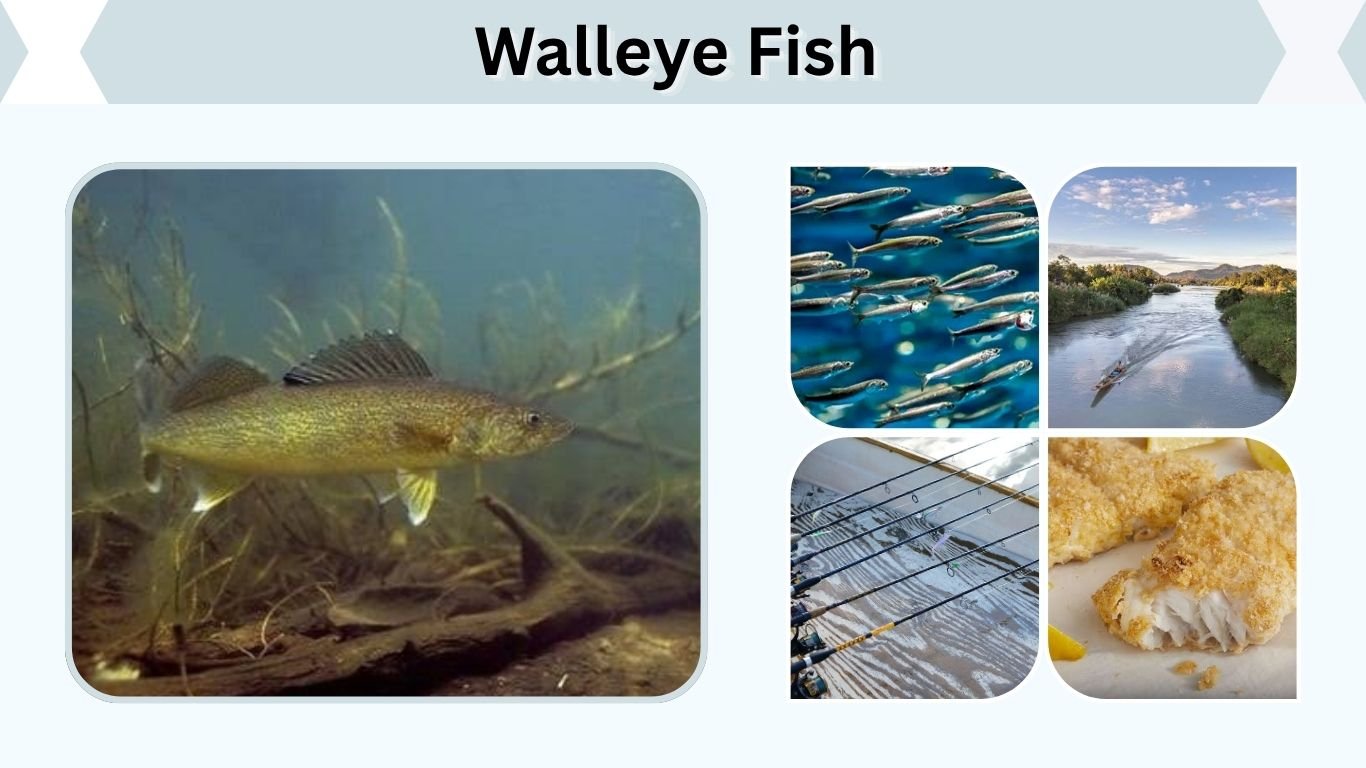
The walleye (Sander vitreus) is a popular North American freshwater game fish prized for its large reflective eyes, sharp teeth, challenging fishing, and mild white meat. Walleyes inhabit lakes, reservoirs, and rivers, especially in cooler northern regions. Their exceptional low-light vision makes them effective predators during cloudy weather, at dawn and dusk, and after dark. Anglers pursue them with minnows, jigs, crankbaits, and other lures from boats, shorelines, and through the ice. Despite sometimes being called “walleye pike,” the species actually belongs to the perch family rather than the pike family.
What Is a Walleye Fish?
The walleye is a predatory freshwater fish in the family Percidae, which also includes yellow perch and sauger. Its scientific name is Sander vitreus. The species is native to major North American drainage systems, particularly the Great Lakes and Mississippi River basins, but stocking has expanded its distribution considerably.
Walleye Identification
Look for these characteristics:
- Long, streamlined body
- Olive-brown to golden sides
- Pale or white belly
- Large pearly-looking eyes
- Two separate dorsal fins
- First dorsal fin armed with sharp spines
- Large mouth with prominent canine-like teeth
- Dark blotch near the rear base of the first dorsal fin
- Distinctive white tip on the lower lobe of the tail
The white lower tail tip is particularly useful when distinguishing a walleye from a sauger.
Why Do Walleyes Have Such Large Eyes?
The name “walleye” refers to the fish’s cloudy or pearlescent-looking eyes.
A reflective layer called the tapetum lucidum helps increase visual sensitivity in dim conditions. This adaptation allows walleyes to hunt effectively at night and in murky water, when many prey fish have greater difficulty seeing.
How Big Do Walleye Fish Get?
Walleyes commonly caught by anglers are much smaller than the species’ maximum potential size. Minnesota DNR reports that an average harvested walleye is around 14 inches long and slightly over one pound, while fish exceeding 10 pounds occasionally occur.
Walleye Size
Typical measurements include:
- Common adult length: roughly 12–30 inches
- Average caught fish: around 14 inches in some fisheries
- Large specimens: over 30 inches
- Maximum reported length: about 42 inches
- Maximum reported age: 29 years
Growth varies greatly with water temperature, food supply, population density, and geographic location.
Where Do Walleye Live?

Walleyes inhabit natural lakes, reservoirs, rivers, and larger streams. They prefer cool or cold water and can survive in both clear and turbid conditions. They may occupy shallow areas during certain seasons and move into deeper water when temperatures rise or prey shifts location.
Walleye Habitat
Good walleye habitat often includes:
- Rocky points
- Gravel shoals
- Drop-offs
- River channels
- Weed edges
- Submerged humps
- Reefs
- Dam areas
- Current breaks
- Deep-water structure
They are native to much of northern and central North America and are especially famous in places such as Minnesota, Ontario, the Great Lakes, and Lake Erie. Walleye have also been introduced into suitable waters elsewhere for recreational fishing.
What Do Walleye Fish Eat?
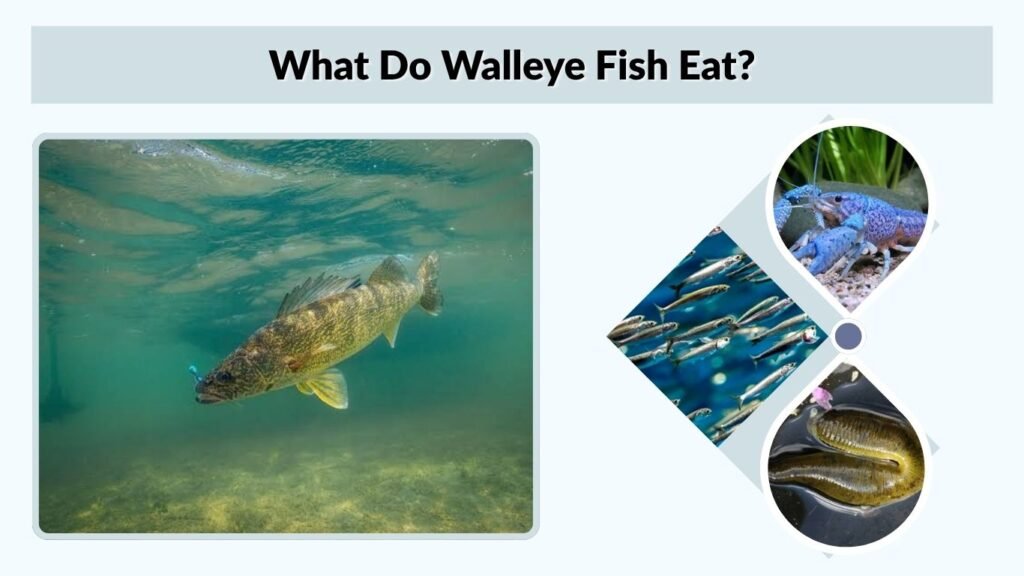
Walleyes become increasingly predatory as they grow. Newly hatched fish consume small aquatic organisms and insects, while larger juveniles and adults primarily prey on other fish.
Common Foods
Their diet can include:
- Yellow perch
- Minnows
- Shad
- Small fish
- Aquatic insects
- Crayfish
- Leeches
- Snails
- Frogs
Fish usually become the most important food source for larger adults. Their strong eyesight and sharp canine teeth make them highly effective ambush and pursuit predators, particularly under low-light conditions.
How to Fish for Walleye
Successful walleye fishing depends heavily on finding the right depth, structure, and feeding period. Because walleyes regularly change depth with season and light level, anglers often need to search different areas rather than repeatedly casting to one spot.
Best Bait for Walleye
Popular natural baits include:
- Minnows
- Nightcrawlers
- Leeches
Minnows are especially useful during cooler periods, while nightcrawlers and leeches can become productive as water warms.
Best Walleye Lures
Common artificial options include:
- Jigs
- Soft-plastic minnows
- Paddle-tail swimbaits
- Crankbaits
- Jerkbaits
- Blade baits
- Spoons
- Spinner rigs
A jig tipped with live bait or soft plastic is one of the most versatile setups because it can be worked vertically, cast from shore, or bounced along river bottoms.
What Is the Best Time to Fish for Walleye?
Walleye eyes are especially adapted to low-light conditions. As a result, dawn, dusk, cloudy weather, windy conditions, and nighttime can produce excellent fishing.
The U.S. Fish and Wildlife Service notes that anglers often favor windy conditions because waves stir sediment and reduce underwater visibility, creating what anglers sometimes call a “walleye chop.” Walleyes can exploit those darker conditions with their superior vision.
Fishing for Walleye at Night
At night, walleyes often move from deeper daytime locations toward shallower reefs, rocky shorelines, points, and feeding flats.
Slow-moving crankbaits, jerkbaits, and minnows can be particularly effective.
Avoid assuming that deeper water is always necessary after sunset; large fish may move surprisingly close to shore when hunting.
How to Fish for Walleye From Shore
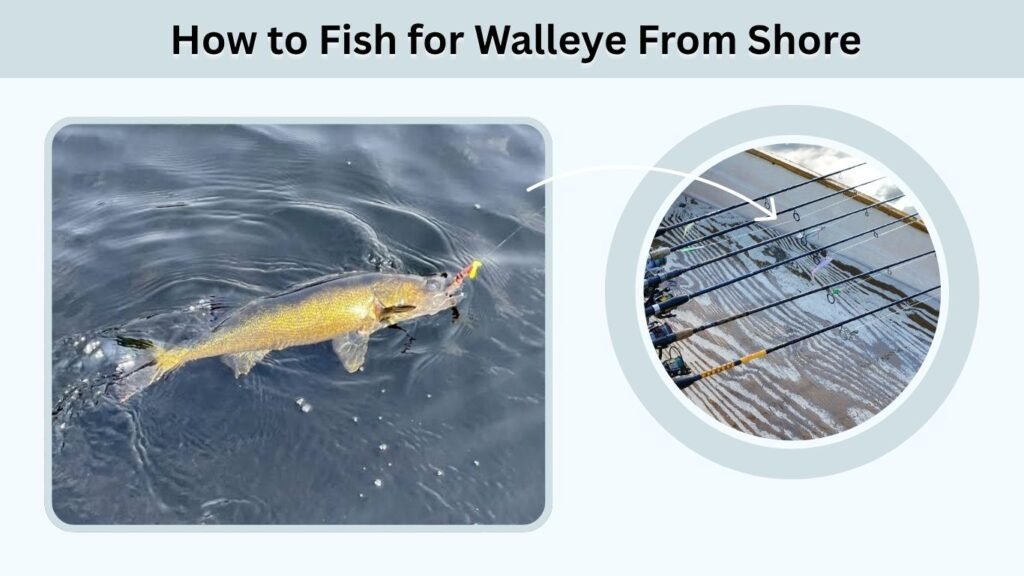
A boat is useful but not essential. Shore fishing can be excellent when walleyes move shallow during spring, fall, evenings, and nighttime.
Productive Shore Locations
Target:
- Rocky points
- Piers
- Breakwalls
- River mouths
- Bridges
- Dams
- Riprap banks
- Current seams
Cast parallel to structure when possible instead of always casting straight toward deep water.
Jigs, suspending jerkbaits, crankbaits, and live minnows beneath floats are useful shore presentations.
How to Fish for Walleye in Rivers
River walleyes conserve energy by using areas where current delivers food without forcing them to swim constantly against fast water.
Look for fish around:
- Current breaks
- Wing dams
- Bridge pilings
- Deep pools
- Outside bends
- Rock piles
- Dam tailwaters
- Creek mouths
Present a jig or bait close to the bottom while maintaining enough control to detect subtle bites.
Walleye vs Sauger
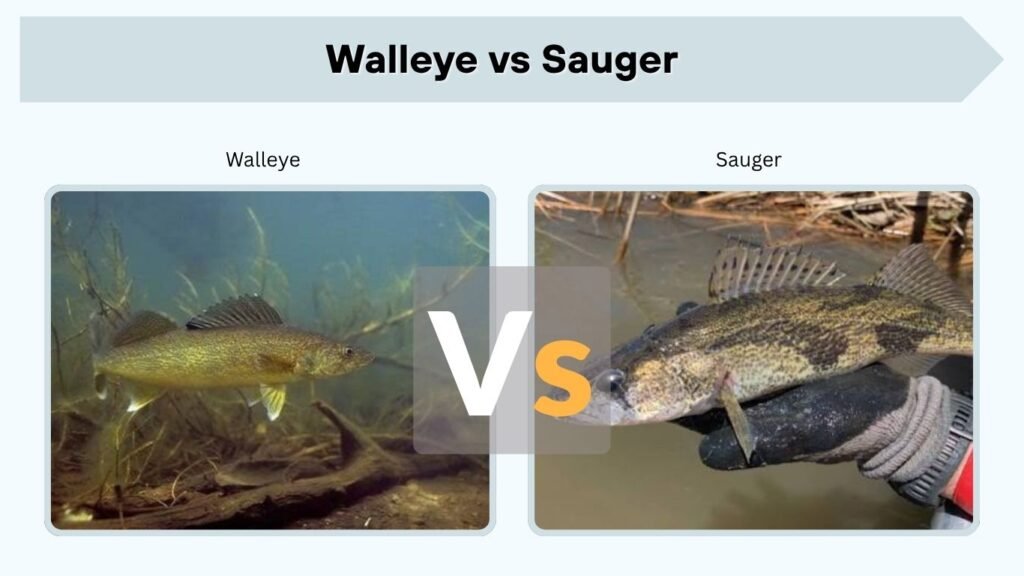
Walleyes and saugers are closely related and frequently confused.
| Feature | Walleye | Sauger |
| Lower tail | White tip | No white tip |
| First dorsal fin | Generally no rows of spots | Rows of dark spots |
| Dorsal base | Dark blotch present | Blotch absent |
| Average size | Larger | Usually smaller |
| Body | Olive-gold | More mottled/blotchy |
Minnesota DNR considers the white lower tail tip and dorsal-fin markings particularly reliable identification features.
Walleye vs Zander
The European zander (Sander lucioperca) is a close relative of the North American walleye, not simply another name for the same species.
Both belong to the genus Sander and share an elongated predatory body, sharp teeth, and large eyes. However, they are separate species occurring naturally on different continents.
Are Walleye and Pike the Same Fish?
No.
Names such as walleye pike, “yellow pike,” and “pickerel” are sometimes used regionally, but a walleye is not a true pike.
Walleye belong to Percidae, the perch family. Northern pike belong to Esocidae.
Similarly, walleye should not be confused with pollock, which are marine fish unrelated to walleye.
What Does Walleye Taste Like?

Walleye is widely prized as a food fish because its flesh is white, mild, slightly sweet, tender, and flaky.
Its relatively subtle flavor makes it suitable for people who do not enjoy strongly “fishy” seafood.
Is Walleye a White Fish?
In culinary terms, yes. Cooked walleye has pale white flesh.
However, “white fish” in this context describes its meat rather than a taxonomic group.
Best Ways to Cook Walleye
Walleye can be:
- Pan-fried
- Baked
- Grilled
- Broiled
- Air-fried
- Used for fish tacos
- Prepared as fish and chips
A simple preparation is to season boneless fillets lightly, coat them with flour or breadcrumbs, and pan-fry until the flesh is opaque and flakes easily.
Follow local fish-consumption advisories for the specific lake or river where your fish was caught.
Walleye Spawning and Life Cycle
Walleyes generally reach reproductive maturity at around three to four years of age. Spawning occurs during spring as fish move into shallow rocky or gravel areas.
The U.S. Fish and Wildlife Service reports spawning around 45°F (7°C) in suitable shallow areas. Eggs typically hatch in roughly 12–30 days depending on water temperature.
Unlike species that build and guard nests, walleyes broadcast their eggs over suitable substrate and generally provide no parental care afterward.
FAQs
1. What type of fish is a walleye?
A walleye is a freshwater predatory fish in the perch family, Percidae. Its scientific name is Sander vitreus.
2. Do walleye fish have teeth?
Yes. Walleyes have numerous sharp teeth, including prominent canine-like teeth used for catching and holding fish prey.
3. Is walleye good to eat?
Yes. Walleye is highly valued for its mild flavor, white color, and tender, flaky texture.
4. When is the best time to catch walleye?
Dawn, dusk, nighttime, cloudy days, and windy periods are often productive because walleye are particularly well adapted to feeding in low-light conditions.
5. Where should you fish for walleye?
Search rocky points, reefs, weed edges, drop-offs, river channels, current breaks, dams, and other locations where prey fish concentrate. Their preferred depth changes with season, weather, and light level.