
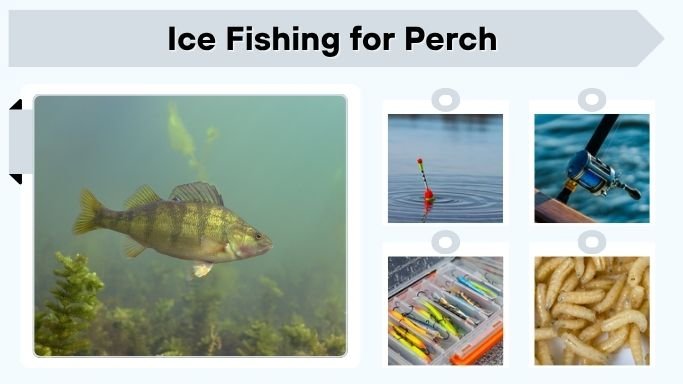
Ice fishing for perch is popular because yellow perch stay active under the ice and often travel in schools. When you find one, there is a good chance more are nearby. The key is knowing where perch hold in winter, how to jig correctly, and which baits, jigs, spoons, rods, and rigs work best in cold water.
What Makes Perch Good for Ice Fishing?
Perch are one of the most reliable fish to target during winter. They feed through the ice season, move in groups, and often bite small jigs, spoons, and live bait. Yellow perch are especially popular because they are fun to catch and excellent for eating.
During winter, perch often move between shallow weed beds, flats, drop-offs, and deeper basins. Their location can change throughout the day, so successful anglers usually drill multiple holes and keep moving until they find active fish.
Why Perch Bite Under the Ice
Perch still need to feed in cold water, but they usually become more selective. They may chase small minnows, insects, larvae, tiny crustaceans, and other small food sources. Because their winter meals are often small, compact lures and subtle jigging usually work better than oversized baits.
Perch often feed more actively during daylight hours, especially in the morning and late afternoon. On clear lakes, they may bite better when light levels are lower. On stained water, they may remain active longer during the day.
Best Ice Fishing Conditions for Perch
Good perch fishing often depends on stable weather, safe ice, and the right lake structure. Sudden pressure changes can slow the bite, while steady weather often improves activity.
- Safe, clear ice with enough thickness
- Healthy weed beds near deeper water
- Mud flats with insect life
- Drop-offs close to feeding areas
- Basin edges where perch school
- Morning and late-afternoon feeding windows
- Light tackle and small presentations
Where to Find Perch Ice Fishing
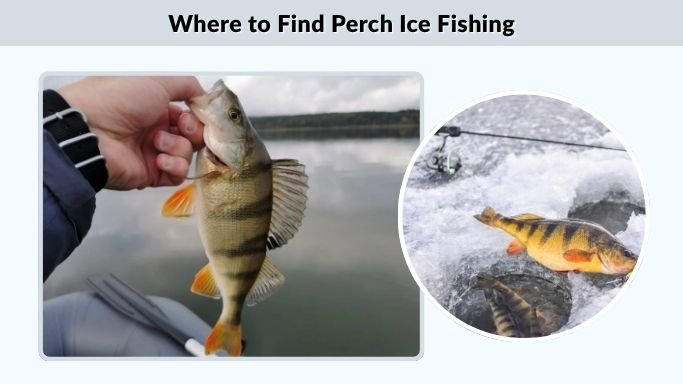
Finding perch is the biggest part of ice fishing success. Perch are schooling fish, so the goal is not just to drill one hole and wait. You need to search likely areas until you locate fish.
Early in the ice season, perch often stay near shallow weeds and flats. In midwinter, they may slide deeper into basins and soft-bottom areas. Late in the season, they may move back toward shallower feeding zones as oxygen and baitfish patterns change.
Early Ice Locations
During early ice, look near green weeds, inside turns, points, and shallow flats. These places hold minnows, insects, and oxygen. Perch may cruise through the weeds in small groups, so drilling several holes around the weed edge can help you stay on them.
Early ice perch are often aggressive. Small jigs tipped with wax worms, spikes, or minnow heads can work very well. Light spoons can also attract larger perch when fish are active.
Midwinter Perch Locations
Midwinter can be harder because perch often move deeper. Focus on soft-bottom flats, basin edges, and transitions where mud meets sand or gravel. Mud bottoms are important because they can hold insect larvae and other food.
This is the time when electronics, depth maps, and hole-hopping become very useful. If you mark fish but they do not bite, change your lure size, color, bait, or jigging rhythm before moving.
Late Ice Locations
Late ice can produce some of the best perch fishing of the season. As light increases and oxygen improves, perch may return toward shallower flats, weed edges, and spawning approach areas.
Late ice fish can be active, but safety becomes more important. Ice can weaken quickly near shorelines, current areas, pressure cracks, and dark spots.
Best Baits for Perch Ice Fishing
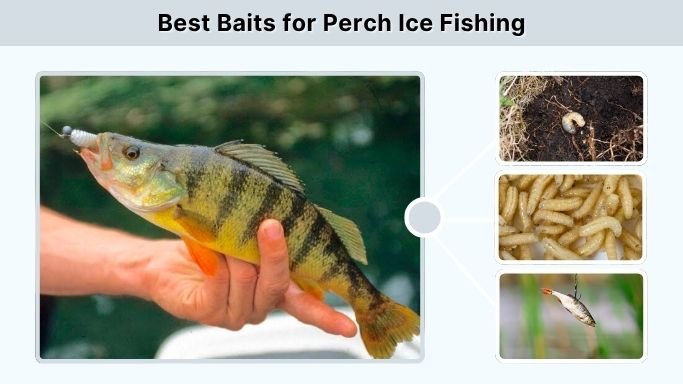
The best bait for perch ice fishing is usually small, natural, and easy for perch to inhale. Perch have relatively small mouths, so downsizing can make a big difference. Live bait often works best when fish are finicky.
Popular options include wax worms, spikes, minnows, minnow heads, maggots, and small plastics. Some days perch want movement. Other days they prefer a nearly still bait.
Top Perch Ice Fishing Baits
- Wax worms: Great for small jigs and finicky perch.
- Spikes or maggots: Excellent for subtle presentations.
- Minnow heads: Good on spoons and larger jigs.
- Small live minnows: Useful for bigger perch.
- Eurolarvae: A common choice for panfish ice fishing.
- Soft plastics: Good when fish are active or bait is limited.
- Perch eyes: Traditional bait in some regions where legal.
Live Bait vs Artificial Bait
Live bait is usually better when perch are slow or pressured. It adds scent and natural movement, which can convince fish to bite. Artificial bait is useful when fish are active because it allows you to fish faster and avoid rebaiting after every catch.
Many anglers use both together. A small jig tipped with a wax worm or spike is a classic perch setup. A small spoon tipped with a minnow head is also excellent when targeting larger perch.
Best Ice Fishing Lures for Perch
Perch lures should match the size of the food they are eating. Small tungsten jigs, spoons, rattle baits, jigging minnows, and soft plastics all catch perch through the ice. The best lure depends on fish mood, water clarity, and depth.
If perch are aggressive, start with a flashy spoon or jigging bait to call fish in. If they follow but do not bite, switch to a smaller jig with live bait.
Best Lure Types for Ice Perch
| Lure Type | Best Use | Tip |
| Tungsten jig | Finicky perch and deep water | Tip with wax worms or spikes |
| Small spoon | Calling fish from a distance | Add a minnow head |
| Jigging minnow | Larger perch | Use sharp lifts and pauses |
| Soft plastic jig | Active fish | Match small insects or minnows |
| Dropper spoon | Suspended perch | Use a tiny hook below the spoon |
| Rattle bait | Stained water or aggressive fish | Use short, controlled lifts |
Best Ice Fishing Jigs for Perch
Tungsten jigs are very popular because they are small but heavy. They sink fast, keep your line tight, and help you feel light bites. This is useful when fishing deeper water or when perch are barely touching the bait.
Small horizontal jigs work well when perch want a natural look. Vertical jigs can be better when fish are tight to the bottom. Keep several sizes ready because perch can change preferences quickly.
Best Ice Fishing Spoons for Perch
Small spoons are excellent search lures. They flash, flutter, and attract fish from a distance. Gold, silver, glow, orange, chartreuse, and perch-pattern spoons can all work.
For a stronger bite trigger, tip the spoon with a minnow head, wax worm, or small piece of bait. If fish rush in but do not bite, reduce the spoon size or switch to a jig.
Perch Ice Fishing Rod, Line, and Gear
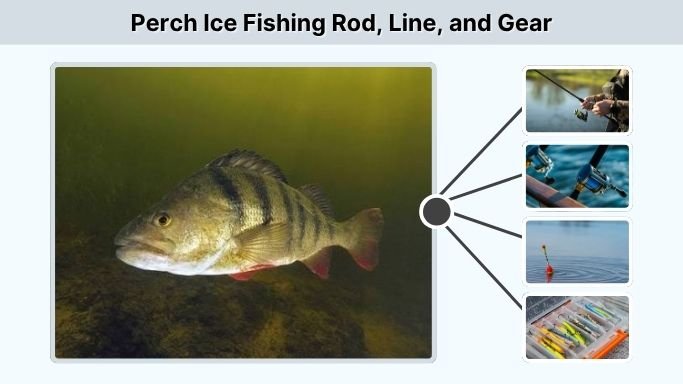
Perch fishing does not require heavy equipment. A light or ultralight ice rod is usually enough. The setup should be sensitive so you can detect soft bites, but strong enough to handle jumbo perch.
A good perch rod has a soft tip and enough backbone to set the hook. Many anglers prefer rods around 24–32 inches, depending on whether they fish inside a shelter or outside.
Recommended Perch Ice Fishing Setup
- Rod: Light or ultralight ice rod
- Length: 24–32 inches for most anglers
- Reel: Small spinning reel
- Line: 2–6 lb test
- Jigs: Small tungsten or lead jigs
- Spoons: Small flutter spoons
- Bait: Wax worms, spikes, minnows, or minnow heads
- Tools: Ice auger, scoop, electronics, safety picks
Best Line for Perch Ice Fishing
Light line helps small lures move naturally. Two- to four-pound test is common for clear water and finicky perch. Four- to six-pound test can work better around weeds, deeper water, or bigger fish.
Fluorocarbon is useful because it is less visible underwater. Monofilament is easier to handle in cold weather. Many anglers use a main line with a fluorocarbon leader for better stealth.
How to Catch Perch Ice Fishing
The best way to catch perch through the ice is to stay mobile and adjust quickly. Perch may be under you one minute and gone the next. Instead of waiting too long in a dead hole, drill a grid and keep checking different depths.
Use your lure to attract fish, then slow down when they come close. Many bites happen when the bait pauses or slowly rises.
Step-by-Step Perch Ice Fishing Method
- Choose a lake known for yellow perch.
- Start near weeds, flats, drop-offs, or basin edges.
- Drill several holes across different depths.
- Use a spoon or jigging bait to search.
- Watch for marks on electronics if available.
- Switch to a small jig when fish get picky.
- Tip your hook with live bait.
- Keep moving if you do not see or catch fish.
- Use a slow lift-and-pause motion.
- Set the hook quickly when the rod tip moves.
Jigging Techniques for Perch
Jigging for perch should not always be aggressive. Start with small lifts to attract attention. Then pause and watch your line or rod tip. If a fish comes in but does not bite, raise the bait slowly. Perch often follow upward and bite as the lure escapes.
If they are aggressive, use sharper lifts and let the lure flutter down. If they are negative, barely shake the bait or hold it still just above the bottom.
Best Perch Ice Fishing Rigs
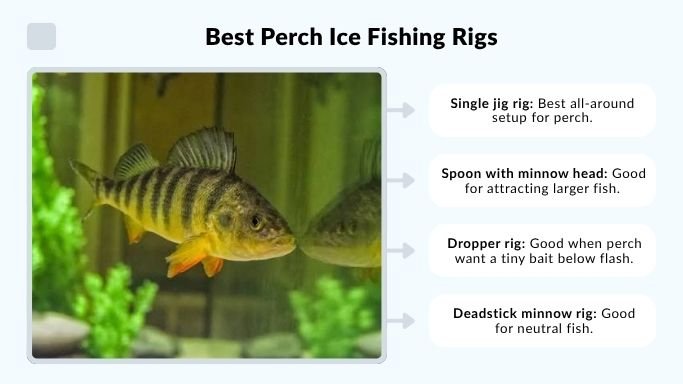
Perch rigs are usually simple. A single jig with bait is often enough. However, dropper rigs, spoon-and-chain rigs, and deadstick setups can also work well.
A deadstick is a second rod with a live minnow or bait held nearly still. It can catch perch that are interested but not willing to chase.
Effective Ice Fishing Rigs for Perch
- Single jig rig: Best all-around setup for perch.
- Spoon with minnow head: Good for attracting larger fish.
- Dropper rig: Good when perch want a tiny bait below flash.
- Deadstick minnow rig: Good for neutral fish.
- Tungsten jig with wax worm: Great for finicky perch.
- Soft plastic jig: Good for active fish and fast fishing.
Drop Shot Ice Fishing for Perch
A drop shot rig can work well when perch are close to the bottom. Place a small hook above a sinker, then bait it with a wax worm, spike, or small minnow. This keeps the bait just above the bottom where perch can see it.
This rig is helpful when fish are feeding on bottom insects or when they are not willing to chase fast-moving lures.
Ice Fishing for Jumbo Perch
Jumbo perch are larger, older fish that often behave differently from small perch. They may stay deeper, travel in smaller groups, and prefer larger meals. If you only catch tiny perch, try moving away from the main school and fishing nearby deeper edges.
Bigger perch often respond well to small spoons, jigging minnows, minnow heads, and slightly larger jigs.
Tips for Catching Bigger Perch
To catch jumbo perch, avoid staying too long in areas full of very small fish. Move along basin edges, points, and deeper flats until you mark larger fish. Use a slightly bigger spoon or jigging bait first, then downsize if they refuse.
Bigger perch may bite lightly, so keep your line tight and use a sensitive rod. Many jumbo perch are caught when the lure is paused or slowly lifted away from the fish.
Common Mistakes When Ice Fishing Perch
Many anglers struggle with perch because they fish too large, too fast, or too long in one place. Perch can be aggressive, but they can also be very selective in cold water.
Mistakes to Avoid
- Using lures that are too large
- Fishing only one hole all day
- Ignoring deeper basin areas
- Jigging too aggressively when fish are slow
- Not tipping lures with bait
- Using line that is too heavy
- Missing light bites
- Staying with one color or lure too long
- Forgetting ice safety gear
- Overlooking late-day feeding windows
FAQs
What is the best bait for perch ice fishing?
Wax worms, spikes, maggots, minnows, and minnow heads are some of the best baits for perch ice fishing. Small live bait usually works best when perch are finicky. For bigger perch, a small spoon tipped with a minnow head can be very effective.
What are the best ice fishing lures for perch?
The best lures include small tungsten jigs, tiny spoons, jigging minnows, soft plastics, and dropper spoons. Use spoons to attract perch from a distance, then switch to a smaller jig if they follow but do not bite. Tipping the lure with bait often improves results.
Where do you find perch when ice fishing?
Perch are commonly found near weed beds, flats, drop-offs, basin edges, and soft mud bottoms. Early in the season, they may stay shallow near weeds. In midwinter, they often move deeper. Late in the season, they may return toward shallower feeding areas.
Do perch bite at night ice fishing?
Perch can bite near low-light periods, but they are mostly daytime feeders compared with species like walleye or crappie. The best times are often morning and late afternoon. Night fishing can work in some lakes, but it is usually not the most reliable time for perch.
What rod is best for perch ice fishing?
A light or ultralight ice rod is best for perch. A soft tip helps detect light bites, while enough backbone helps set the hook on bigger fish. A 24- to 32-inch rod with 2- to 6-pound line is a good general perch ice fishing setup.