
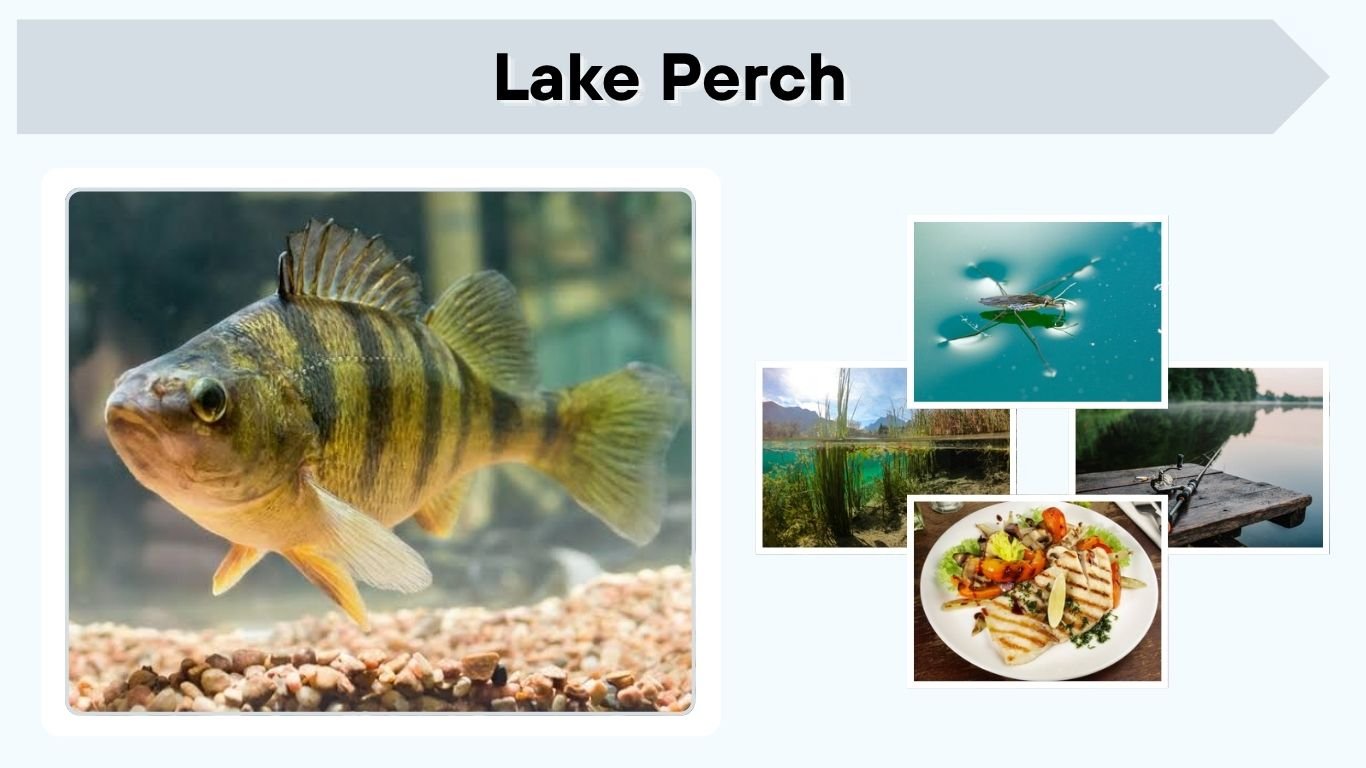
Lake perch is a popular freshwater fish known for its yellow-gold body, dark vertical bars, mild flavor, and strong reputation as a panfish. In North America, “lake perch” usually refers to yellow perch, especially when people talk about Lake Erie perch, Lake Michigan perch, or yellow lake perch. Anglers love this fish because it often schools in groups, bites well on simple bait, and makes excellent table fare. This guide explains what lake perch are, where they live, how to identify them, how to fish for them, and how they compare with ocean perch.
What Is Lake Perch?
Lake perch is a common name often used for yellow perch, a freshwater fish with the scientific name Perca flavescens. The U.S. Fish & Wildlife Service lists yellow perch as a fish commonly found in clear water near vegetation, and it notes their common length is about 7.5 inches, with much larger individuals possible.
Yellow perch are part of the perch family and are closely related to walleye. They are not the same as “ocean perch,” which is usually a market name for different saltwater fish. This is why the keyword “ocean perch vs lake perch” is important for searchers who want to know what they are buying, cooking, or catching.
| Feature | Lake Perch / Yellow Perch |
| Common name | Lake perch, yellow perch |
| Scientific name | Perca flavescens |
| Water type | Freshwater |
| Main habitat | Lakes, ponds, slow rivers, weedy areas |
| Body color | Yellow to gold with dark bars |
| Popular use | Fishing and cooking |
| Flavor | Mild, sweet, flaky |
Lake Perch Identification
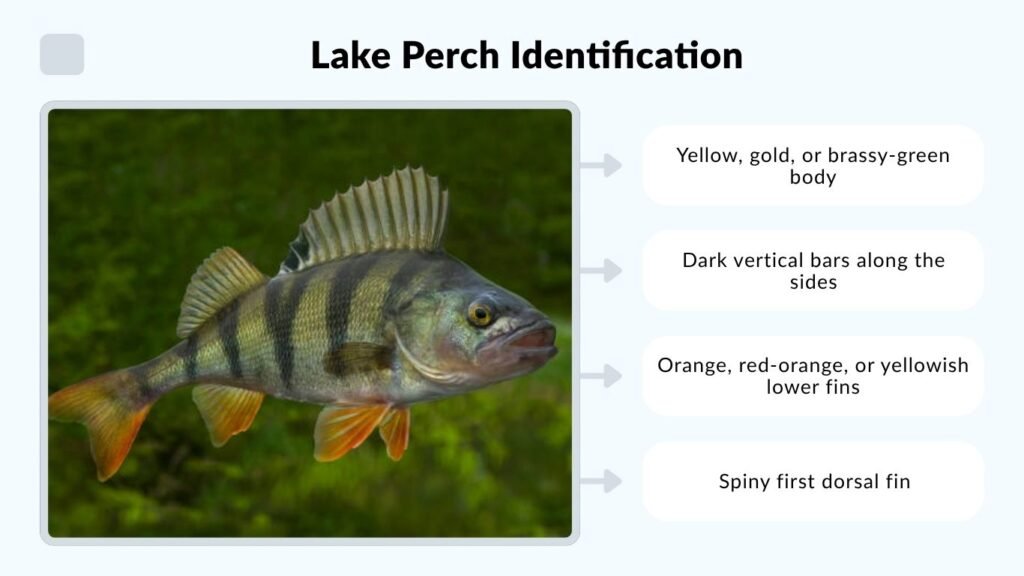
Lake perch are easy to recognize once you know the main field marks. They have a bright yellow to brassy body, vertical dark bars, and orange or reddish lower fins. Iowa DNR describes yellow perch as having bright yellow to brassy-green sides, a lighter belly, and dark vertical bars.
Key Identification Features
- Yellow, gold, or brassy-green body
- Dark vertical bars along the sides
- Orange, red-orange, or yellowish lower fins
- Spiny first dorsal fin
- Smaller mouth than bass or walleye
- Light-colored belly
- Schooling behavior
- Commonly caught in lakes, bays, and weedy areas
Young perch may look paler, while mature perch often show stronger yellow color and darker bars. In clear water, they can look especially bright.
Where Do Lake Perch Live?
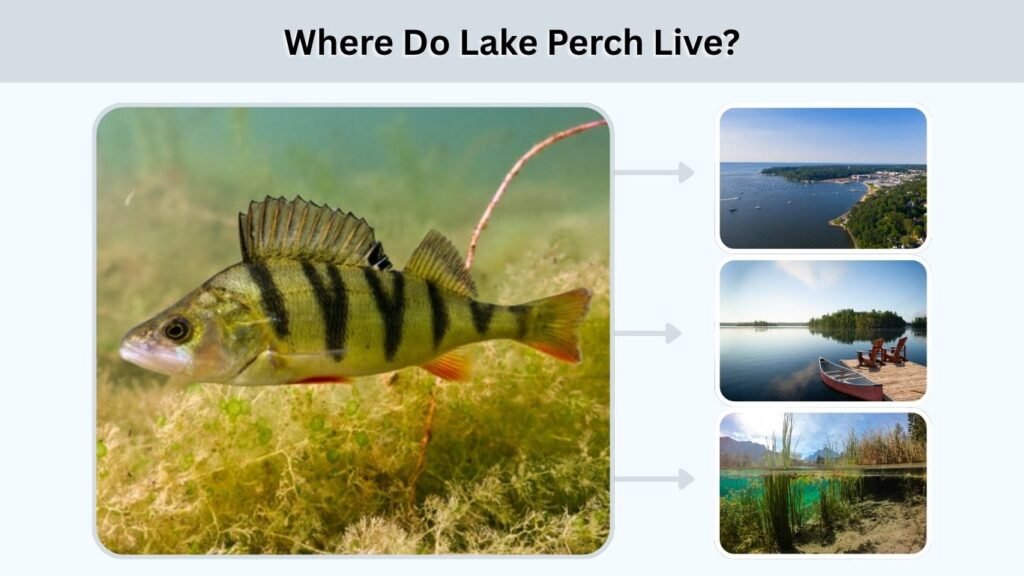
Lake perch are mostly freshwater fish. They live in lakes, ponds, reservoirs, slow rivers, and connected bays. Fisheries and Oceans Canada says yellow perch are found widely in Canada, including the Great Lakes drainage system, and they are especially abundant in many Manitoba lakes.
In the United States, yellow perch are strongly associated with northern and Great Lakes states. Popular search areas include Lake Erie perch, Lake Michigan perch, Devils Lake perch, Lake Cascade perch, Lake Gogebic perch, and Wisconsin lake perch.
Best Lake Perch Habitat
Lake perch often use shallow to moderate-depth areas with weeds, structure, sand, gravel, or soft bottom. Minnesota DNR notes that yellow perch are prey for many larger fish and fish-eating birds, which helps explain why perch often school and use cover.
Good perch areas often include:
- Weed beds
- Drop-offs near flats
- Sandy or gravel bottoms
- Docks and piers
- Bays and harbors
- Submerged vegetation
- Points and channel edges
Perch may move deeper in summer or winter, but they often return to shallower feeding areas when conditions are right.
Lake Erie Perch
Lake Erie perch is one of the most searched forms of lake perch. Lake Erie is famous for yellow perch fishing, especially in areas of Ohio, Pennsylvania, Michigan, New York, and Ontario waters. Keywords like “lake erie perch report,” “lake erie perch fishing report today,” “lake erie perch charters,” and “lake erie perch limit” show that many users want current fishing information.
Lake Erie rules can change by year and location. Pennsylvania Fish & Boat Commission announced 2026 Lake Erie daily creel limits after the Lake Erie Committee set yellow perch allowable catch numbers for Pennsylvania waters. Because limits vary by state, zone, and season, anglers should always check the official state or provincial regulation page before fishing.
Lake Michigan Perch
Lake Michigan perch is another major search topic. Perch fishing on Lake Michigan can be popular from piers, harbors, boats, and shoreline areas, depending on local conditions. Keywords like “perch fishing Lake Michigan,” “Lake Michigan perch fishing reports,” and “yellow perch recruitment Lake Michigan” show both angler and conservation interest.
Michigan DNR states that its 2026 fishing regulations are in effect until March 31, 2027, which is a reminder that anglers should check current official regulations before keeping perch. Regulations may include daily possession limits, size rules, special lake rules, or seasonal changes.
What Do Lake Perch Eat?
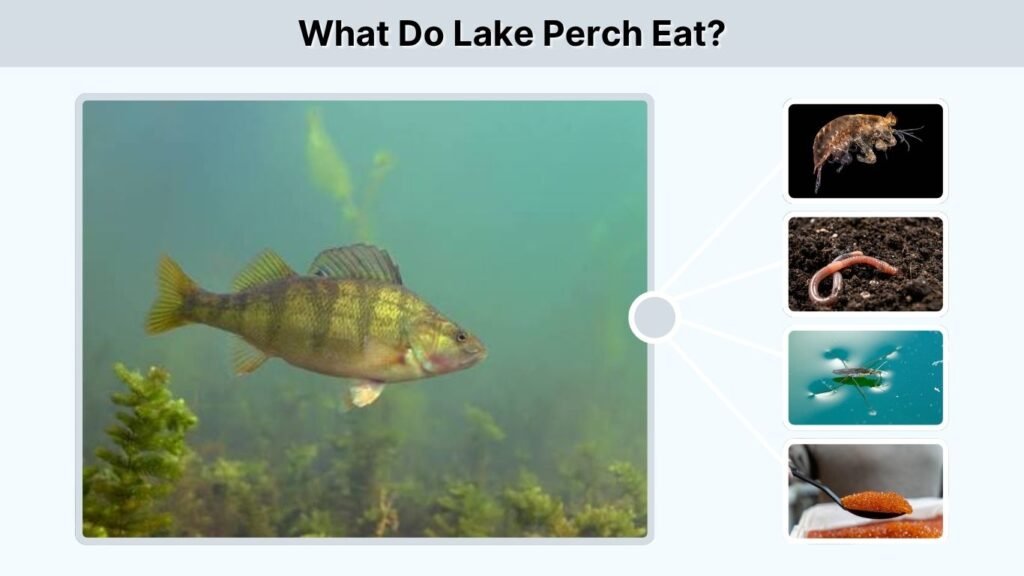
Lake perch eat different foods as they grow. Young perch feed heavily on tiny aquatic animals, while larger perch eat insects, larvae, small fish, eggs, and crustaceans. The Animal Diversity Web notes that yellow perch are found mainly in lakes and larger river impoundments, and that clear water is important because excessive turbidity can reduce habitat quality.
Common foods include:
- Zooplankton
- Midge larvae
- Aquatic insects
- Small minnows
- Fish eggs
- Crayfish
- Worms
- Small invertebrates
This diet explains why live bait works so well for perch fishing. Minnows, worms, and small insect-like presentations often match what perch naturally eat.
How to Fish for Lake Perch
Lake perch fishing is popular because it can be simple, affordable, and beginner-friendly. Many anglers catch perch with light spinning rods, small hooks, live bait, and basic rigs. Perch often travel in schools, so once you catch one, more fish may be nearby.
Best Baits for Lake Perch
- Live minnows
- Worms
- Nightcrawler pieces
- Wax worms
- Spikes or maggots for ice fishing
- Small jigs
- Small spoons
- Soft plastics that imitate insects or minnows
Small hooks are usually better than large hooks because perch have relatively small mouths. A light line also helps detect soft bites.
Best Lake Perch Rigs
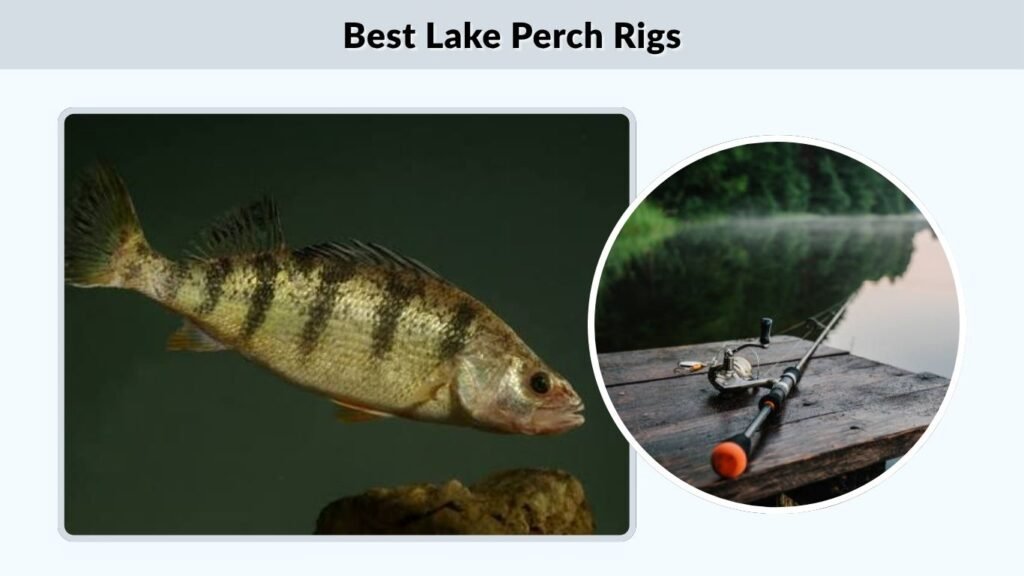
Perch rigs are often simple. For open-water fishing, many anglers use a two-hook spreader rig, drop-shot rig, slip bobber, or small jig. For ice fishing, small tungsten jigs, spoons, and live bait are common.
| Rig Type | Best Use |
| Slip bobber | Shallow water, weeds, docks |
| Drop-shot rig | Deeper water and light bites |
| Two-hook perch rig | Finding schools and fishing bait near bottom |
| Small jig | Active fish and ice fishing |
| Jigging spoon | Deeper schools and aggressive perch |
The best rig depends on depth, water clarity, current, and how active the fish are. If perch are biting lightly, smaller hooks and lighter presentations often work better.
Lake Perch Fishing by Season
Lake perch behavior changes through the year. In spring, perch may move shallow for spawning and feeding. In summer, they may spread across weed beds, flats, and deeper edges. In fall, they often feed actively before winter. In winter, ice anglers target schools near bottom structure, basin edges, and weed lines.
Seasonal Fishing Tips
Spring is a good time to check shallow bays and warmer water. Summer fishing often works best early or late in the day, or near deeper structure. Fall can produce larger perch because fish feed heavily. Winter perch fishing can be excellent through the ice, especially when anglers find active schools.
Ocean Perch vs Lake Perch
Many people search “ocean perch vs lake perch” because fish markets and restaurants may use similar names. Lake perch usually means freshwater yellow perch. Ocean perch usually refers to saltwater rockfish or redfish species, depending on region and market labeling.
Lake perch has a mild, sweet flavor and delicate flakes. Ocean perch can also be mild, but it is not the same species. If you are buying fish, check the label carefully. “Yellow perch” is the clearer name for true lake perch.
| Comparison | Lake Perch | Ocean Perch |
| Water type | Freshwater | Saltwater |
| Common species | Yellow perch | Often rockfish/redfish market names |
| Flavor | Mild, sweet, delicate | Mild, sometimes firmer |
| Common source | Lakes and inland waters | Ocean fisheries |
| Best search term | Yellow perch | Ocean perch or rockfish |
Lake Perch Taste and Recipes
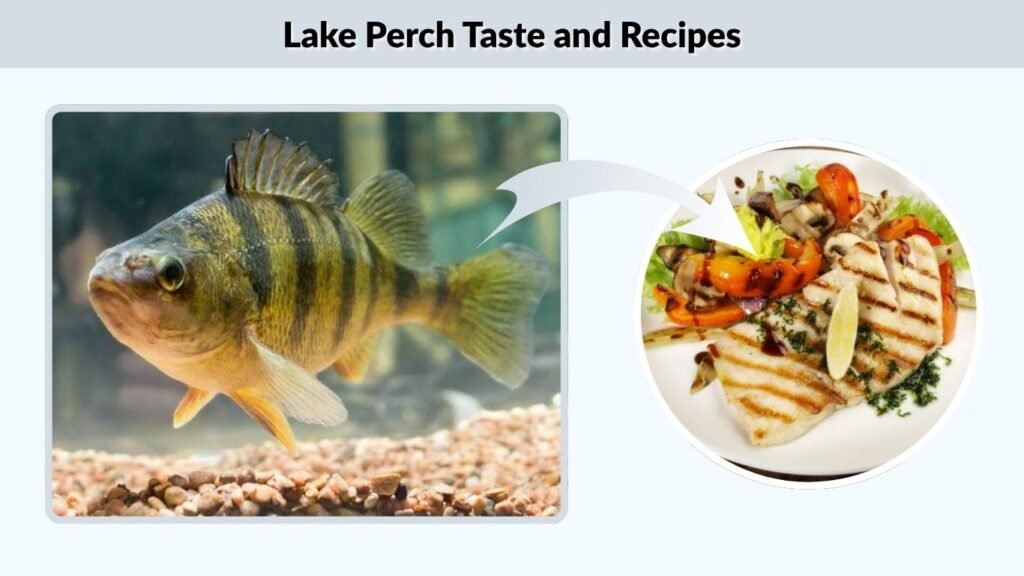
Lake perch is popular because it tastes mild, clean, and slightly sweet. It is often fried, baked, broiled, or used in fish dinners. Keywords like “lake perch recipes,” “fried lake perch,” “recipes for lake perch,” and “lake perch dinner near me” show strong food interest.
Simple cooking methods work best because perch fillets are delicate. A classic preparation is lightly breaded fried lake perch with lemon, tartar sauce, fries, or coleslaw. Baked lake perch can also be seasoned with butter, garlic, paprika, herbs, and lemon.
Popular Ways to Cook Lake Perch
- Pan-fried lake perch
- Beer-battered perch
- Baked perch with lemon butter
- Air-fried perch fillets
- Perch tacos
- Perch sandwiches
- Perch fish fry dinners
Avoid overcooking. Perch fillets are thin, so they cook quickly.
Lake Perch for Sale and Near Me Searches
Searches like “lake perch for sale,” “lake perch fillets,” “lake perch dinner near me,” and “lake perch near me” show commercial and local intent. These users may want restaurants, fish markets, charters, or fishing spots.
For SEO, a strong lake perch article can include a local section if the website targets a specific region. For example, a restaurant page could target “lake perch dinner near me,” while a fishing guide could target “Lake Erie perch charters” or “perch fishing Lake Michigan.”
Perch Lake vs Lake Perch
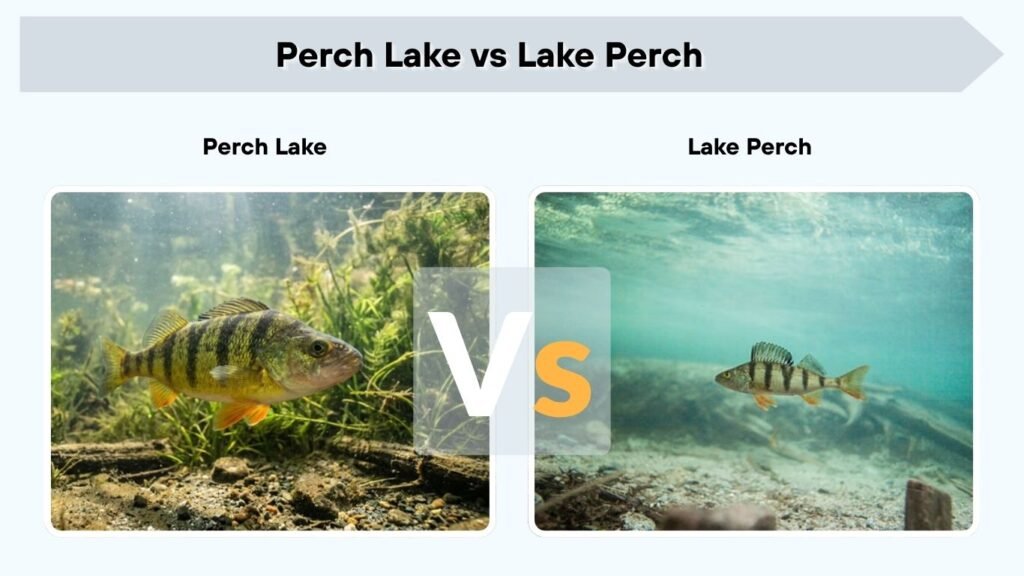
The keyword list also includes terms such as “perch lake,” “Perch Lake campground,” “Perch Lake Wisconsin,” “Perch Lake Michigan,” “Perch Lake NY,” and “The Perch on Lake.” These are different from lake perch as a fish.
“Lake perch” usually means fish. “Perch Lake” usually means a place, campground, lake, lodge, road, or business name. An SEO article about the fish should not try to rank for all local place names unless it has a dedicated travel or local directory section.
Are Lake Perch Good to Eat?
Yes, lake perch are considered excellent eating fish. Their flesh is white, mild, and flaky. They are especially popular in the Great Lakes region, where yellow perch dinners are a traditional menu item in many restaurants.
As with any fish, anglers should follow local fish consumption advisories. Some waters may have mercury, PCB, or other advisories that affect how often certain people should eat locally caught fish. Check the official advisory for your state, province, or lake before eating a lot of wild-caught fish.
FAQs
Is lake perch the same as yellow perch?
In most North American fishing and food contexts, lake perch usually means yellow perch. Yellow perch is the clearer species name, while lake perch is a common name often used by anglers, restaurants, and fish markets.
Where is the best place to catch lake perch?
Good places to catch lake perch include weed beds, docks, bays, drop-offs, sandy flats, gravel areas, and lake basins where schools gather. Lake Erie, Lake Michigan, Devils Lake, and Lake Cascade are popular perch search topics.
What is the best bait for lake perch?
Minnows, worms, nightcrawler pieces, wax worms, and small jigs are among the best baits for lake perch. Small hooks and light line usually work well because perch have smaller mouths and may bite softly.
What is the difference between ocean perch and lake perch?
Lake perch usually means freshwater yellow perch. Ocean perch usually refers to saltwater fish sold under that market name, often rockfish-type species. They are not the same fish, even though both may be used in mild white-fish recipes.
Are lake perch good to eat?
Yes, lake perch are widely liked for their mild, sweet flavor and flaky white meat. They are commonly fried, baked, or served as fish dinners. Always follow local fishing regulations and fish consumption advisories.