
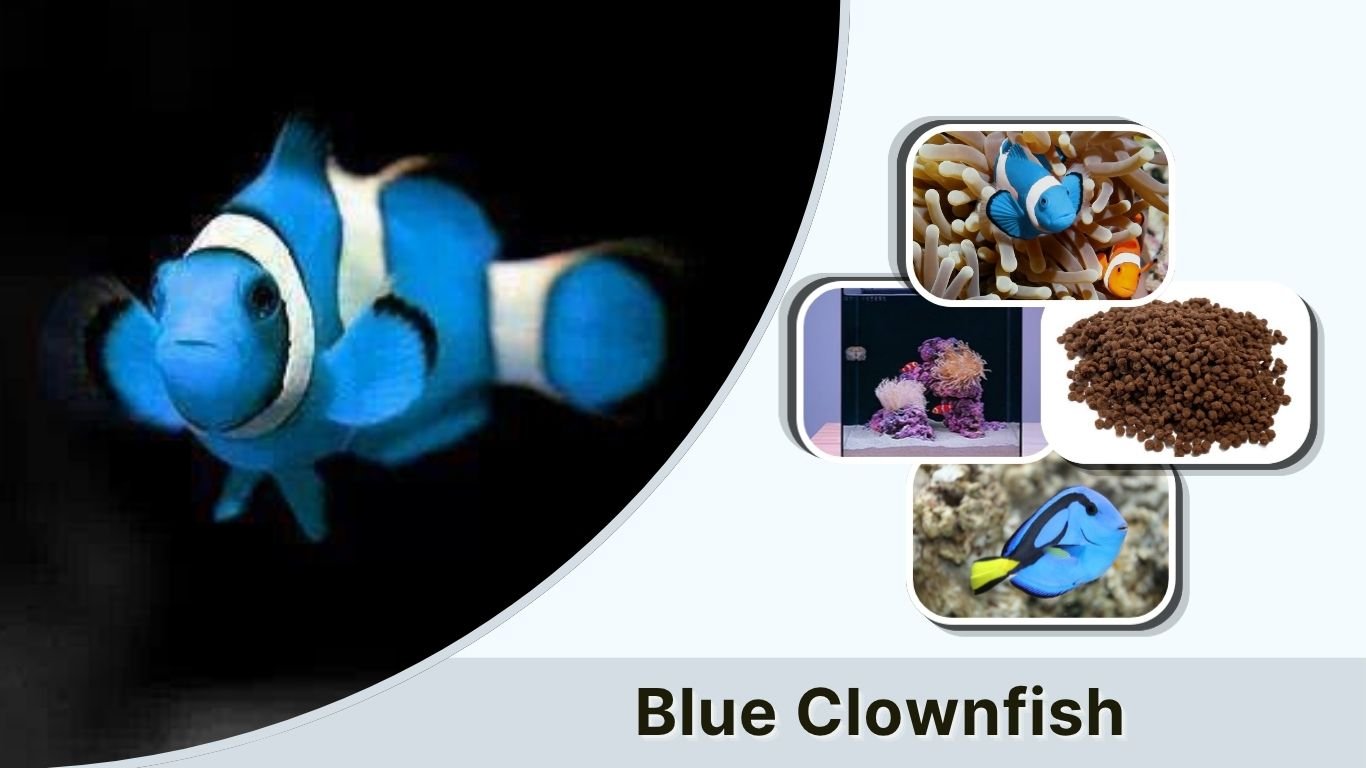
Blue clownfish attract attention because their color sounds rare, unusual, and eye-catching. Many people search for them after seeing edited images, designer clownfish listings, games, toys, or blue tangs kept with clownfish. In real aquariums, however, naturally blue clownfish are not standard clownfish species. Most clownfish are orange, black, white, red, brown, or designer-patterned rather than truly blue.
Are Blue Clownfish Real?
The simple answer is: naturally blue clownfish are not a normal recognized clownfish type in the same way that ocellaris, percula, maroon, or clarkii clownfish are. Most true clownfish species do not have bright blue bodies in the wild.
That said, the phrase “blue clownfish” can mean different things online. Some people use it for edited photos, fantasy fish, toys, plush characters, aquarium games, or heavily blue-lit aquarium images. Others use it for designer clownfish names that include words like “blue,” “phantom,” or “lightning.”
This is why blue clownfish searches can be confusing. A fish may look blue in a photo because of actinic reef lighting, image editing, or marketing language, but that does not always mean it is a naturally blue clownfish species.
Why Do Some Clownfish Look Blue Online?
Many saltwater aquariums use blue reef lighting. This lighting makes corals glow and can change how fish colors appear in photos and videos. A black, white, or pale clownfish may look slightly blue under strong blue lights.
Photos can also be edited or filtered. Some “electric blue clownfish” images online are not reliable examples of normal aquarium fish. A very bright neon-blue clownfish should be viewed carefully before assuming it is a real, commonly available pet fish.
There are also game-related and toy-related searches, such as blue clownfish in mobile aquarium games or blue clownfish plush toys. These are not the same as real marine fish available for aquariums.
Blue Clownfish vs Blue Tang
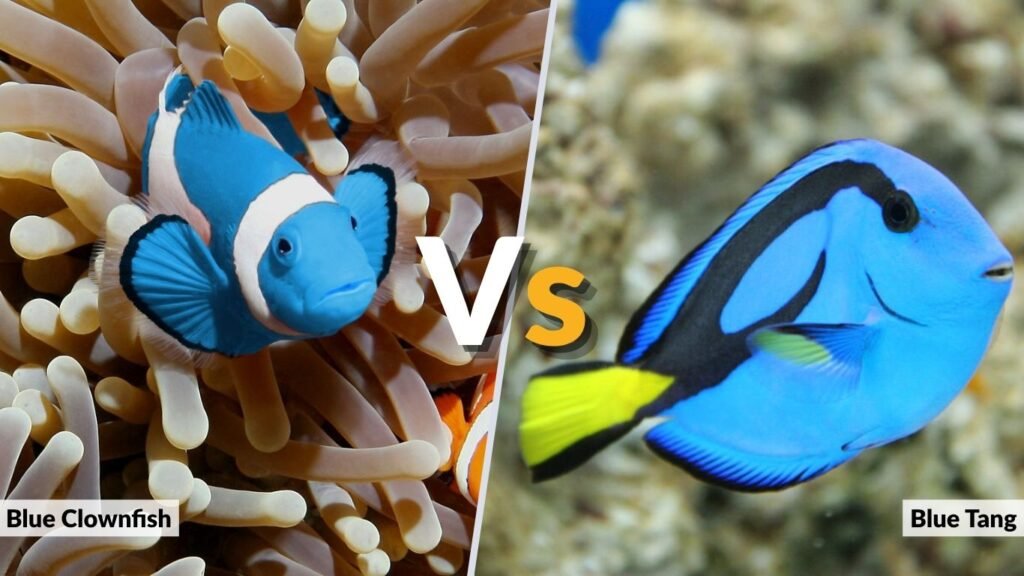
A major reason people search for blue clownfish is confusion with the blue tang. The blue tang is the bright blue fish often associated with “Dory,” while the clownfish is the orange-and-white fish associated with “Nemo.”
Blue tangs and clownfish are completely different fish. A blue tang has a flat, oval blue body with a yellow tail and black markings. A clownfish is smaller, rounder, and usually orange, black, white, red, or patterned.
| Feature | Blue Clownfish Search Term | Blue Tang |
|---|---|---|
| Real common aquarium fish? | Usually not a natural blue clownfish species | Yes |
| Common color | Often edited, designer-named, or lighting-based | Bright blue, black, and yellow |
| Body shape | Clownfish-shaped if real | Flat, oval tang body |
| Famous association | Often confused with clownfish morphs or games | “Dory” type fish |
| Tank needs | Depends on actual clownfish species | Large marine tank with swimming space |
| Beginner-friendly? | Ocellaris clownfish are often beginner-friendly | Blue tangs need more space and experience |
What Are Electric Blue or Blue Phantom Clownfish?
Some online listings use names such as electric blue clownfish, blue lightning clownfish, or electric blue phantom clownfish. These names may refer to novelty listings, designer concepts, edited examples, or extremely unusual claims. One retail listing describes “Electric Blue Phantom Designer Clownfish” as bright blue genetically modified fish, but such listings should be treated with caution and researched carefully before buying.
Before purchasing any “blue clownfish for sale,” ask the seller for clear, unedited photos under white lighting, the scientific name, captive-bred status, feeding history, and whether the color is natural, selectively bred, lighting-dependent, or otherwise altered.
For most hobbyists, it is better to choose established captive-bred clownfish varieties such as ocellaris, percula, black ocellaris, snowflake, storm, platinum, maroon, or Wyoming White.
Blue Stripe Clownfish and Blue Line Clownfish
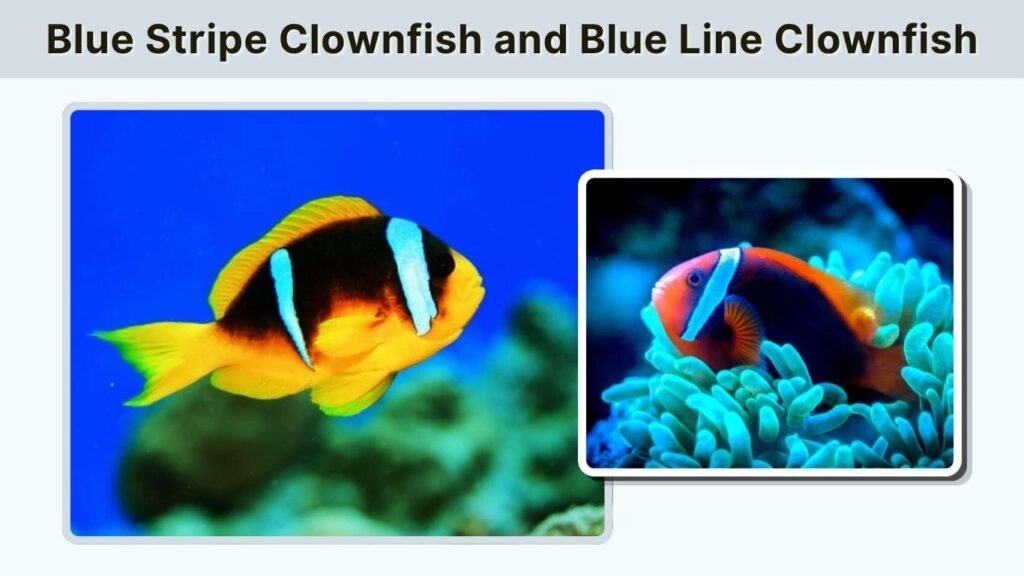
Some searches mention blue stripe clownfish or blue line clownfish. In many cases, this may refer to a slight bluish sheen, a common name used by a seller, or confusion with another marine fish. Clownfish may show subtle iridescence under certain lighting, but that is different from having a fully blue body.
If you see a fish labeled as a blue stripe clownfish, do not rely on the name alone. Check the scientific name and compare it with reputable clownfish references. Retail names can vary widely, especially with designer clownfish.
Rare Blue Clownfish: What Buyers Should Know
Rare fish names can be exciting, but they can also be misleading. The marine aquarium trade uses many designer names to describe line-bred colors and patterns. Some names are widely recognized, while others are seller-specific.
A rare blue clownfish may be:
- A normal clownfish photographed under blue lighting
- A designer clownfish with a blue-sounding name
- An edited or AI-generated image
- A toy, game fish, or fantasy fish
- A mislabeled species
- A novelty listing that needs verification
If the fish is expensive, ask for proof. A trustworthy seller should be able to explain the species, origin, care requirements, and whether the fish is captive-bred.
Blue Clownfish Care
If you actually buy a clownfish being sold as blue, its care will depend on the true species. Most designer clownfish are based on ocellaris, percula, or maroon clownfish. Ocellaris clownfish are among the most popular captive-bred saltwater fish and are often considered suitable for beginners with a properly cycled marine aquarium.
A clownfish tank should be fully cycled before adding fish. Ammonia and nitrite should be zero. Salinity, temperature, pH, and nitrate should be stable. Clownfish are hardy compared with many marine fish, but they still suffer in unstable or uncycled tanks.
Tank Size for Clownfish
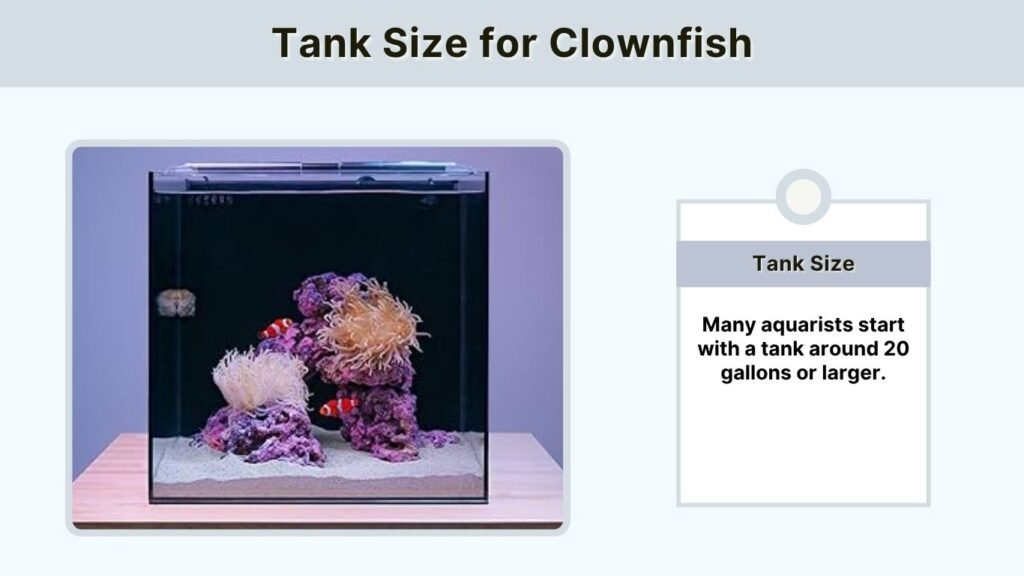
For a single ocellaris clownfish or a bonded pair, many aquarists start with a tank around 20 gallons or larger. A larger tank is easier to keep stable and gives more room for tank mates.
Maroon clownfish and some larger clownfish types need more space and can be more aggressive. If the “blue clownfish” is actually a maroon-based designer fish, research maroon clownfish behavior before buying.
Water Parameters for Clownfish
Clownfish need typical tropical marine water conditions. Stability matters more than chasing exact numbers.
| Parameter | General Clownfish Range |
|---|---|
| Temperature | About 74–79°F |
| Salinity | Around 1.020–1.026 specific gravity |
| pH | Around 8.1–8.4 |
| Ammonia | 0 ppm |
| Nitrite | 0 ppm |
| Nitrate | Keep low with water changes |
| Tank maturity | Fully cycled before adding fish |
Use a refractometer or reliable hydrometer for salinity. Sudden salinity swings can stress marine fish quickly.
What Do Blue Clownfish Eat?
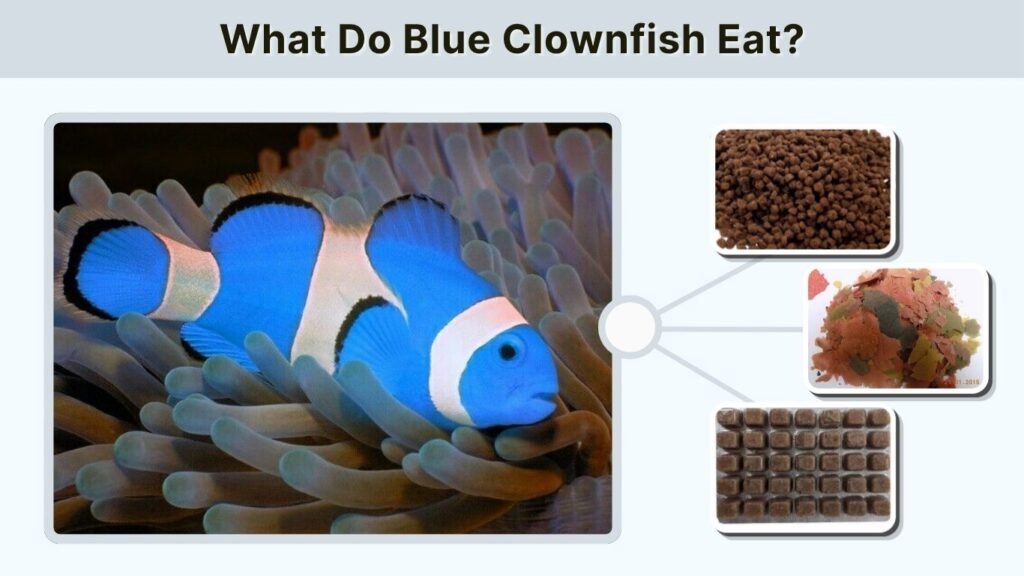
A clownfish sold as “blue” should eat like the clownfish species it actually belongs to. Most clownfish are omnivores and accept a variety of prepared foods. Captive-bred clownfish often adapt well to pellets and frozen foods.
Good foods include:
- Marine pellets
- Quality marine flakes
- Frozen mysis shrimp
- Brine shrimp
- Chopped seafood blends
- Copepods
- Algae-based foods
- Vitamin-enriched frozen foods
Feed small portions once or twice daily. Remove uneaten food and avoid overfeeding, because excess food can quickly lower water quality in marine tanks.
Can Blue Tang and Clownfish Live Together?
Yes, blue tangs and clownfish can live together in the right aquarium, but tank size is the major issue. Clownfish can live in smaller marine tanks, but blue tangs are active swimmers that need much more space. Compatibility guides often recommend a large tank for a blue tang, with some sources giving 75 gallons as a minimum for a single blue tang.
Clownfish are territorial around their chosen area, while blue tangs swim actively through open water. They usually do not compete for the same exact territory if the tank is large enough.
Clownfish and Blue Tang Tank Setup
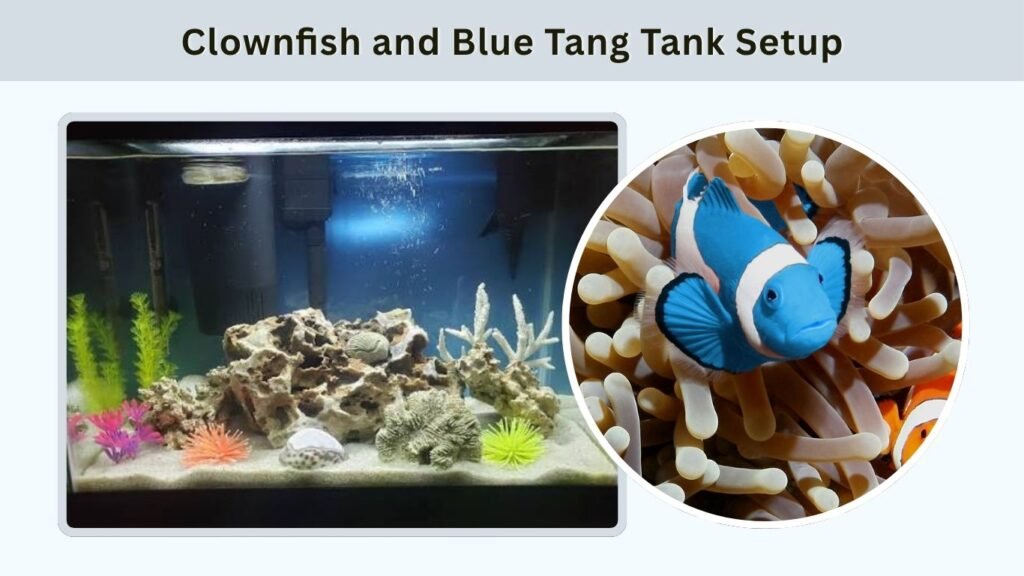
If you want a clownfish and blue tang in the same tank, plan the aquarium around the blue tang’s needs, not the clownfish’s minimum requirements. A tank that is fine for a pair of clownfish may be far too small for a blue tang.
A good setup should include:
- Large swimming space
- Stable saltwater conditions
- Strong filtration
- Live rock for shelter
- Open areas for the tang
- Peaceful tank mates
- Quarantine for new fish
- A varied diet for both species
Blue tangs can be more disease-prone than clownfish, especially when stressed. Quarantine and stable water quality are important.
Do Blue Tangs Eat Clownfish?
Healthy blue tangs do not normally eat clownfish. Blue tangs are not predators in the way lionfish or groupers are. They are generally herbivorous/omnivorous grazers that feed on algae and prepared marine foods.
However, fish compatibility is not only about diet. Stress, crowding, territory, and poor tank setup can cause problems. If a blue tang is cramped or a clownfish is overly territorial, aggression may occur.
Can a Blue Tang and Clownfish Mate?
No, a blue tang and clownfish cannot mate. They are different species from different fish groups. They may live in the same aquarium under the right conditions, but they cannot breed together.
Clownfish breed with compatible clownfish of the same or closely related type. Blue tangs breed with blue tangs in marine environments, and breeding them in home aquariums is very difficult.
Best Tank Mates for Clownfish Besides Blue Tang
If your tank is not large enough for a blue tang, choose smaller peaceful marine fish instead. Many aquarists keep clownfish with gobies, blennies, firefish, royal grammas, cardinalfish, chromis, and peaceful wrasses.
Avoid very aggressive damsels, large predatory fish, or fish that need very different conditions. Blue devil damsels, for example, can be territorial and may harass clownfish in smaller tanks.
Blue Clownfish Price and Buying Tips
Blue clownfish price can vary dramatically because many “blue” listings are unusual, novelty, or designer-related. Standard captive-bred clownfish are usually much cheaper than rare designer morphs. A listing claiming an electric blue or rare blue clownfish may be very expensive, but price does not prove authenticity.
Before buying, check:
- Scientific name
- Captive-bred status
- Actual color under white light
- Seller reputation
- Eating behavior
- Health signs
- Return or live-arrival policy
- Whether the image is edited
Avoid buying based only on a dramatic photo. Ask for a short video under normal lighting.
Common Health Issues in Clownfish
Whether your clownfish is orange, black, white, or sold as blue, watch for signs of illness. Clownfish may develop marine ich, Brooklynella, bacterial infections, fin damage, internal parasites, or stress-related symptoms.
Warning signs include:
- White spots
- White film or excess slime
- Heavy breathing
- Clamped fins
- Not eating
- Sitting at the bottom
- Scratching against rocks
- Torn fins
- Stringy white poop
If symptoms appear, test water first and consider quarantine. Marine fish diseases can spread quickly, so early action matters.
Should You Buy a Blue Clownfish?
A blue clownfish can be interesting as a search topic, but most hobbyists should be cautious. If you want a real aquarium clownfish, choose a healthy captive-bred ocellaris, percula, maroon, or established designer morph from a reputable seller.
If you specifically want a blue-looking fish, a blue tang, blue chromis, or another naturally blue marine fish may be more realistic. Just remember that blue tangs need large tanks and are not as simple as clownfish.
For beginners, a captive-bred ocellaris clownfish pair is usually a better first saltwater choice than chasing a rare blue clownfish listing.
FAQs
Are blue clownfish real?
Naturally blue clownfish are not a standard wild clownfish species. Many blue clownfish images come from lighting, editing, games, toys, or unusual designer names. Some listings use terms like electric blue clownfish, but buyers should verify the fish carefully before purchasing.
Do blue clownfish exist in aquariums?
Most aquarium clownfish are orange, black, white, red, brown, or designer-patterned rather than truly blue. Some may look blue under reef lighting, and some novelty listings use blue names. Always ask for the scientific name and photos under normal lighting.
Can a blue tang and clownfish live together?
Yes, a blue tang and clownfish can live together in a large, stable saltwater aquarium. The tank must meet the blue tang’s space needs, not just the clownfish’s needs. Clownfish can live in smaller tanks, but blue tangs require much more swimming room.
Do blue tangs and clownfish get along?
They often get along if the tank is large, stable, and not overcrowded. Clownfish usually defend a small territory, while blue tangs swim actively around the tank. Problems are more likely in cramped tanks or with stressed fish.
Can a blue tang and clownfish mate?
No, blue tangs and clownfish cannot mate. They are completely different fish. They may live together peacefully in a suitable aquarium, but they cannot breed with each other.