
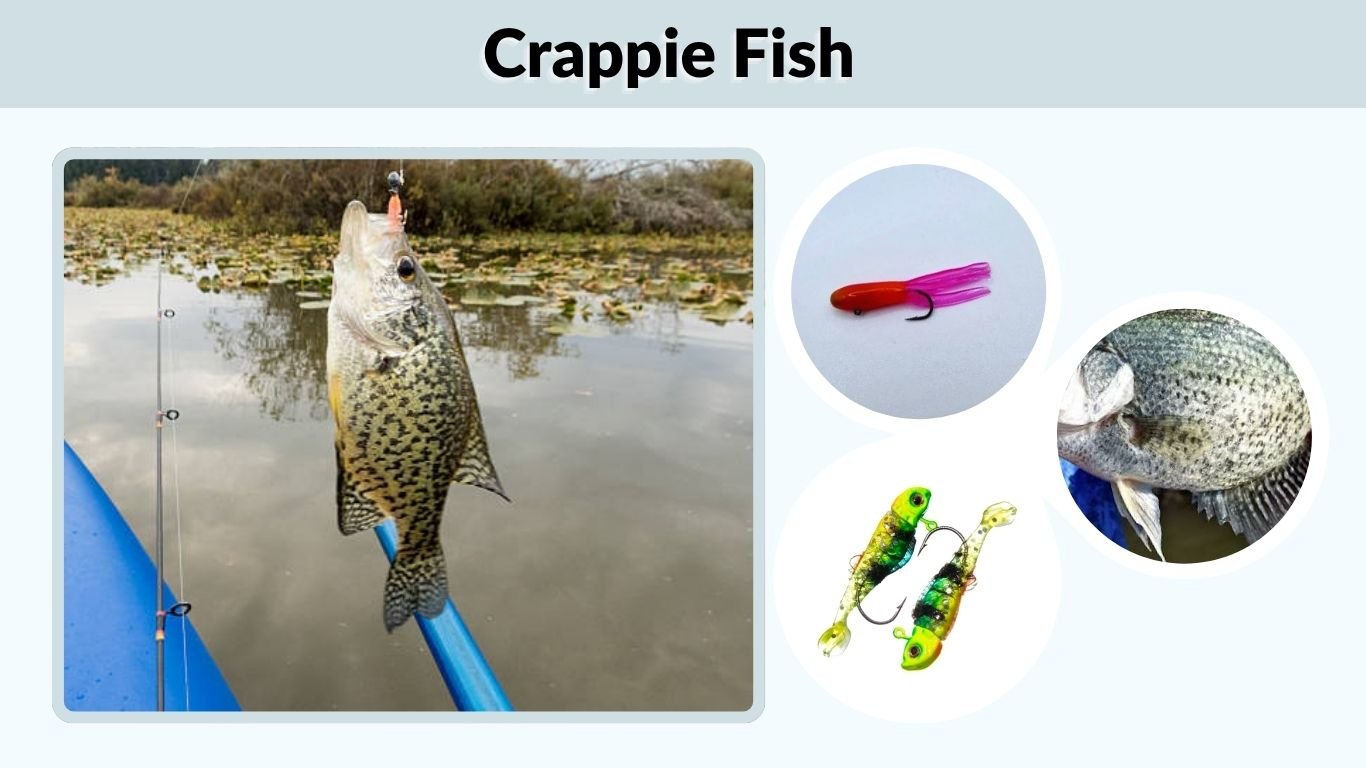
Crappie are popular North American freshwater fish valued for their mild flavor, schooling behavior, and willingness to strike small jigs and minnows. Two recognized species exist: black crappie and white crappie. Both belong to the sunfish family and inhabit lakes, reservoirs, ponds, and slow-moving rivers. Although the two species look similar, their markings and dorsal spines make identification possible. Successful crappie fishing depends on locating submerged structure, matching lure size to natural prey, and adjusting fishing depth as water temperatures change throughout the year.
What Is a Crappie?
Crappie belong to the genus Pomoxis and family Centrarchidae, making them relatives of bluegill and largemouth bass. Their compressed bodies, large mouths, and silvery sides are adapted for capturing minnows, insects, and small crustaceans. The name is commonly pronounced “crop-ee,” although “crap-ee” is also used regionally.
Crappie Identification
- Body: Deep, thin, and strongly compressed
- Color: Silvery with dark spots, bars, or mottling
- Mouth: Large and extending close to or beyond the eye
- Fins: One connected dorsal fin with sharp front spines
- Typical length: Approximately 6–12 inches
- Large adult: More than 14 inches
- Trophy weight: Commonly considered 2 pounds or more
Crappie usually remain near submerged trees, brush piles, vegetation, docks, rocks, bridge supports, and creek channels. Young fish eat zooplankton and aquatic insects, while larger adults consume minnows, shad, small sunfish, and occasionally young crappie.
Black Crappie vs. White Crappie
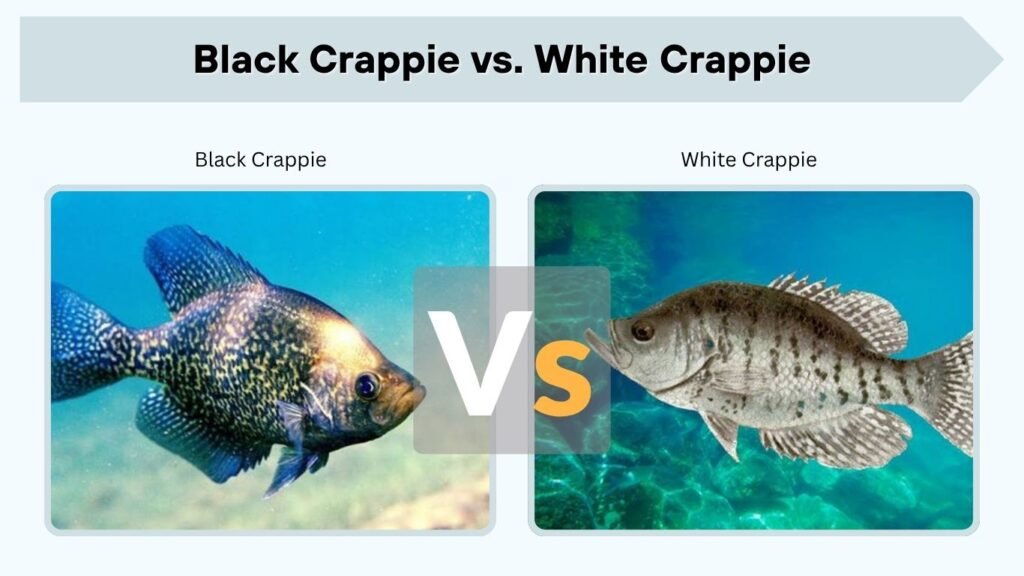
Color alone is not a reliable way to identify these species because water clarity, season, sex, and habitat can affect their appearance. Counting dorsal spines and examining the pattern on the sides provide much stronger identification clues.
Key Differences
| Feature | Black Crappie | White Crappie |
| Scientific name | Pomoxis nigromaculatus | Pomoxis annularis |
| Side pattern | Irregular dark speckles | Faint vertical bars |
| Dorsal spines | Usually 7–8 | Usually 5–6 |
| Body shape | Deeper and more rounded | Slightly longer |
| Preferred water | Clearer water with vegetation | More tolerant of muddy water |
| Common habitat | Lakes, ponds and reservoirs | Lakes, reservoirs and slow rivers |
| Maximum record weight | Slightly heavier | Slightly lighter |
Male white crappie may become very dark around the throat and head during spawning season. This temporary coloration does not turn them into black crappie.
Hybrid and Magnolia Crappie
Black and white crappie can naturally hybridize where both species occur. A hybrid may have an intermediate spine count, a mixture of spots and bars, or a body shape that does not clearly match either parent.
The Magnolia crappie is a hatchery-produced hybrid developed for stocking certain managed waters. These fish are usually triploid and reproductively sterile, reducing the risk of overpopulation in smaller lakes.
Fish described as “crappie-bluegill hybrids” are frequently misidentified. The familiar hybrid crappie is normally a cross between black and white crappie, not between a crappie and bluegill.
How to Catch Crappie
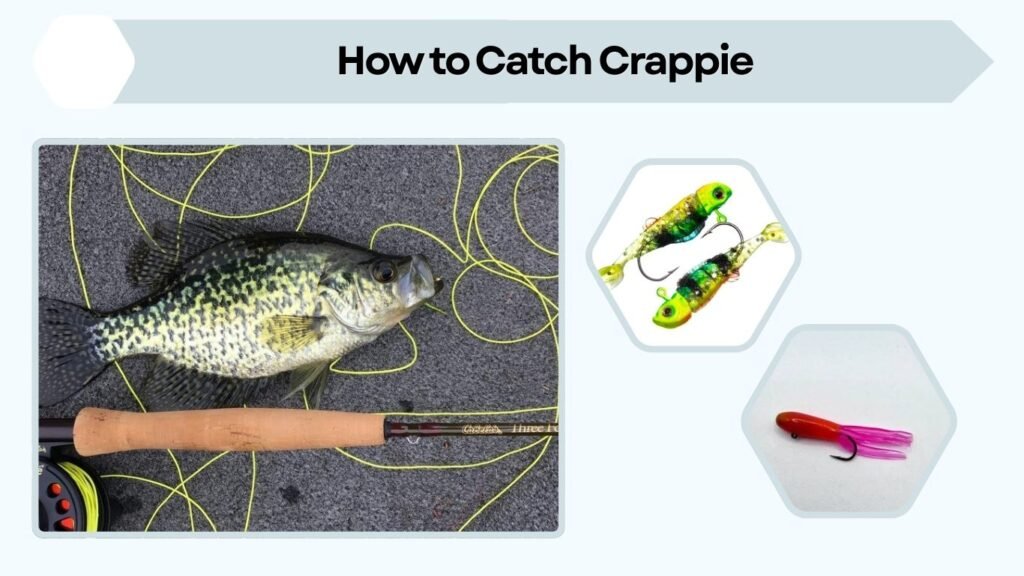
Crappie gather in schools, so catching one often means more fish are nearby. The most important skill is determining their depth. A lure passing several feet above or below a school may receive no attention, even when many fish are present.
Where to Fish Each Season
Spring: Crappie move toward shallow coves, vegetation, flooded trees, docks, and rocky banks to spawn. Water from one to six feet deep can be productive.
Summer: Many fish move deeper and gather around brush piles, creek channels, drop-offs, bridge supports, and the thermocline.
Fall: Cooling water draws crappie toward concentrations of shad and other baitfish. Target docks, points, creek arms, and mid-depth cover.
Winter: Schools commonly hold in deeper water around submerged timber, channel edges, and standing brush. Vertical jigging can keep a lure close to inactive fish.
To find crappie fishing near you, check your state wildlife agency’s fishing maps, stocking reports, public-access listings, and recent lake reports. Always confirm current licenses, size limits, daily limits, and restrictions on multiple-hook rigs.
Best Crappie Bait and Lures
Effective choices include:
- Live crappie minnows
- Small tube jigs
- Paddle-tail minnows
- Curly-tail grubs
- Split-tail or shad-shaped plastics
- Marabou and hair jigs
- Small spinner jigs
- Miniature crankbaits
- Insect larvae and small worms
A live minnow beneath a slip float is one of the easiest setups for beginners. Adjust the float until the bait hangs slightly above the fish or surrounding brush.
Soft plastics between approximately 1.5 and 2.5 inches imitate young shad and minnows. Natural silver, gray, blue, and translucent colors work well in clear water. White, pink, orange, and chartreuse are often easier for crappie to locate in stained water.
Crappie Jigs and Jig Heads
Crappie jigs commonly use heads weighing from 1/32 to 1/8 ounce. A 1/16-ounce jig is a versatile starting point. Use lighter heads for shallow water or slow presentations and heavier heads for deep water, wind, or faster trolling.
Retrieve the jig slowly and steadily. Crappie frequently feed upward, so keeping the lure slightly above the school is usually better than dragging it beneath them. Their bite may feel like a light tap, added weight, or sudden slack line.
Useful Crappie Rigs
- Slip-float rig: Suspends a minnow or jig at an adjustable depth.
- Single-jig rig: Simple option for casting or vertical fishing.
- Double-jig rig: Searches two depths or colors simultaneously.
- Drop-shot rig: Holds bait above the bottom or submerged cover.
- Spider rig: Uses several long rods to present baits across a wide area.
- Trolling rig: Pulls jigs or crankbaits through open water to locate schools.
Check local regulations before using double-jig or multi-rod setups because permitted hook and rod numbers vary.
Best Crappie Rod and Reel
For casting jigs, a 5- to 7-foot light or ultralight spinning rod paired with a small spinning reel is suitable. Four- to six-pound monofilament or fluorocarbon line handles most situations.
Long rods measuring 10–14 feet help anglers reach brush, make vertical presentations, or use spider rigs. A sensitive tip detects light bites, while enough backbone is needed to guide fish away from cover.
When Do Crappie Spawn?
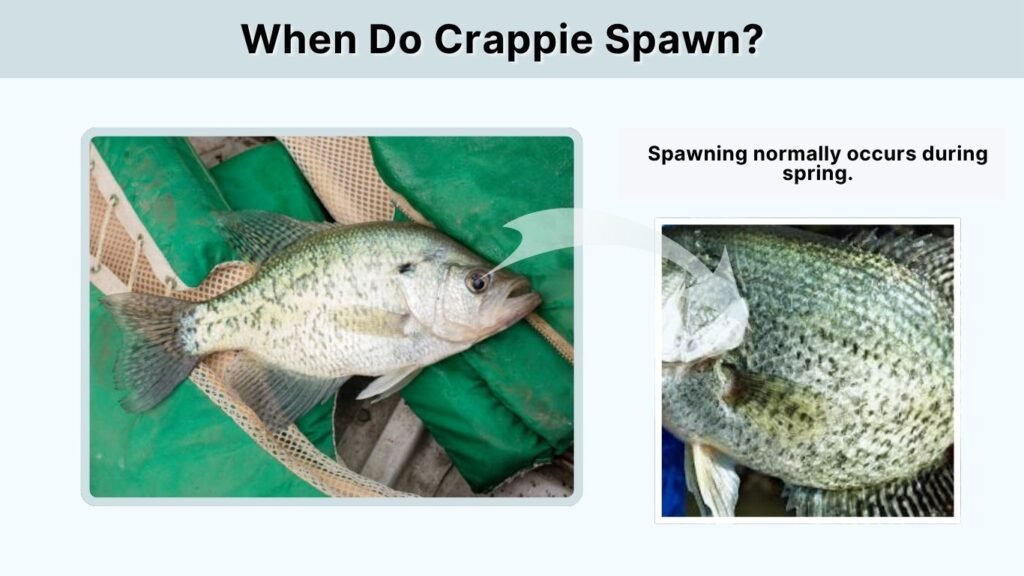
Spawning normally occurs during spring as warming water draws adults into protected shallows. Timing varies by latitude, weather, water clarity, and species, so calendar dates are less useful than water temperature and fish movement.
Spawning Temperature and Behavior
Crappie generally begin spawning when water temperatures enter the upper 50s and 60s Fahrenheit. White crappie commonly spawn around 65–70°F, although activity has been observed near 56°F. Texas Parks and Wildlife documents this broad temperature range.
Males select shallow sites and clear depressions near vegetation, wood, gravel, or firm bottom. They guard the nests after females deposit eggs. Protected coves and shallow flats beside deeper creek channels are especially productive during this period.
Biggest Crappie and Fishing Records
Black and white crappie have separate official records because they are distinct species. A genuine 4-pound crappie is exceptionally rare, while a fish exceeding 5 pounds represents world-record size.
World-Record Crappie
As of August 2026:
- Black crappie: Lionel Ferguson caught the 5-pound, 7-ounce all-tackle record at Richeison Pond, Tennessee, in May 2018.
- White crappie: Fred Bright caught the 5-pound, 3-ounce record at Enid Dam, Mississippi, on July 31, 1957.
The IGFA record database does not recognize a 12-pound all-tackle crappie. Online claims about a “12-pound world-record crappie” often confuse the fish’s weight with 12-pound fishing line, another species, or an unverified social-media post.
Texas Records and Anthony Mondo’s Catch
Current Texas rod-and-reel records are:
- Black crappie: 4 pounds, caught by Hazel Bolton at Toledo Bend in 2002.
- White crappie: 4.56 pounds, caught by G. G. Wooderson at Navarro Mills in 1968.
These figures appear in the current Texas state record database.
In 2026, bass angler Anthony Mondo caught a 19-inch black crappie weighing just under 4 pounds from Chickamauga Lake. It was an extraordinary trophy but did not exceed the official world record.
Crappie vs. Bluegill
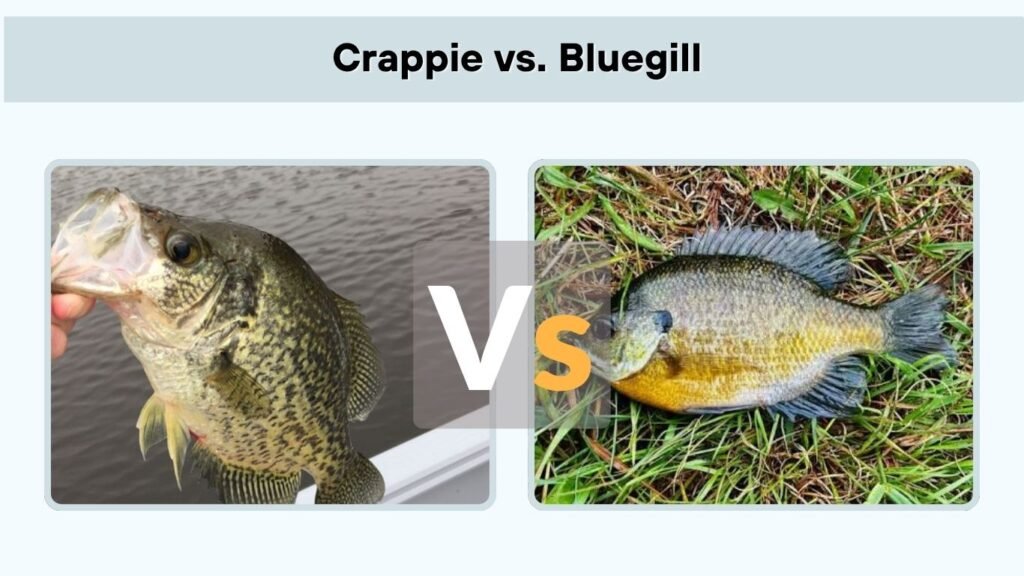
Crappie and bluegill belong to the sunfish family, but they are different species. Crappie have larger mouths, more silvery bodies, and irregular spots or vertical bars. Bluegill have smaller mouths, noticeable dark ear flaps, and frequently show blue or purple coloring around the face.
Crappie feed heavily on other fish and often suspend around deeper structure. Bluegill consume more insects and commonly remain closer to shoreline cover.
Are Crappie Good to Eat?
Crappie have mild, white, flaky meat suitable for frying, baking, grilling, or blackening. To fillet one, cut behind the gill plate to the backbone, turn the blade toward the tail, remove the fillet, cut away the ribs, and separate the skin.
Keep harvested fish cold and follow local consumption advisories. Popular preparations include blackened crappie, cornmeal-fried fillets, baked crappie with herbs, and fish tacos.
FAQs
What is the best bait for crappie?
Live minnows and small soft-plastic jigs are the most dependable choices. The better option depends on season, depth, and local forage.
What color jig works best?
Use natural shad colors in clear water and brighter chartreuse, white, pink, or orange patterns in stained water.
What time of day is best?
Dawn and evening are productive, but crappie can feed throughout the day when anglers locate the correct depth and cover.
How big do crappie normally grow?
Most caught by anglers measure 6–12 inches. Fish longer than 14 inches are large, and a 2-pound crappie is considered a trophy in many waters.
Can crappie be caught year-round?
Yes. Spring offers accessible shallow fishing, while summer, fall, and winter require locating schools around deeper cover and baitfish.