
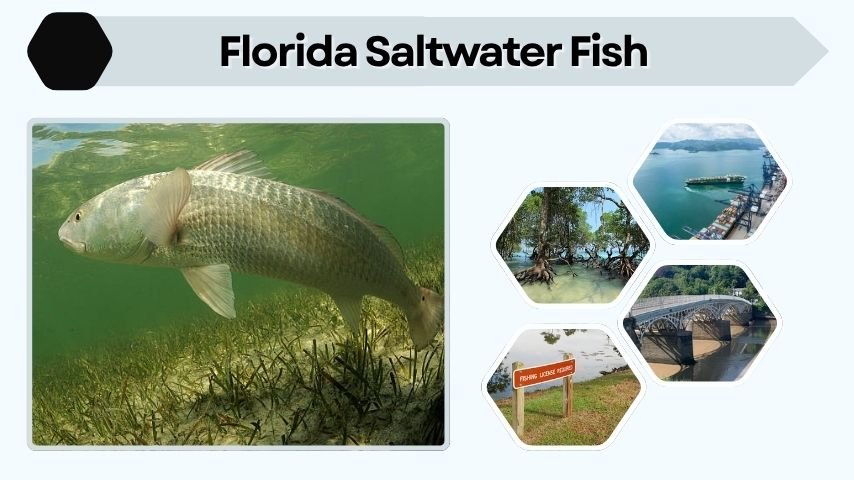
Florida saltwater fish attract anglers from across the country because the state offers warm water, long coastlines, reefs, bays, flats, bridges, and offshore fishing grounds. From redfish and snook to snapper, grouper, tarpon, and sailfish, Florida’s saltwater variety is hard to match. This guide explains common species, basic identification tips, fishing license needs, and regulation checks every angler should understand before casting a line.
Why Florida Saltwater Fishing Is So Popular
Florida has two major saltwater fishing worlds: the Atlantic side and the Gulf side. Add the Florida Keys, Panhandle beaches, mangrove shorelines, estuaries, piers, and offshore reefs, and you get one of the most diverse fishing destinations in the United States.
Anglers can target small inshore fish from shore or chase large offshore species from boats. Some fish live around grass flats and mangroves. Others stay near reefs, wrecks, bridges, channels, passes, or deep blue water.
A Coastline Built for Variety
The reason Florida saltwater fish are so diverse is habitat. Different fish prefer different water depths, temperatures, structures, and food sources. A shallow grass flat may hold redfish, spotted seatrout, pinfish, and snook. A reef may hold snapper, grouper, amberjack, hogfish, and barracuda. Offshore waters may produce mahi-mahi, tuna, wahoo, sailfish, and king mackerel.
This variety is also why regulations matter. A fish that is legal in one area or season may be closed, protected, or limited in another.
Florida’s State Saltwater Fish
The official Florida state saltwater fish is the Atlantic sailfish. Sailfish are famous for their tall dorsal fin, speed, jumping ability, and strong offshore fight. Most anglers release sailfish because they are prized more as a sport fish than a food fish.
Common Florida Saltwater Fish Species
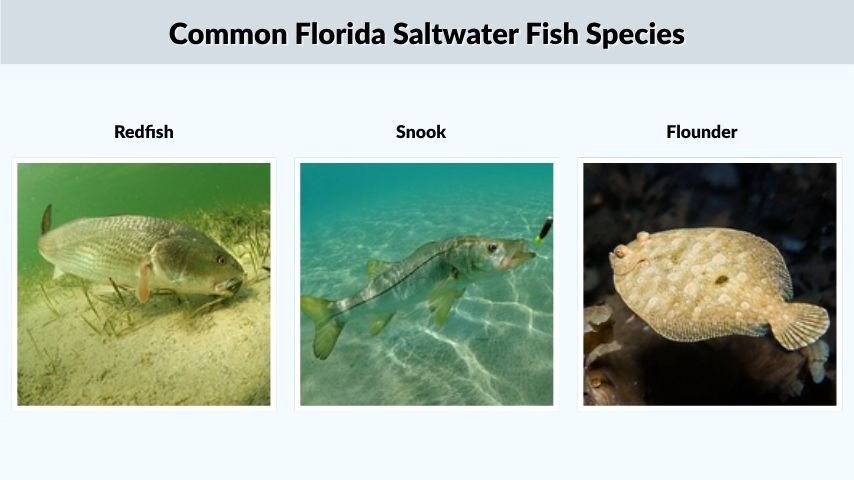
Many people search for a list of saltwater fish in Florida because the same coastline can produce dozens of species. Some are common table fish. Others are catch-and-release favorites. Some are highly regulated because they are popular or vulnerable to overharvest.
Popular Inshore Species
Inshore fishing usually happens around flats, bays, passes, docks, mangroves, bridges, and beaches. These areas are easier to access than offshore reefs and can be productive year-round.
Common inshore Florida saltwater fish include:
- Redfish, also called red drum, often found around grass flats, oyster bars, mangroves, and shorelines.
- Snook, a hard-fighting fish that likes mangroves, docks, passes, bridges, and warmer water.
- Spotted seatrout, one of Florida’s most popular grass-flat fish.
- Flounder, a bottom-dwelling fish often found near sandy areas, channels, and structure.
- Sheepshead, known for black stripes and strong teeth, often caught near docks, pilings, and rocks.
- Black drum, a cousin of redfish that can grow large and feed near the bottom.
Inshore species are popular because they can often be caught from shore, kayak, small boat, pier, or bridge. They are also some of the most searched fish for Florida saltwater fish identification because several species can look similar to beginners.
Reef and Nearshore Species
Reef fishing is a major part of saltwater fishing in Florida. Natural reefs, artificial reefs, wrecks, ledges, and rocky bottom areas hold many fish that feed near structure.
Common reef and nearshore species include snapper, grouper, hogfish, amberjack, cobia, triggerfish, grunts, porgies, and king mackerel. These fish are often targeted for food, but many have strict bag limits, size limits, seasonal closures, and gear rules.
Snapper and grouper are especially important to check before fishing. There are several types, and each may have different rules. For example, red snapper, mangrove snapper, lane snapper, mutton snapper, red grouper, black grouper, and gag grouper may not follow the same season or limit.
Offshore Game Fish
Offshore fishing in Florida can mean trolling, drifting, kite fishing, deep dropping, or running to blue water. These trips target larger pelagic species that travel with bait, currents, temperature changes, and weed lines.
Common offshore Florida saltwater fish include:
- Sailfish
- Mahi-mahi
- Wahoo
- Blackfin tuna
- Yellowfin tuna in some areas
- King mackerel
- Spanish mackerel
- Cobia
- Swordfish
- Marlin
Offshore fishing can be seasonal, but conditions often matter as much as the calendar. Water temperature, bait movement, wind, current, and moon phase can all affect the bite.
Florida Saltwater Fish Identification Basics
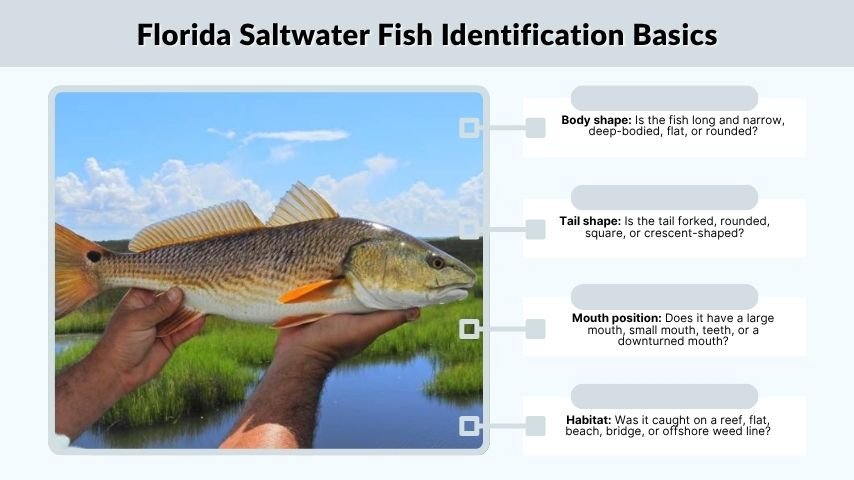
Florida saltwater fish identification is important because misidentifying a fish can lead to keeping an illegal catch. Some species look similar, especially snapper, grouper, jacks, drum, and mackerel.
The safest approach is to identify the fish before harvest, not after putting it in the cooler. If you are unsure, release it carefully.
Features to Check First
When identifying saltwater fish in Florida, look at a few simple features:
- Body shape: Is the fish long and narrow, deep-bodied, flat, or rounded?
- Tail shape: Is the tail forked, rounded, square, or crescent-shaped?
- Mouth position: Does it have a large mouth, small mouth, teeth, or a downturned mouth?
- Color and markings: Look for spots, bars, stripes, yellow fins, black tails, or dark shoulder marks.
- Habitat: Was it caught on a reef, flat, beach, bridge, or offshore weed line?
- Size: Some juvenile fish look different from adults, so size can help.
For example, redfish often have a dark spot near the tail, though they can have multiple spots. Sheepshead have vertical black bars and human-like teeth. Spanish mackerel are slim, fast fish with yellow spots, while king mackerel are usually larger and have a different body profile.
Why Pictures Help
Many search results for Florida fish species saltwater pictures appear because visual identification is easier than text-only descriptions. A fish chart, field guide, or regulation app can help anglers compare markings while still on the water.
Photos should be clear and taken quickly. If the fish may be released, keep it wet, support the body, and avoid long handling times.
Florida Saltwater Fishing Regulations
Florida saltwater fishing regulations protect fish populations and help keep fishing sustainable. The rules can cover size limits, bag limits, closed seasons, gear restrictions, harvest zones, vessel rules, and special permits.
Regulations can differ between Atlantic and Gulf waters. They can also change for federal waters, special management zones, or specific counties.
Key Regulation Terms
Before fishing, every angler should understand the basic terms used in Florida saltwater fishing rules.
| Term | What It Means | Why It Matters |
| Bag limit | Number of fish you may keep | Prevents overharvest |
| Size limit | Legal minimum, maximum, or slot size | Protects young or breeding fish |
| Closed season | Time when harvest is not allowed | Protects fish during vulnerable periods |
| State waters | Florida-managed waters near shore | Rules may differ from federal waters |
| Gear rule | Limits on hooks, spears, nets, or equipment | Reduces harm and illegal harvest |
Size Limits and Seasons
Many anglers search for Florida saltwater fish size limits because they want one simple chart. However, size limits are not the same for all fish. Some species have minimum sizes. Others use slot limits, where only fish within a certain size range may be kept. Some have no harvest allowed at certain times.
A slot limit is common for fish that need protection at both young and larger breeding sizes. If a fish is too small or too large, it must be released.
What Saltwater Fish Are in Season Right Now?
This is one of the most important questions, but it must be checked close to the actual fishing date. Seasons can change, emergency rules can happen, and different regions may have different open dates.
Before keeping fish, check:
- The species name, not just the general fish group.
- Whether you are in Atlantic, Gulf, Monroe County, or another special zone.
- Whether you are in state or federal waters.
- Whether the fish has a current open season.
- Whether special permits or designations apply.
For high-value species like snook, red snapper, grouper, spotted seatrout, tarpon, lobster, and some reef fish, always verify rules before the trip.
Florida Saltwater Fishing License Requirements
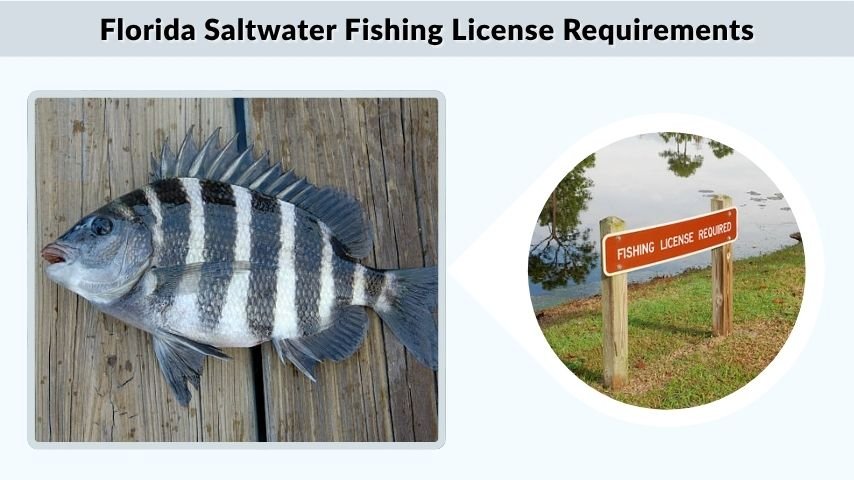
Most anglers need a Florida saltwater fishing license before fishing in saltwater. A license may be required even if you plan to catch and release. Non-residents age 16 or older generally need a Florida license, and an out-of-state license does not count in Florida.
Non-Resident Saltwater Fishing License in Florida
Visitors often search for a non-resident Florida saltwater fishing license because they are planning a vacation, charter, pier trip, beach trip, or family fishing day.
Non-resident options commonly include short-term and annual choices. A short trip may only need a temporary license, while regular visitors may prefer a longer license. The exact license type depends on where and how you fish.
You may not need your own license in some situations, such as fishing on a licensed charter boat, party boat, licensed pier, or during a free saltwater fishing day. However, exemptions do not apply to every situation or every permit, so it is still smart to check before fishing.
Buying a Florida Saltwater Fishing License Online
Many anglers buy a Florida saltwater fishing license online before traveling. This is usually the easiest option because it lets you handle requirements before reaching the water. You may also be able to buy licenses through approved agents or apps.
When buying, make sure your name, birthdate, residency status, and license type are correct. Keep proof of your license with you while fishing.
Best Places to Catch Saltwater Fish in Florida
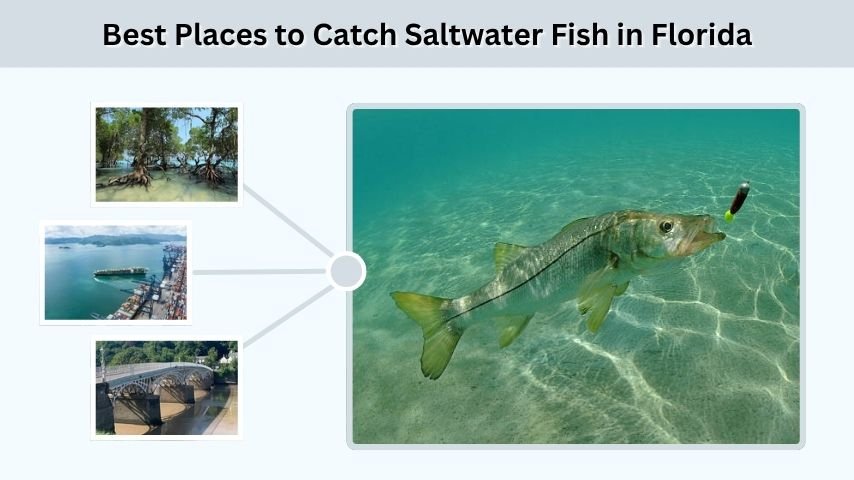
The best saltwater fishing spots in Florida depend on your target species, season, skill level, and access. A beginner fishing from shore will choose different spots than an offshore angler with a center-console boat.
Inshore and Shoreline Options
For easier access, try beaches, piers, bridges, jetties, seawalls, passes, and public fishing areas. These spots may produce pompano, whiting, Spanish mackerel, snook, trout, redfish, mangrove snapper, sheepshead, and ladyfish.
Shore anglers should watch tides. Moving water usually improves fishing, especially around passes, bridges, cuts, and mangrove edges. Early morning and late afternoon can also be productive, especially in warmer months.
Boat and Kayak Areas
Boats and kayaks open more water. Grass flats, oyster bars, mangrove shorelines, channels, docks, and spoil islands can all hold fish. Kayaks are especially useful for quiet inshore fishing, but anglers should pay attention to weather, current, boat traffic, and tides.
For reef or offshore fishing, boaters must also consider safety gear, distance, fuel, storms, and sea conditions.
Best Baits and Lures for Florida Saltwater Fish
Bait choice depends on the fish. Live shrimp is one of the most popular all-around Florida saltwater baits. Pilchards, pinfish, mullet, crabs, squid, cut bait, and sand fleas are also common.
Artificial lures can work very well, especially when fish are actively feeding.
Popular lure choices include:
- Soft plastic paddle tails for trout, redfish, snook, and flounder.
- Topwater plugs for early morning strikes on flats.
- Jigs for bridges, passes, docks, and deeper channels.
- Spoons for redfish, mackerel, bluefish, and beach fishing.
- Trolling plugs or feathers for offshore species.
- Bucktail jigs for snook, tarpon, cobia, and reef edges.
Match the lure to the baitfish size and water depth. In clear water, natural colors and lighter leaders often help. In dirty water, vibration, scent, and contrast can matter more.
Safe Handling and Responsible Harvest
Good fish handling protects both the fish and the angler. Some Florida saltwater fish have sharp gill plates, teeth, spines, or venomous areas. Catfish, lionfish, stingrays, snapper, grouper, and sheepshead should be handled carefully.
If releasing fish, reduce stress as much as possible.
Use these handling habits:
- Wet your hands before touching the fish.
- Keep the fish in the water when possible.
- Use circle hooks when fishing natural bait for many species.
- Support large fish horizontally.
- Remove hooks quickly or cut the leader if needed.
- Do not hold heavy fish only by the jaw.
- Release fish quickly, especially in hot weather.
Responsible harvest also means only keeping fish you can legally keep and actually use. Florida’s saltwater fish are valuable, and careful anglers help protect the resource for future trips.
FAQs
Do you need a saltwater fishing license in Florida?
Yes, most anglers need a Florida saltwater fishing license to fish in saltwater, including catch-and-release fishing. Non-residents age 16 or older generally need a Florida license. Some exemptions may apply for licensed charters, licensed piers, certain vessel licenses, children under 16, and free saltwater fishing days.
What are the most common saltwater fish in Florida?
Common Florida saltwater fish include redfish, snook, spotted seatrout, flounder, sheepshead, black drum, mangrove snapper, Spanish mackerel, pompano, grouper, snapper, cobia, tarpon, mahi-mahi, king mackerel, and sailfish. The exact species you encounter depends on location, season, water depth, habitat, and fishing method.
What is the Florida state saltwater fish?
The Florida state saltwater fish is the Atlantic sailfish. It is known for its large sail-like dorsal fin, speed, jumping ability, and offshore fighting power. Sailfish are mostly targeted as sport fish, and many anglers release them after a careful fight and quick photo.
How do I check Florida saltwater fish size limits?
Check the current Florida Fish and Wildlife Conservation Commission rules before your trip. Size limits can change by species, coast, season, and water type. Some fish have minimum sizes, some have slot limits, and others may be closed to harvest during certain times of the year.
What saltwater fish are in season in Florida right now?
The answer depends on today’s date, your location, the species, and whether you are fishing state or federal waters. Florida seasons may differ between the Gulf, Atlantic, Monroe County, and special management areas. Always confirm current rules before keeping fish, especially for snapper, grouper, snook, trout, lobster, and tarpon.