
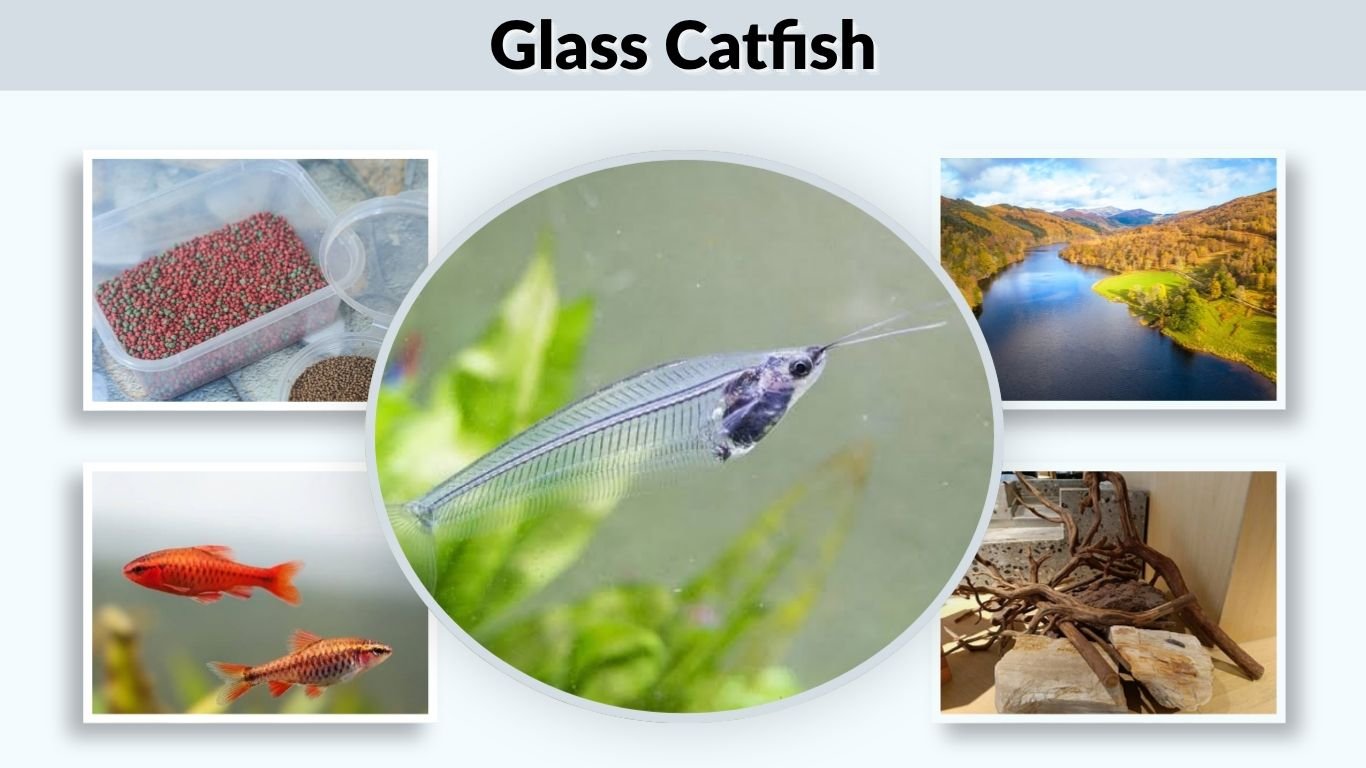
Glass catfish are unusual freshwater fish famous for their nearly transparent bodies. Their visible spines, internal organs, long barbels, and shimmering appearance make them look like tiny swimming skeletons. They are also called ghost glass catfish, phantom catfish, or Asian glass catfish.
Despite their delicate appearance, these peaceful schooling fish can live successfully in a well-maintained community aquarium. However, they need stable water conditions, suitable companions, subdued lighting, and a proper group to remain healthy. This guide explains everything you should know about glass catfish care, including their size, tank setup, diet, behavior, lifespan, and breeding.
Glass Catfish Overview
The glass catfish commonly sold for home aquariums is Kryptopterus vitreolus, a freshwater species native to Thailand. It was historically confused with the larger Kryptopterus bicirrhis, which explains why some older care guides report an adult size of six inches or more.
| Characteristic | Information |
| Scientific name | Kryptopterus vitreolus |
| Common names | Glass catfish, ghost catfish, phantom catfish |
| Adult size | Approximately 2.5–3.5 inches |
| Temperament | Peaceful and timid |
| Minimum group | Six or more |
| Tank level | Middle |
| Diet | Omnivorous with carnivorous preferences |
| Temperature | 75–82°F |
| Recommended tank | 30 gallons or larger |
| Lifespan | Approximately 5–8 years |
| Care level | Intermediate |
What Does a Glass Catfish Look Like?
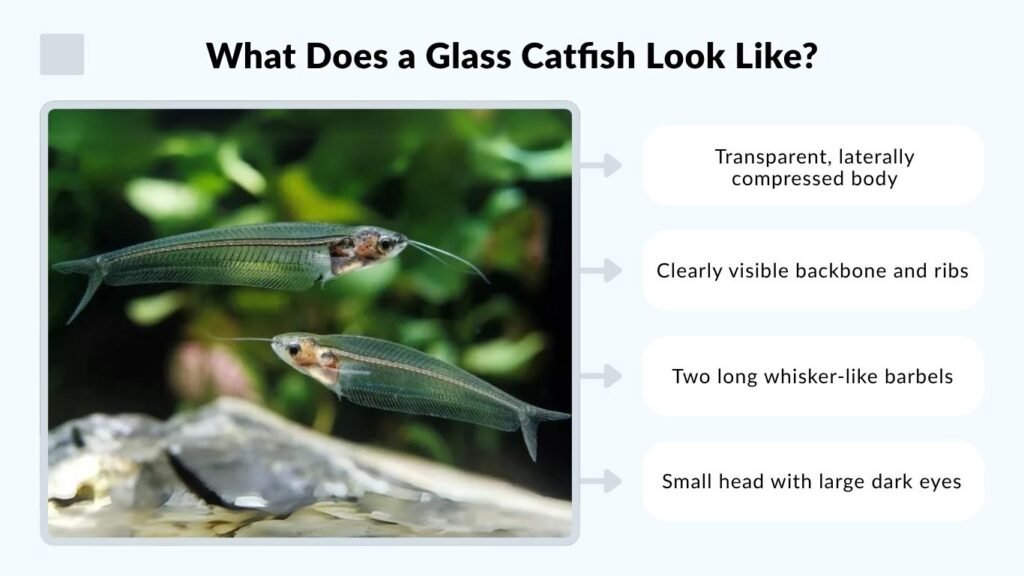
Glass catfish have long, slender, almost entirely transparent bodies. Their spine, ribs, and some internal organs can be seen through their skin. Light reflecting from the body may produce green, blue, silver, or rainbow-like colors.
Identification Features
- Transparent, laterally compressed body
- Clearly visible backbone and ribs
- Two long whisker-like barbels
- Small head with large dark eyes
- Long anal fin extending beneath the body
- Very small or nearly absent dorsal fin
- Forked, transparent tail
- Slightly iridescent appearance under aquarium lights
Most of the organs are concentrated near the head. This leaves the rear portion of the fish remarkably clear.
Glass catfish should not be confused with painted glassfish. Some retailers have historically sold artificially colored fish injected with fluorescent dyes. Naturally healthy glass catfish do not have bright artificial stripes.
How Big Do Glass Catfish Get?
A full-grown glass catfish typically measures approximately 2.5–3.5 inches long. FishBase records a maximum standard length of 6.5 centimeters, although total length, including the tail, can be closer to eight centimeters or slightly more.
Their growth depends on genetics, nutrition, water quality, tank space, and stress levels. Juveniles sold in aquarium shops may be only 1.5–2 inches long.
Reports of six-inch glass catfish often refer to Kryptopterus bicirrhis or another related species rather than the commonly traded Kryptopterus vitreolus.
Natural Habitat and Distribution
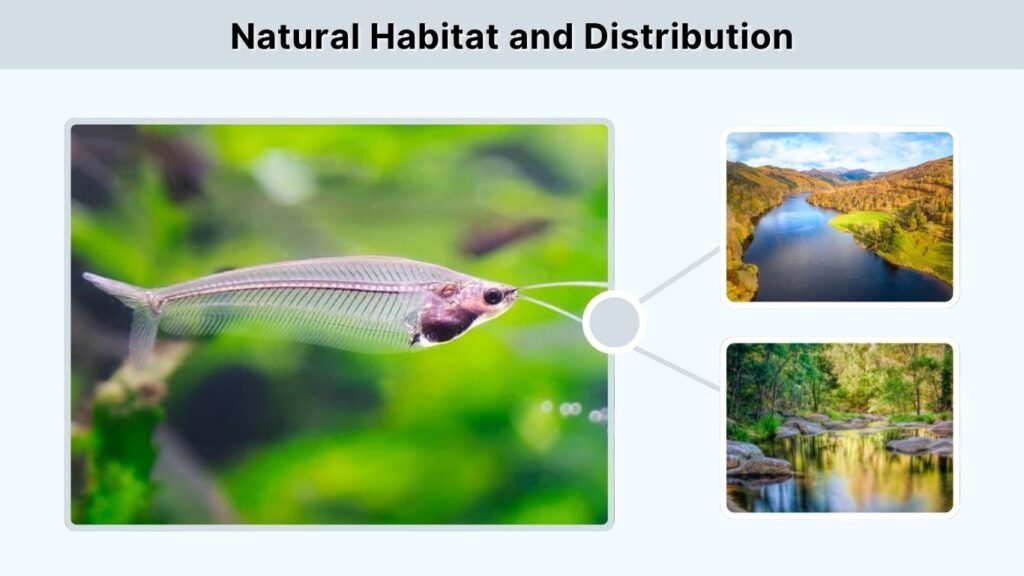
Glass catfish originate from freshwater rivers and streams in peninsular and southeastern Thailand. They are usually associated with gently flowing water, shaded areas, submerged plants, and habitats with relatively subdued lighting.
They spend much of their time suspended in the middle of the water rather than resting on the bottom. Their transparent bodies may help them blend into their environment and avoid predators.
An aquarium containing plants, driftwood, open swimming areas, gentle current, and shaded sections can reproduce many features of their natural habitat.
Glass Catfish Tank Size and Setup
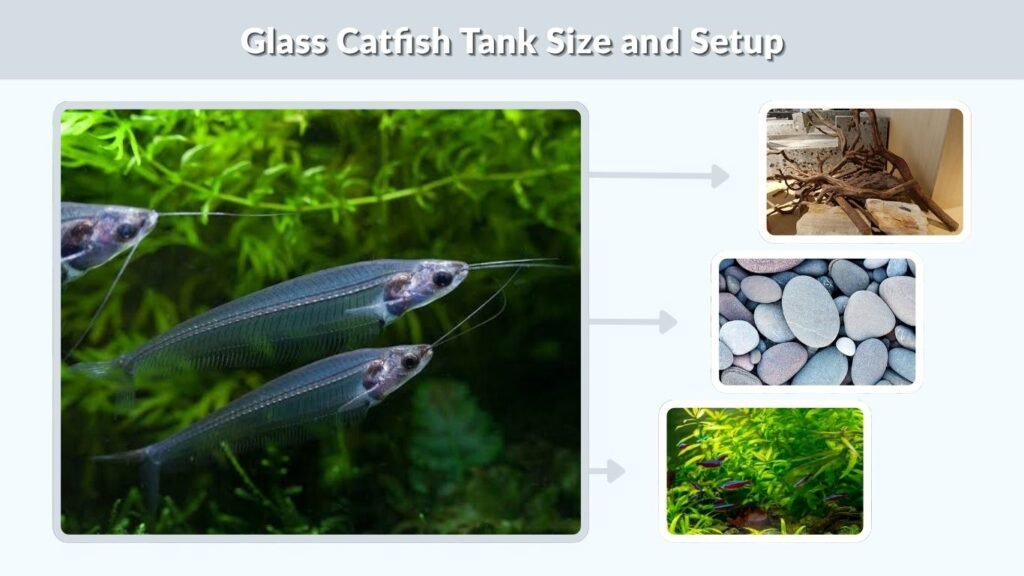
A 30-gallon aquarium is a practical minimum for a group of six glass catfish. A larger tank is preferable when keeping eight or more fish or creating a mixed community.
Although they are relatively small, they need horizontal swimming space and should never be kept alone in a tiny aquarium.
Ideal Tank Conditions
Provide live plants around the back and sides while leaving an open area in the center. Floating plants are particularly useful because they soften bright aquarium lighting.
Driftwood, tall plants, and smooth rocks can provide cover. However, glass catfish generally spend more time swimming in open midwater than hiding in caves.
Use a reliable filter that creates gentle to moderate circulation. Strong currents may exhaust them, while stagnant water can reduce oxygen levels.
Water Parameters
| Water condition | Recommended range |
| Temperature | 75–82°F |
| pH | Approximately 6.0–7.5 |
| Hardness | Soft to moderately hard |
| Ammonia | 0 ppm |
| Nitrite | 0 ppm |
| Nitrate | Kept as low as practical |
Consistency is more important than chasing a perfect number. Sudden changes in temperature, pH, or hardness can cause severe stress.
Change approximately 20–25% of the water weekly, depending on stocking level and nitrate readings. Always treat tap water with an appropriate conditioner before adding it.
How Many Glass Catfish Should Be Kept Together?
Glass catfish are schooling fish and should be kept in groups of at least six. Groups of eight to twelve are even better when the aquarium is large enough.
A solitary glass catfish may hide continuously, refuse food, lose its transparency, or become vulnerable to illness. In a suitable group, the fish usually hover together and move around the aquarium in coordinated formations.
Their need for companions is one reason a larger tank is recommended, even though each fish is relatively small.
Glass Catfish Diet and Feeding
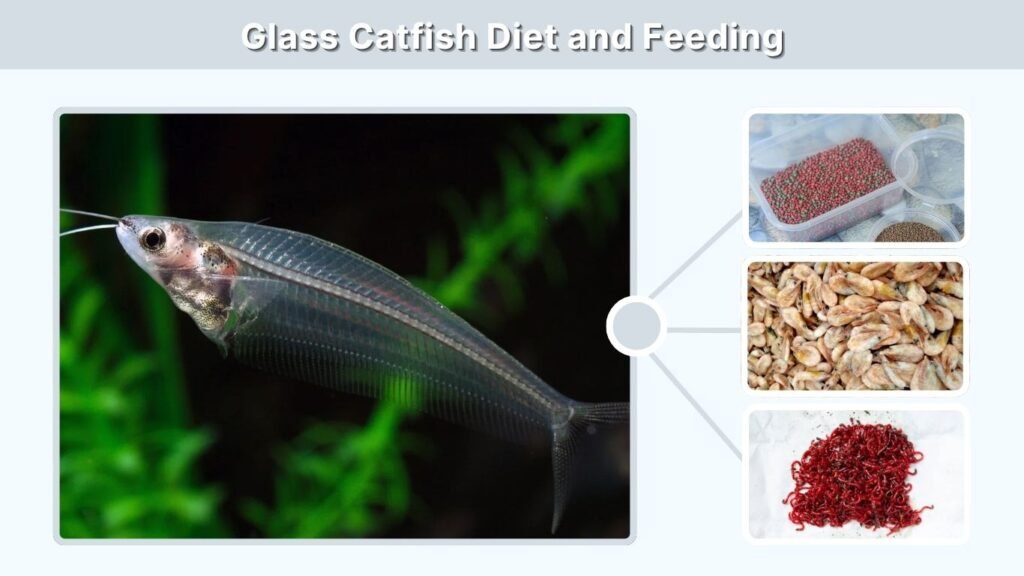
Glass catfish are not algae eaters or traditional bottom-feeding scavengers. They primarily collect food from the middle of the water column.
Suitable Foods
- High-quality micro pellets
- Crushed tropical flakes
- Frozen brine shrimp
- Frozen or live daphnia
- Bloodworms in moderation
- Mosquito larvae
- Small insect larvae
- Finely chopped mysis shrimp
Feed small portions once or twice daily. The food should be small enough to fit inside their mouths and should sink slowly through the middle of the aquarium.
Glass catfish can be timid during feeding, especially when housed with fast, aggressive eaters. Watch the group carefully to ensure every fish receives food.
They generally do not clean algae from aquarium glass. They may eat extremely small shrimp or newborn shrimp, but healthy adult shrimp are often too large to be considered normal prey.
Temperament and Behavior
Glass catfish are peaceful, social, and somewhat shy. They are not aggressive toward similarly sized community fish and rarely bother other inhabitants.
Unlike many catfish, they are neither strictly nocturnal nor dedicated bottom dwellers. They commonly remain visible during the day, particularly when kept in a secure group with subdued lighting.
They may hide after being introduced to a new aquarium. Once settled, they normally gather in the middle of the tank, often facing into the filter current.
Best Glass Catfish Tank Mates
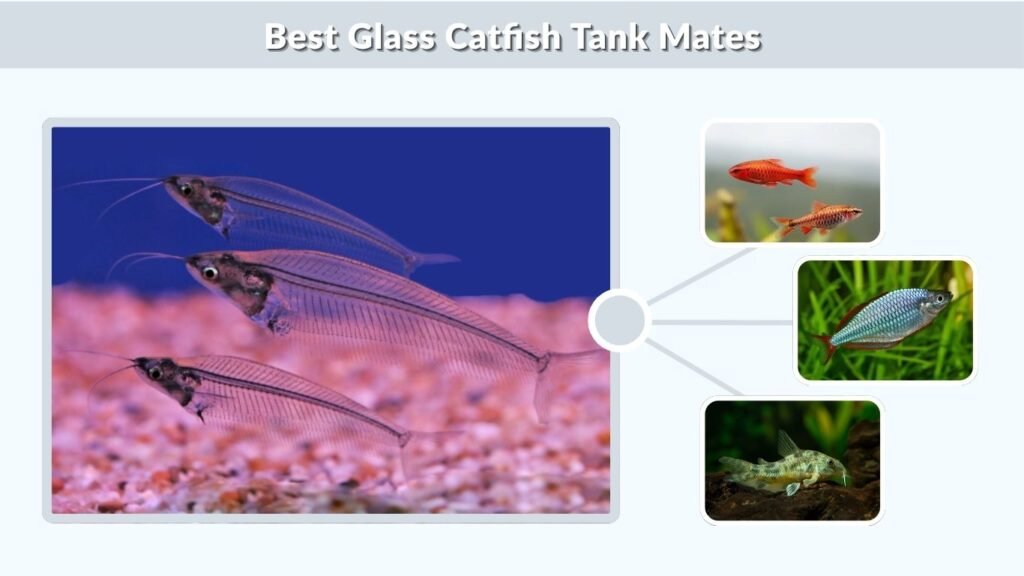
Choose peaceful fish with similar temperature and water requirements. Avoid large predators, fin-nippers, territorial cichlids, and highly aggressive feeders.
Good tank mates include:
- Harlequin rasboras
- Peaceful tetras
- Cherry barbs
- Small rainbowfish
- Corydoras catfish
- Kuhli loaches
- Dwarf gouramis
- Honey gouramis
- Peaceful guppies
- Small, non-aggressive plecos
Glass catfish may live with a calm betta, but compatibility depends on the betta’s personality and the aquarium’s size. Angelfish are riskier because adults can become territorial or attempt to eat smaller fish.
Adult ornamental shrimp may coexist with them, although baby shrimp could be eaten.
Glass Catfish Lifespan
A properly maintained glass catfish may live for approximately five to eight years. Lifespan is affected by water quality, diet, genetics, stress, disease exposure, and whether the fish is kept in an adequate school.
Stable water and low stress are particularly important. These fish can decline quickly when exposed to ammonia, sudden parameter changes, unsuitable companions, or long-term isolation.
Why Is My Glass Catfish Turning White?
A glass catfish becoming cloudy, pale, or white is usually a warning sign rather than a normal color change.
Possible causes include:
- Poor water quality
- Temperature shock
- Sudden pH changes
- Stress from being kept alone
- Bullying by tank mates
- Bacterial or parasitic infection
- Transportation stress
- Approaching death
Test ammonia, nitrite, nitrate, temperature, and pH immediately. Observe whether the fish is breathing rapidly, refusing food, swimming abnormally, or developing spots and damaged fins.
Do not add medication without identifying the likely problem. Some fish treatments can create additional stress when used unnecessarily.
Glass Catfish Breeding and Pregnancy
Glass catfish are egg-laying fish, so they do not become pregnant. A female carrying mature eggs may develop a slightly fuller abdomen, but distinguishing males from females is extremely difficult.
Successful breeding in home aquariums is uncommon. Their precise spawning triggers and fry-care requirements remain poorly documented compared with commonly bred aquarium fish.
A swollen belly can also result from overeating, constipation, internal parasites, dropsy, or another illness. Raised scales, lethargy, unusual feces, or loss of appetite indicate that the swelling may not be related to eggs.
Are Glass Catfish Hard to Keep?
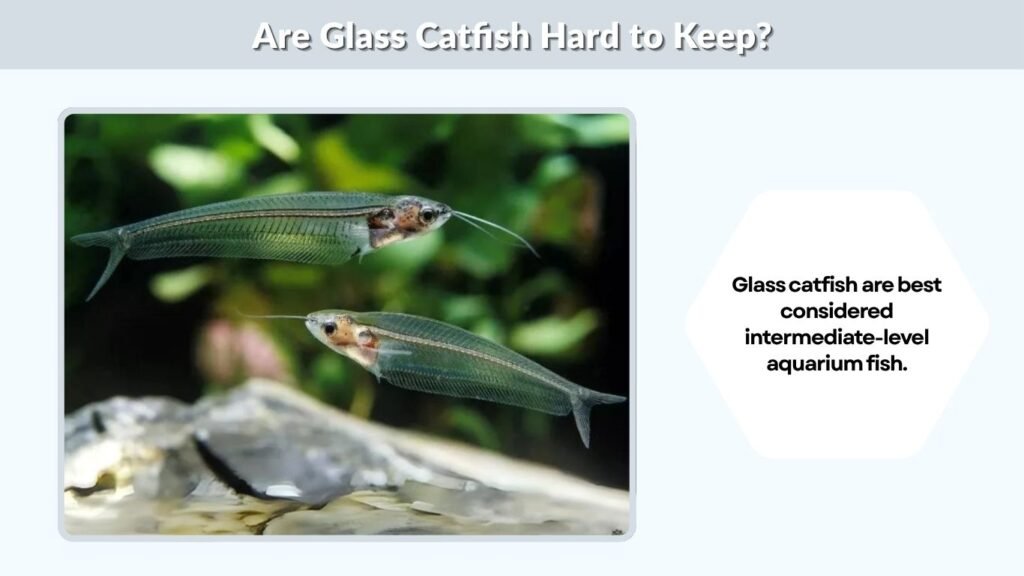
Glass catfish are best considered intermediate-level aquarium fish. They are peaceful and easy to feed once settled, but they react poorly to unstable water, immature aquariums, intense lighting, aggressive companions, and isolation.
They should only be introduced to a fully cycled tank. Keeping six or more together, providing plants and shaded areas, offering varied foods, and maintaining consistent water conditions will greatly improve their chances of living a long and healthy life.
FAQs
Are glass catfish aggressive?
No. Glass catfish are generally peaceful schooling fish that rarely attack other aquarium inhabitants. However, they may consume tiny fry or newborn shrimp that fit inside their mouths. They are more likely to be bullied than to become the aggressor.
Are glass catfish bottom feeders?
Glass catfish are not typical bottom feeders. They usually swim and feed in the middle of the aquarium. Slow-sinking pellets, crushed flakes, frozen brine shrimp, daphnia, and similar foods are easier for them to catch than food that immediately falls to the substrate.
Can glass catfish live with guppies?
Glass catfish can usually live with peaceful guppies in a suitably sized aquarium. Both species prefer warm freshwater conditions. However, glass catfish may eat newborn guppy fry, and highly active guppies should not prevent the catfish from reaching food.
Do glass catfish need a filter?
Yes. They require clean, oxygenated water with no detectable ammonia or nitrite. A filter provides biological filtration and water movement. The current should be gentle to moderate rather than excessively strong, and regular partial water changes are still necessary.
Can you keep one glass catfish alone?
Keeping only one is not recommended. Glass catfish are strongly social and may become frightened, hide constantly, stop eating, or lose condition when isolated. Keep at least six together, with a larger school preferred when the aquarium has enough space.