
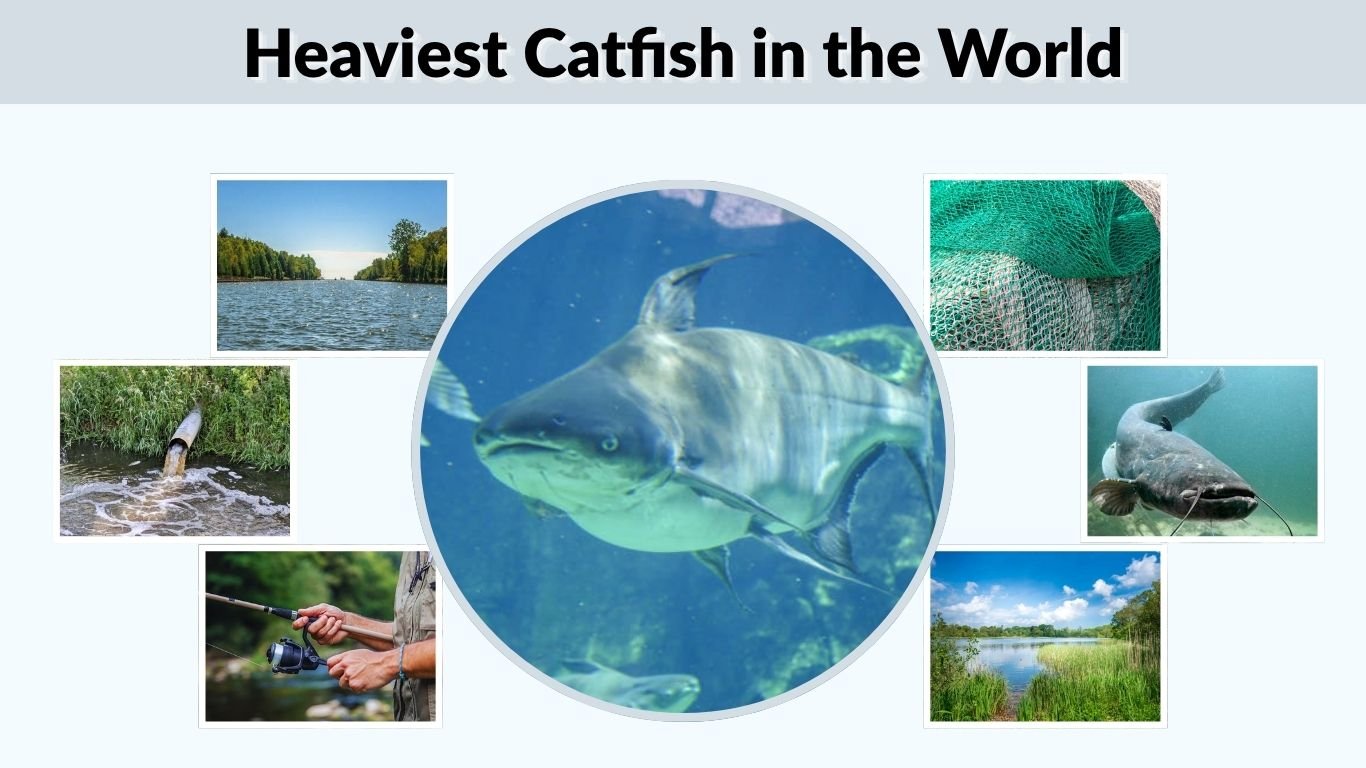
The Mekong giant catfish is the heaviest catfish ever reliably recorded. A female caught in northern Thailand in 2005 weighed 646 pounds (293 kilograms) and measured approximately 8 feet 11 inches (2.7 meters) long. Although other catfish may grow longer, no heavier individual has been documented with comparable measurements. This enormous freshwater fish lives in Southeast Asia’s Mekong River system, where it is now exceptionally rare and critically endangered.
What Is the Heaviest Catfish in the World?
The heaviest confirmed catfish is the Mekong giant catfish, scientifically known as Pangasianodon gigas. It belongs to the shark-catfish family, Pangasiidae, and is native exclusively to the Mekong River basin in Southeast Asia.
The species is capable of approaching three meters in length. Some references report a potential maximum weight near 350 kilograms, but the largest reliably measured individual weighed 293 kilograms. Unverified estimates should not be treated as established records.
Quick Facts
| Feature | Information |
| Common name | Mekong giant catfish |
| Scientific name | Pangasianodon gigas |
| Record weight | 646 pounds or 293 kilograms |
| Record length | 8 feet 11 inches or 2.7 meters |
| Potential length | Around 10 feet or 3 meters |
| Natural range | Mekong River basin |
| Diet | Primarily herbivorous as an adult |
| Conservation status | Critically Endangered |
The Heaviest Catfish Ever Caught
Local fishers captured the record-breaking fish in the Mekong River near Chiang Khong in northern Thailand in 2005. It took the fishing team more than an hour to bring the enormous animal ashore.
The female measured approximately 2.7 meters and weighed 293 kilograms—roughly as heavy as a large motorcycle or an adult grizzly bear. Attempts were made to keep it alive for a breeding program, but the fish eventually died.
Was It Caught With a Fishing Rod?
No. The record Mekong giant catfish was captured by commercial fishers using a net. Therefore, it represents the heaviest verified catfish captured and measured, but it is not a conventional rod-and-line angling record.
Record categories can produce different answers depending on whether the fish was:
- Captured in a fishing net
- Caught with a rod and reel
- Entered in a recognized competition
- Weighed on a certified scale
- Measured and released without weighing
Guinness lists a 143-pound blue catfish caught at Kerr Lake, Virginia, in 2011 as the heaviest catfish caught in a recognized competition. That fish was much smaller than the Mekong giant but qualified under different record requirements.
Is It Still the World’s Largest Freshwater Fish?
The Mekong giant catfish held the widely recognized freshwater-fish weight record for 17 years. However, researchers documented a female giant freshwater stingray weighing 661 pounds or 300 kilograms in Cambodia in 2022.
The stingray was about 15 pounds heavier than the record catfish. Therefore, the Mekong giant catfish is still the heaviest confirmed catfish, but it is no longer the heaviest individual freshwater fish ever measured. Guinness describes the stingray and Mekong giant catfish as the two leading contenders for the largest freshwater fish species.
| Record category | Animal | Verified measurement |
| Heaviest recorded catfish | Mekong giant catfish | 646 lb or 293 kg |
| Heaviest recorded freshwater fish | Giant freshwater stingray | 661 lb or 300 kg |
| Heaviest competition-caught catfish | Blue catfish | 143 lb or 64.86 kg |
| Longest recently reported Wels catfish | Wels catfish | 9 ft 6.9 in or 292 cm |
What Does a Mekong Giant Catfish Look Like?
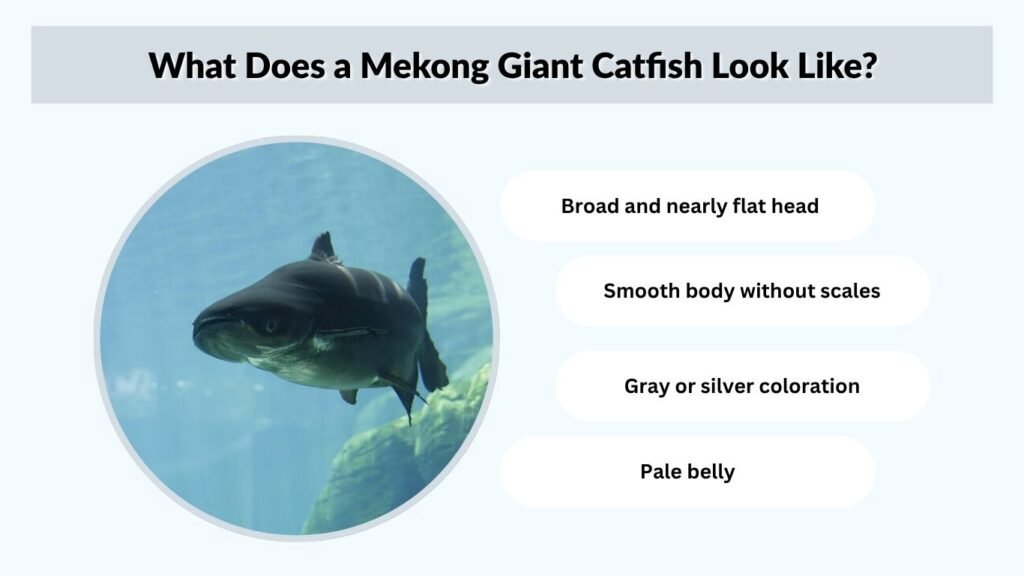
The Mekong giant catfish has a broad, flattened head and a massive, streamlined body. Its smooth skin is generally gray or silver on top and pale underneath.
Identification Features
- Broad and nearly flat head
- Smooth body without scales
- Gray or silver coloration
- Pale belly
- Small eyes positioned low on the head
- Wide mouth
- Long, powerful tail
- Lack of prominent barbels in adults
Most catfish are recognized by whisker-like barbels around their mouths. Adult Mekong giant catfish are unusual because their barbels become greatly reduced or disappear as they mature.
Juveniles possess teeth and feed differently from adults. Mature fish lose their teeth and become primarily plant eaters.
How Can a Catfish Grow So Heavy?
The Mekong giant catfish has one of the fastest growth rates reported among freshwater fish. Under favorable conditions, it may reach approximately 150–200 kilograms within its first six years.
Its exceptional growth is supported by warm tropical water, a large river system, abundant food, and extensive seasonal movements. However, rapid growth alone does not guarantee that a fish will reach record size. It must survive fishing pressure, habitat changes, pollution, dams, and natural hazards for many years.
Where Does the World’s Heaviest Catfish Live?
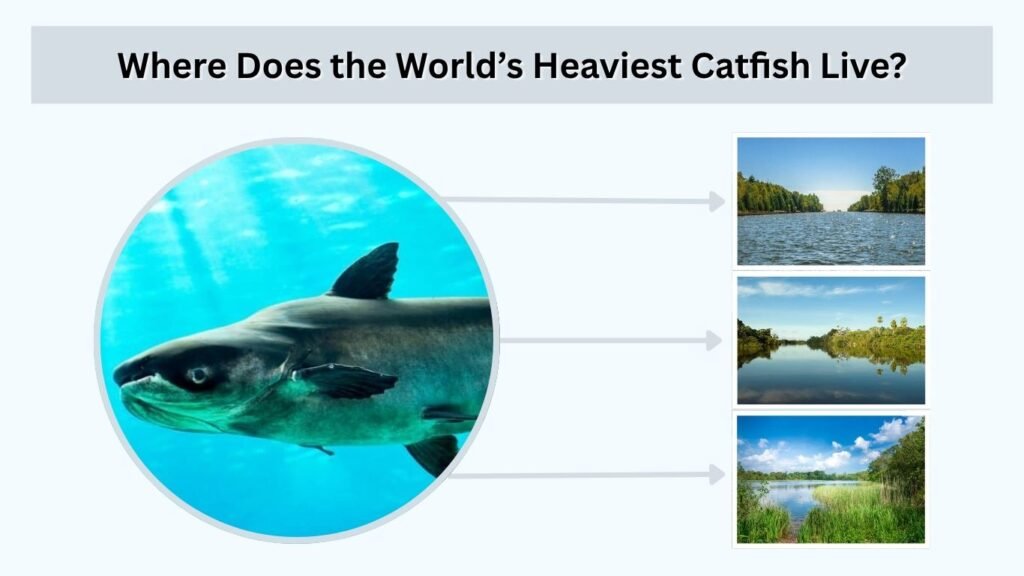
The species is endemic to the Mekong basin, meaning it naturally occurs nowhere else. The river travels through or along China, Myanmar, Laos, Thailand, Cambodia, and Vietnam.
Historically, the catfish occupied a much larger portion of the river system. It is now rare and appears to survive mainly in parts of the lower Mekong and connected waterways.
Natural Habitat
Mekong giant catfish use:
- Deep river channels
- Large pools
- Flooded river habitats
- Mainstream migration routes
- Areas connected to seasonal spawning grounds
The fish must move considerable distances to reach feeding and breeding locations. Dams and other barriers can prevent these journeys and separate important habitats.
What Do Mekong Giant Catfish Eat?
Adult Mekong giant catfish are primarily herbivorous. They feed mainly on algae and plant material rather than hunting large fish.
This peaceful diet is surprising considering their enormous size. Unlike giant predatory catfish such as the Wels catfish or piraíba, mature Mekong giants do not rely mainly on other fish for food.
Younger individuals may consume zooplankton and other tiny organisms before gradually changing to a more plant-based diet as they mature.
Mekong Giant Catfish vs Wels Catfish
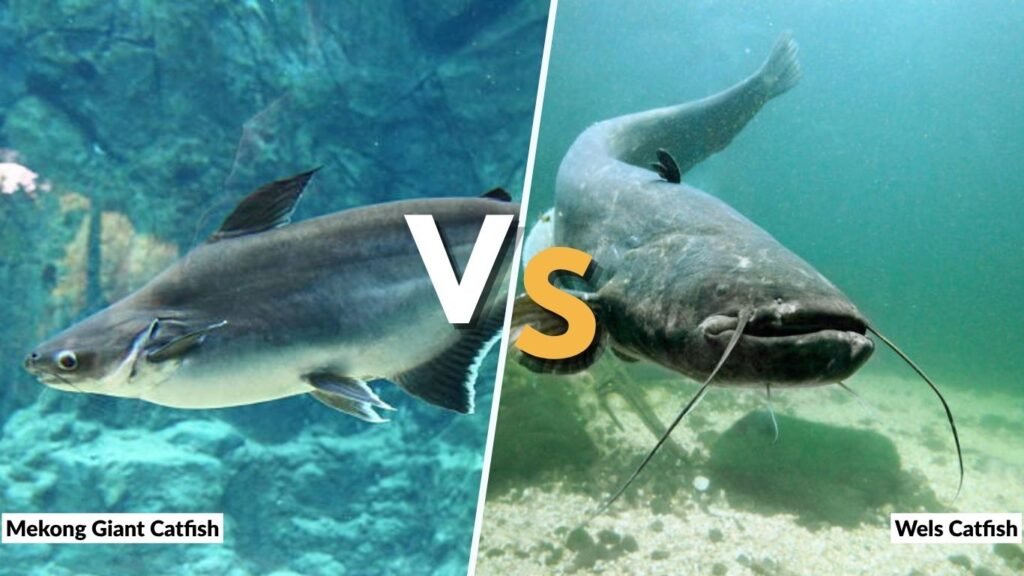
The Wels catfish is often described as the world’s largest catfish because exceptionally long individuals have been caught in Europe. It is a powerful predator that may exceed nine feet in length.
In October 2025, anglers reported a Wels catfish measuring 292 centimeters, slightly longer than the 2005 Mekong giant. However, it was released without a verified weight, so it did not surpass the Mekong catfish’s weight record.
| Feature | Mekong giant catfish | Wels catfish |
| Record strength | Heaviest verified catfish | Among the longest catfish |
| Record measurement | 293 kg | 292 cm reported in 2025 |
| Diet | Primarily herbivorous | Predatory |
| Native range | Mekong basin | Europe and western Asia |
| Appearance | Broad, silvery body | Long, dark, mottled body |
| Conservation concern | Critically endangered | Widespread in much of its range |
Why Is the Mekong Giant Catfish Endangered?
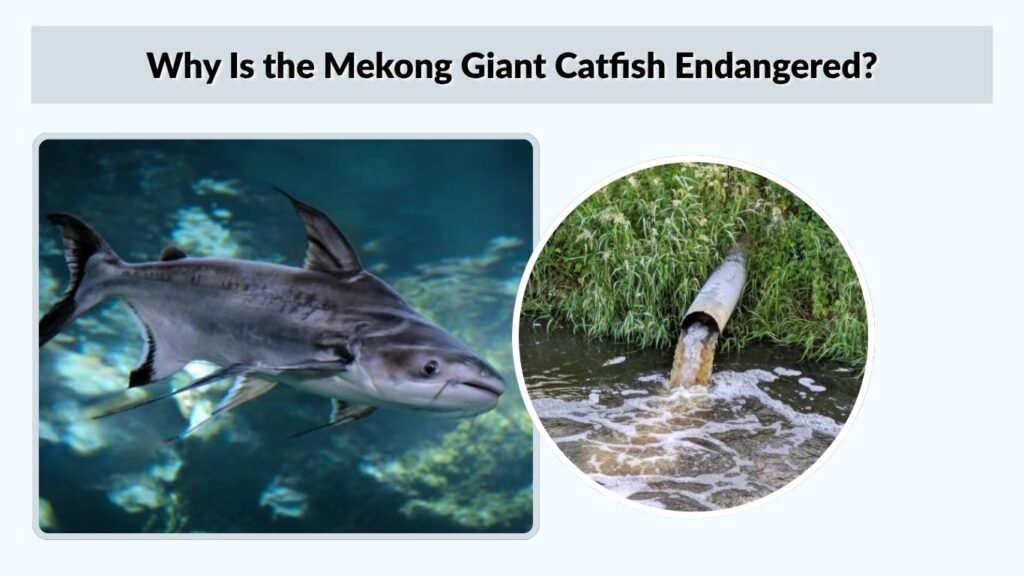
The species has declined severely because of overfishing and major changes to the Mekong River. Large, mature fish are particularly vulnerable because they take time to reach reproductive size and must migrate through heavily used sections of the river.
Major Threats
- Accidental and deliberate capture
- Dam construction
- Blocked migration routes
- Loss of spawning habitat
- Riverbank development
- Pollution
- Reduced water quality
- Changes in seasonal river flow
- Declining numbers of breeding adults
The species is considered Critically Endangered, and researchers describe its population as decreasing. Protecting migration routes and maintaining connected river habitats are essential to its survival.
Are Any Giant Catfish Still Alive?
Yes. Although sightings are rare, living Mekong giant catfish continue to be documented.
In late 2024, Cambodian fishers caught six individuals over several days. Some weighed more than 120 kilograms. Researchers measured, tagged, and released the fish, providing encouraging evidence that mature individuals remain in the Mekong system.
These fish were considerably smaller than the 293-kilogram record holder, but their discovery was important for understanding migration and identifying habitats that need protection.
FAQs
What is the heaviest catfish in the world?
The Mekong giant catfish is the heaviest reliably documented catfish. A specimen caught in northern Thailand in 2005 weighed 646 pounds, or 293 kilograms, and measured approximately 8 feet 11 inches long.
What is the largest catfish ever caught with a rod?
Rod-and-line records depend on the organization and category. Guinness lists a 143-pound blue catfish caught in Virginia in 2011 as the heaviest catfish caught in a recognized competition. Much larger catfish have been captured using nets.
Is a Wels catfish bigger than a Mekong giant catfish?
A Wels catfish may grow longer, and a 292-centimeter specimen was reported in Poland in 2025. However, its weight was not officially established. The 293-kilogram Mekong giant remains the heaviest reliably weighed catfish.
Is the Mekong giant catfish dangerous?
It is not considered an aggressive threat to humans. Adults primarily consume algae and other plant material. However, their massive bodies and powerful tails mean that handling one could still be dangerous for both the fish and nearby people.
What is the heaviest fish in the world?
The whale shark is the heaviest living fish species, with the largest scientifically recorded specimen estimated at 21.5 metric tons. The Mekong giant catfish holds a much narrower distinction as the heaviest reliably recorded catfish.