
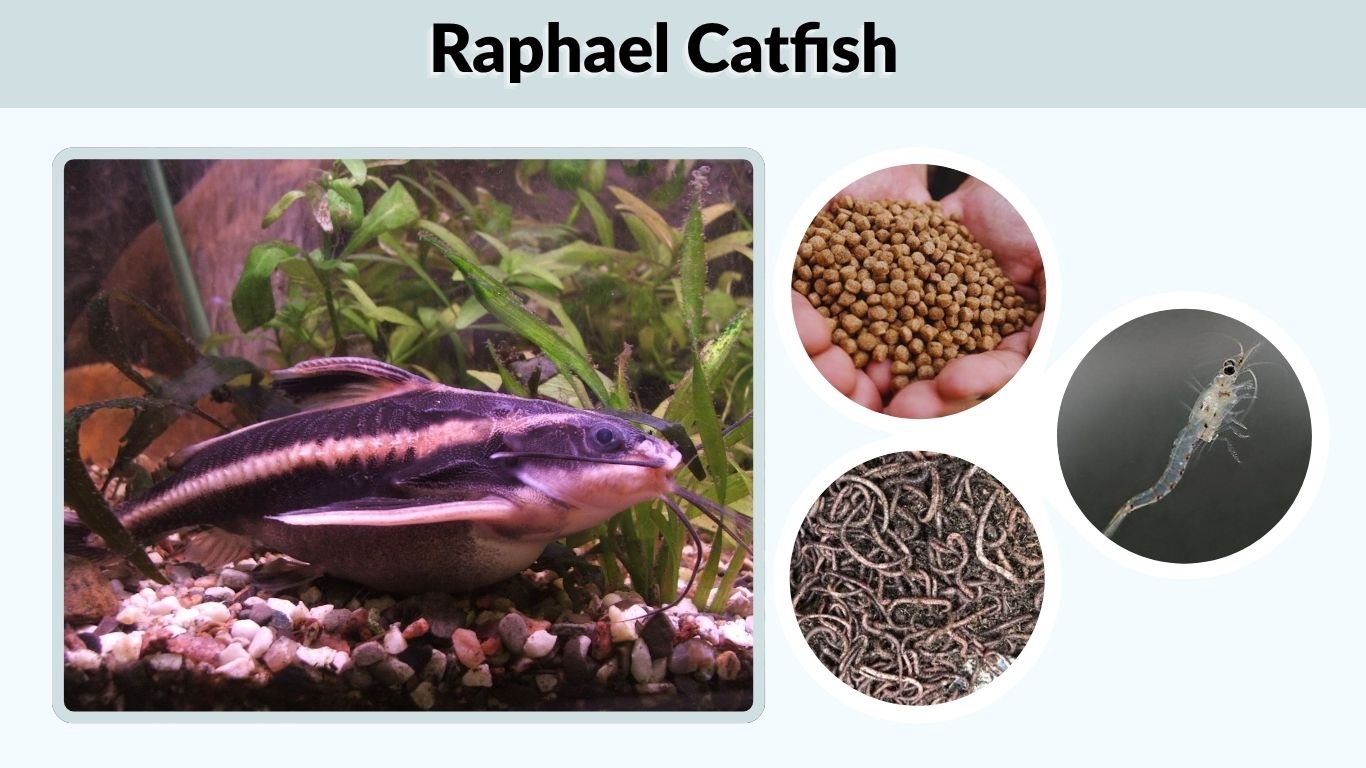
The Raphael catfish is a hardy South American freshwater fish known for its armored body, nocturnal habits, and ability to make audible clicking or croaking sounds. The two aquarium species most often sold under this name are the striped Raphael catfish, Platydoras armatulus, and the spotted Raphael catfish, Agamyxis pectinifrons. Both are generally peaceful, but they need hiding places, sinking food, and tank mates too large to swallow.
Raphael Catfish Quick Facts
| Feature | Striped Raphael | Spotted Raphael |
| Scientific name | Platydoras armatulus | Agamyxis pectinifrons |
| Family | Doradidae | Doradidae |
| Pattern | Cream stripes on a dark body | Pale spots on a dark body |
| Maximum reported size | Up to 43 cm standard length | Up to 15 cm standard length |
| Natural range | Paraná River basin | Amazon River basin |
| Activity | Primarily nocturnal | Primarily nocturnal |
| Diet | Omnivorous bottom feeder | Omnivorous bottom feeder |
| Temperament | Generally peaceful | Generally peaceful |
| Distinctive feature | Armored sides and audible sounds | Armored sides and audible sounds |
Scientific maximum sizes can be larger than the sizes commonly seen in home aquariums. FishBase lists a maximum standard length of 43 cm for P. armatulus and 15 cm for A. pectinifrons.
What Does a Raphael Catfish Look Like?
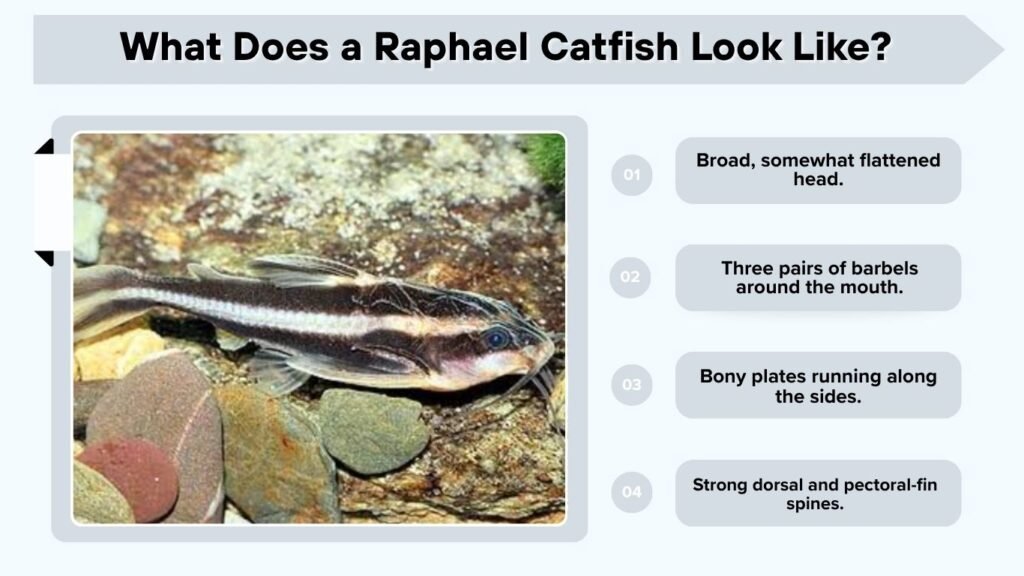
Raphael catfish have broad heads, flattened undersides, long sensory barbels, and rows of hard bony plates along their sides. These plates give them an armored appearance and help protect them from predators.
Identification Features
- Broad, somewhat flattened head
- Three pairs of barbels around the mouth
- Bony plates running along the sides
- Strong dorsal and pectoral-fin spines
- Dark brown or nearly black body
- Cream stripes or pale spots
- Wide mouth adapted for bottom feeding
- Rounded abdomen and tapering tail
The fin spines can lock into an extended position. They may become tangled in ordinary aquarium nets, so moving the fish in a rigid plastic container is safer than lifting it in mesh.
Types of Raphael Catfish
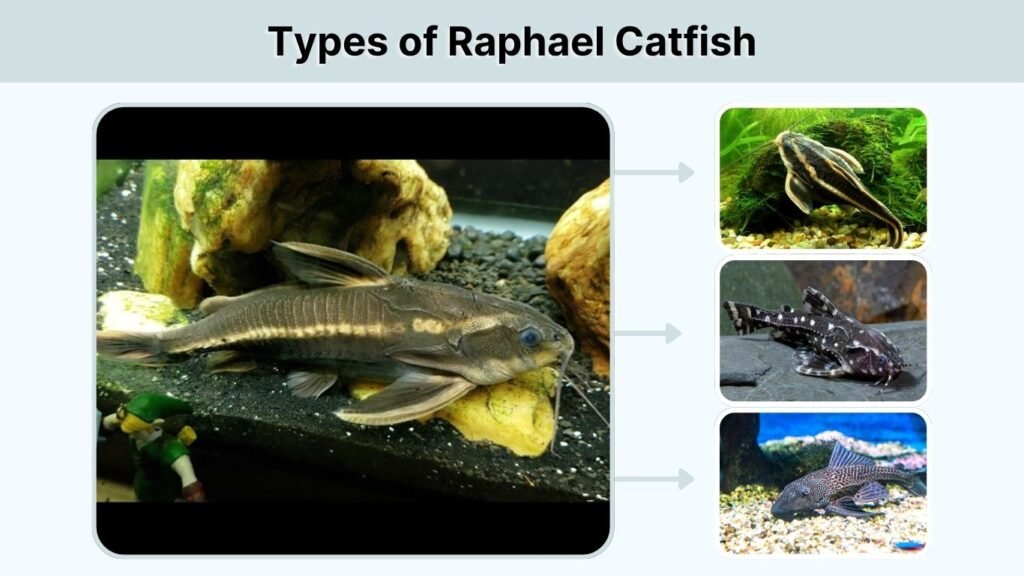
“Raphael catfish” is a common name applied to several thorny catfish rather than a single species.
Striped Raphael Catfish
The striped Raphael catfish has pale cream or yellowish lines running along its dark body. Pale markings also outline parts of the head and fins.
The aquarium fish called the striped Raphael is usually identified as Platydoras armatulus. It is sometimes confused with Platydoras costatus, another related species that also appears under the Raphael catfish name. FishBase recognizes several species within the genus Platydoras, including both P. armatulus and P. costatus.
Spotted Raphael Catfish
The spotted Raphael catfish has a dark body covered with irregular white or cream spots. Its fins may also have pale markings or short bars.
Its scientific name is Agamyxis pectinifrons. It is native to the Amazon basin, reaches a documented maximum of about 15 cm standard length, and naturally inhabits tropical freshwater.
Giant Raphael Catfish
The giant or Irwin’s Raphael catfish is normally Megalodoras uranoscopus. The older name Megalodoras irwini is now treated as a synonym.
This is a much larger species that can reach about 60 cm standard length. It requires an exceptionally large aquarium or indoor tropical pond and should not be purchased as though it were an ordinary striped or spotted Raphael.
Why Is It Called a Talking Catfish?
Raphael catfish can create sounds in two ways. They produce stridulatory sounds by moving ridged pectoral-fin spines against the shoulder girdle. They can also make lower-frequency drumming sounds by vibrating the swim bladder through a specialized elastic-spring mechanism.
These clicks, squeaks, or croaks are commonly heard when the fish is handled, frightened, competing for shelter, or interacting with another fish. The sound is defensive communication, not evidence that the fish is injured.
Raphael Catfish Size
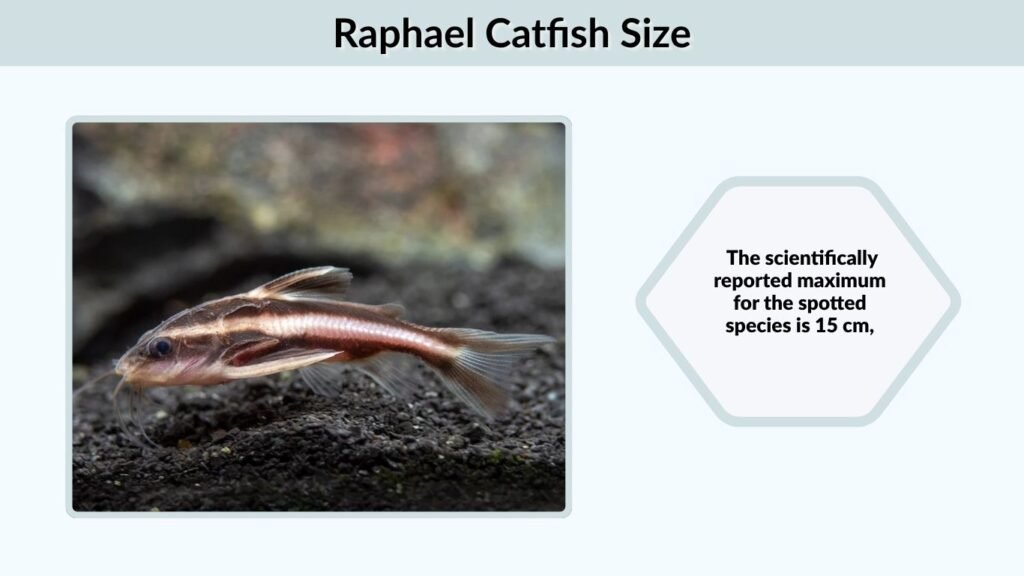
Raphael catfish are often sold when only a few inches long, making it easy to underestimate their adult requirements.
A spotted Raphael normally remains considerably smaller than a striped Raphael. The scientifically reported maximum for the spotted species is 15 cm, while exceptional striped Raphaels have been documented at much greater lengths.
Growth is usually fastest while the fish is young and slows as it approaches adulthood. Water quality, temperature, food, genetics, and available space all influence growth. Owners should choose an aquarium according to the species’ potential adult size rather than its size at purchase.
Raphael Catfish Tank Size and Setup
A conservative starting point is approximately 40 gallons for one spotted Raphael and 55 gallons or more for a striped Raphael. Larger aquariums are preferable for adult striped fish, groups, or communities containing other substantial bottom dwellers.
Tank Requirements
Provide:
- Sand or smooth fine gravel
- Several caves or hollow shelters
- Driftwood and shaded areas
- Dim or floating-plant-filtered lighting
- Strong biological filtration
- Moderate water movement
- A secure lid
- Open floor space for nighttime feeding
Raphael catfish frequently hide throughout the day. A fish that spends hours inside a cave is displaying normal behavior rather than necessarily being sick.
Each Raphael should have access to a shelter large enough to enter and turn around in. Avoid narrow decorations that could trap the fish or catch its lateral plates and fin spines.
Water Temperature and Conditions
Spotted Raphael catfish are recorded from tropical water at approximately 20–26°C, with a pH range of 5.8–7.5. For mixed Raphael communities, a stable temperature of roughly 23–27°C and a near-neutral pH generally provide a practical overlap, provided sudden fluctuations are avoided.
Regular partial water changes and effective filtration are important. These catfish can produce considerable waste, especially when overfed with rich foods.
What Do Raphael Catfish Eat?
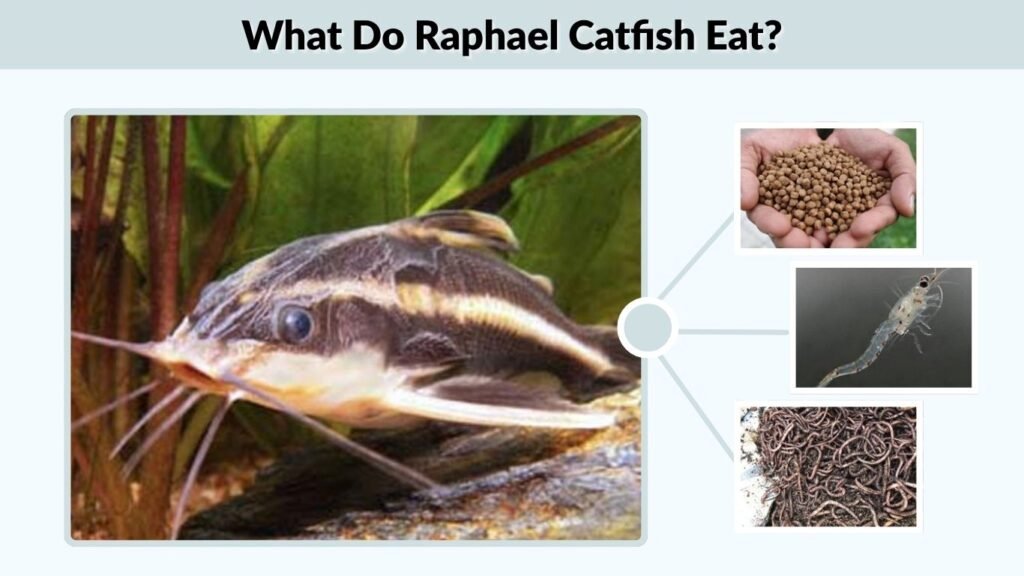
Raphael catfish are opportunistic omnivores that search the bottom for animal matter, plant material, detritus, and edible leftovers. Related Raphael catfish are documented consuming mollusks, crustaceans, and organic debris in natural habitats.
Suitable Foods
Feed a varied selection of:
- Sinking catfish pellets
- Omnivore wafers
- Frozen bloodworms
- Brine shrimp
- Mysis shrimp
- Chopped earthworms
- Insect larvae
- Pieces of shrimp or mussel
- Occasional vegetable-based food
Feed after the aquarium lights dim because Raphael catfish are most active at night. Confirm that food reaches the bottom before faster midwater fish consume everything.
Do Raphael Catfish Eat Algae?
They may swallow some algae or plant matter while grazing, but they are not dependable algae-control fish. They should not be purchased as substitutes for appropriate maintenance or specialized algae grazers.
Do They Eat Snails?
Raphael catfish may consume small snails and other mollusks they can handle. However, they are not guaranteed to eliminate a snail population, and large or hard-shelled snails may be ignored.
Raphael Catfish Tank Mates
Raphael catfish are generally peaceful toward fish they cannot swallow. Their armor allows them to live with many medium-sized community fish and some moderately assertive species.
Suitable tank mates can include:
- Medium and large tetras
- Barbs of appropriate size
- Rainbowfish
- Angelfish
- Peaceful South American cichlids
- Gouramis
- Plecos
- Silver dollars
- Senegal bichirs too large to view them as prey
Do not keep them with very small fish, fry, or tiny shrimp. A Raphael may not actively chase them during the day, but a small sleeping animal can become nighttime food.
Large aggressive cichlids may injure or continually harass a Raphael despite its armor. Tank-mate success depends on aquarium size, shelter availability, species temperament, and individual behavior.
Are Raphael Catfish Aggressive?
Raphael catfish are not normally aggressive community predators. They may defend a favorite cave, push another bottom fish away from food, or eat an animal small enough to fit into their mouth.
Several Raphaels can sometimes live together when the aquarium has sufficient floor space and more shelters than fish. Crowding them into one cave can create competition and make feeding difficult.
Are Raphael Catfish Poisonous?
Raphael catfish are not poisonous to eat or touch in the usual sense. However, members of the Doradidae family possess sharp fin spines, and research has identified venom-associated glandular tissue around the spines of some doradid catfish. A puncture can therefore be painful and should be avoided.
Never grab a Raphael with bare hands. A rigid container is safer for both the fish and the keeper. Clean any puncture promptly and seek medical advice for severe pain, swelling, infection signs, or a deeply embedded spine.
Male vs Female Raphael Catfish
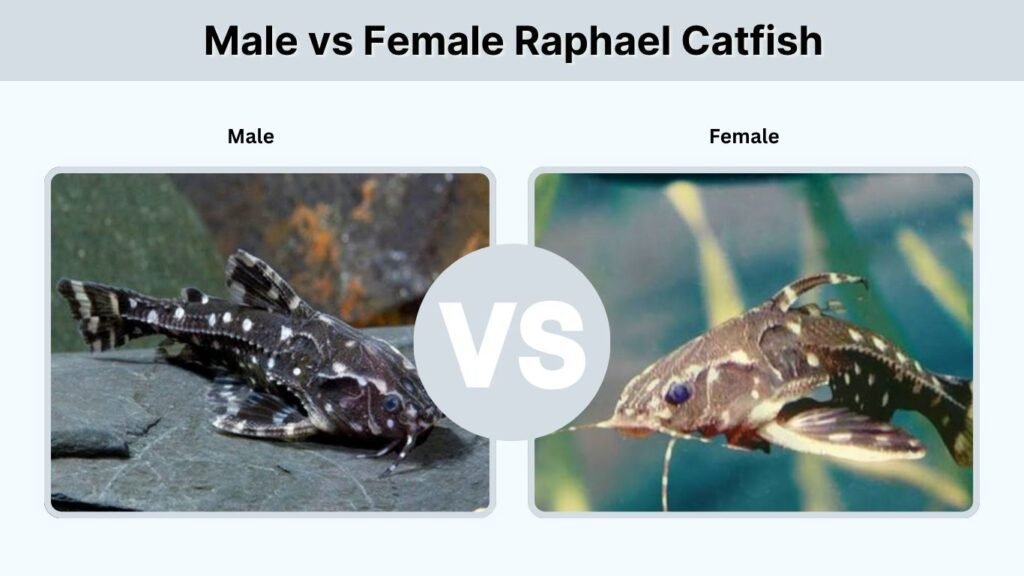
Sexing Raphael catfish by appearance is difficult. Mature females are often described as broader or rounder when viewed from above, while males may remain slimmer. Body condition and recent feeding can create the same appearance, so this method is not completely reliable.
A swollen abdomen does not necessarily mean the fish is pregnant. Raphael catfish lay eggs rather than giving birth to live young. Abdominal enlargement may result from eggs, a large meal, constipation, obesity, or illness.
Breeding Raphael Catfish
Successful breeding in ordinary home aquariums is uncommon. The sexes are difficult to identify, and the natural environmental signals associated with spawning are challenging to reproduce.
Commercial production may involve controlled conditions or hormonal induction. Claims of accidental home spawning exist, but there is no simple, consistently repeatable breeding method for the average keeper.
Raphael Catfish Lifespan
Raphael catfish are long-term aquarium animals. Husbandry sources commonly report lifespans exceeding ten years, with some striped Raphaels reportedly surviving 15 years or longer under good care. Exact lifespan is not well documented in scientific field records and varies with species, water quality, diet, and health.
FAQs
How big do Raphael catfish get?
Spotted Raphaels can reach about 15 cm standard length. Striped Raphaels may grow substantially larger, with an exceptional scientific maximum of 43 cm, although aquarium specimens are often smaller.
Will a Raphael catfish eat other fish?
It may swallow fish small enough to fit into its mouth, particularly at night. Medium-sized tank mates are usually safe when the aquarium provides adequate space and shelter.
Why is my Raphael catfish always hiding?
Raphael catfish are naturally nocturnal and prefer dark shelters during daylight. Consistent hiding is normal when the fish emerges at night to eat and otherwise appears healthy.
Can spotted and striped Raphael catfish live together?
Yes, they can potentially coexist in a sufficiently large aquarium. Provide separate caves, ample floor space, strong filtration, and food in several locations.
Can I pick up a Raphael catfish?
No. Its sharp, locking fin spines may puncture skin or become trapped in a net. Move the fish using a rigid container rather than holding it by hand.