
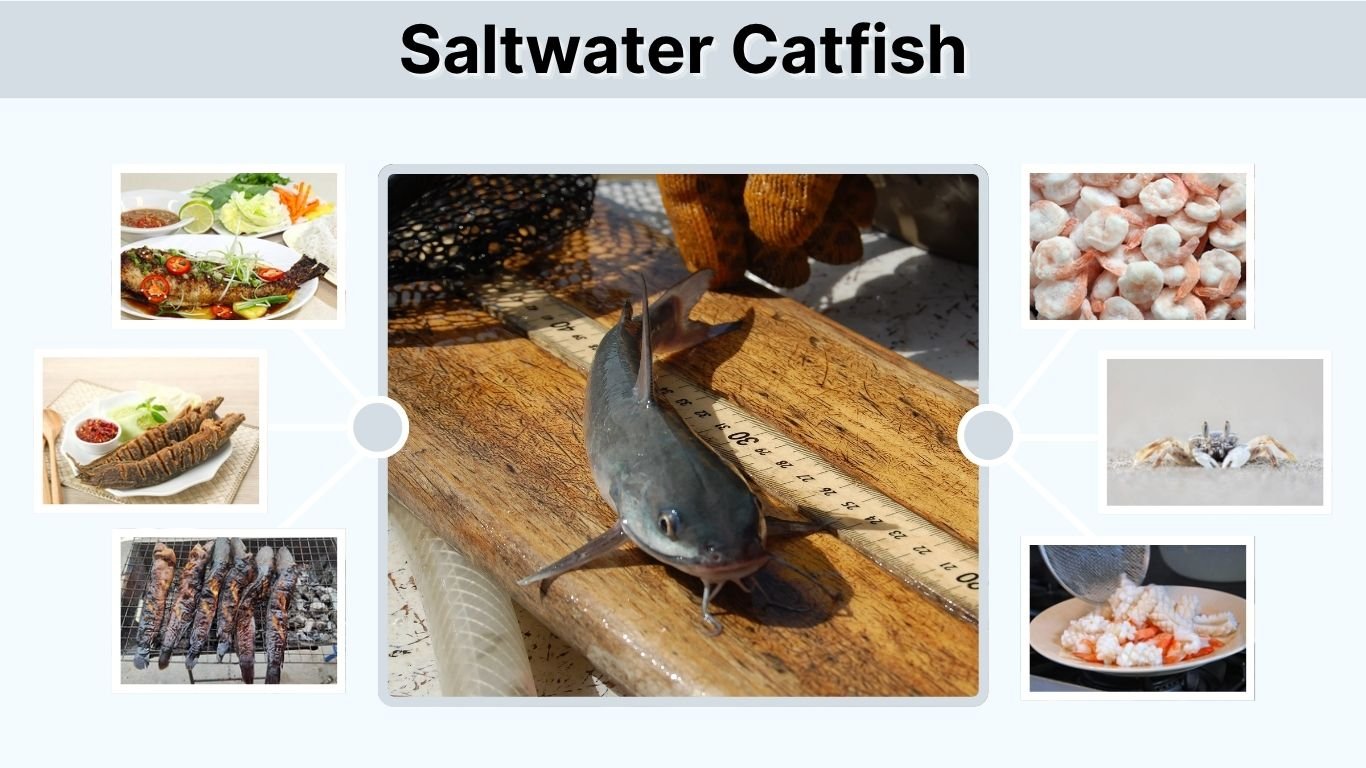
Saltwater catfish are marine and brackish-water fish recognized by their smooth, scaleless bodies, whisker-like barbels and sharp fin spines. They are common around bays, estuaries, beaches, river mouths and coastal waters in many warm regions. In Florida and the Gulf of Mexico, the hardhead and gafftopsail are the best-known species. Both can be eaten, but anglers must handle them carefully because their dorsal and pectoral spines can cause painful wounds.
Are There Catfish in Saltwater?
Yes, numerous catfish species live in saltwater. Most belong to the sea catfish family Ariidae, which contains species found in tropical and subtropical coastal waters worldwide. Some primarily inhabit the ocean, while others regularly enter brackish estuaries and the lower sections of rivers.
Most familiar sport and farmed catfish—including channel, blue and flathead catfish—are freshwater species. They may tolerate limited changes in salinity, but they are not true marine fish and should not be confused with naturally occurring sea catfish.
Saltwater Catfish Identification
Common identification features include:
- Smooth skin without visible scales
- Whisker-like sensory barbels
- Broad or slightly flattened head
- Forked tail in many marine species
- One sharp dorsal spine
- One sharp spine on each pectoral fin
- Silver, blue-grey or brownish coloration
- Lighter white or cream belly
The barbels help the fish detect food in muddy or dark water. Their strong defensive spines are much more important to anglers because they can puncture the skin during handling.
Common Types of Saltwater Catfish
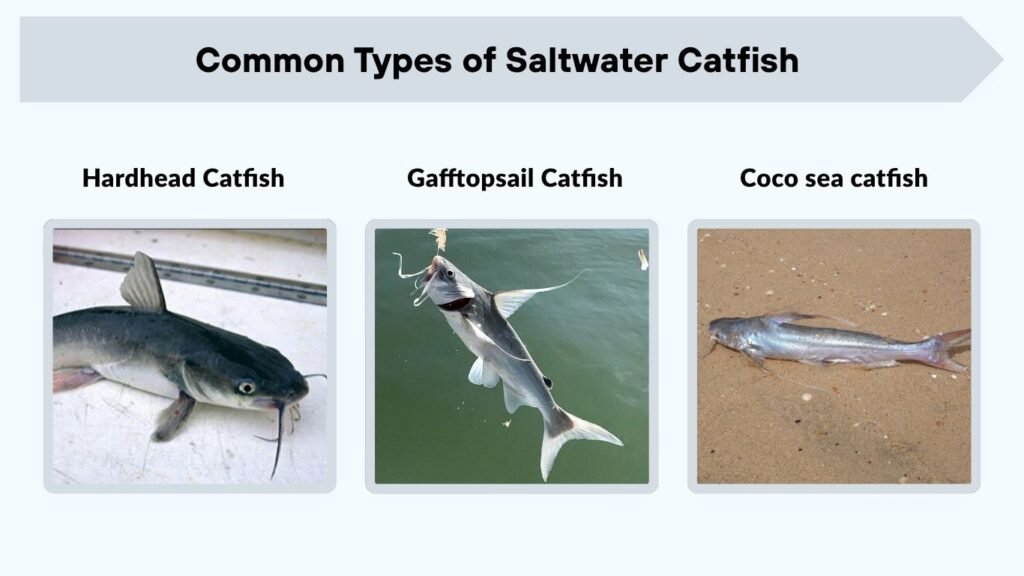
Hundreds of sea catfish species occur worldwide. However, two species account for many saltwater catfish catches along Florida’s Atlantic and Gulf coasts.
1. Hardhead Catfish
The hardhead catfish (Ariopsis felis) is a common marine catfish found in coastal waters, estuaries and brackish rivers. It has four small barbels beneath the chin, a grey or brownish back and a pale underside. Unlike the gafftopsail, its dorsal and pectoral spines do not have long fleshy extensions.
Hardheads are frequently caught by anglers using shrimp or cut bait. They are edible, but their relatively small fillets and abundant slime mean many anglers release them.
2. Gafftopsail Catfish
The gafftopsail catfish (Bagre marinus) is generally larger and more distinctive. Its tall dorsal spine and long ribbon-like extensions create a sail-like appearance. It also has long flattened barbels extending from the corners of its mouth.
Gafftopsails can reach approximately 27 inches and 10 pounds, although most are smaller. The Florida Fish and Wildlife Conservation Commission describes them as good food fish, and many anglers prefer their thicker fillets over those of hardheads.
Other Saltwater Catfish Species
Examples found in different parts of the world include:
- Coco sea catfish
- Crucifix sea catfish
- Gillbacker sea catfish
- Goat catfish
- Mozambique sea catfish
- Pemecou sea catfish
- Sona sea catfish
- Thinspine sea catfish
- Smooth-headed catfish
- Eeltail catfish
Some sea catfish become much larger than the familiar Florida species. FishBase records certain members of the family approaching or exceeding one metre, while the gillbacker sea catfish has a reported maximum length of around 190 cm.
Saltwater Catfish vs Freshwater Catfish
Although both groups belong to the catfish order, they differ in habitat, appearance and common fishing use.
| Feature | Saltwater catfish | Freshwater catfish |
| Main habitat | Oceans, bays and estuaries | Rivers, lakes and ponds |
| Common examples | Hardhead and gafftopsail | Channel, blue and flathead |
| Tail | Often deeply forked | Varies by species |
| Body color | Commonly silver or grey | Often brown, blue-grey or mottled |
| Food reputation | Varies considerably | Commonly valued as food |
| Main hazard | Sharp venomous fin spines | Sharp spines; effects vary by species |
Sea catfish are adapted to marine or brackish conditions. A true saltwater species should not be moved into a freshwater aquarium, just as ordinary freshwater channel or blue catfish should not be placed in full-strength seawater.
Are Saltwater Catfish Poisonous?
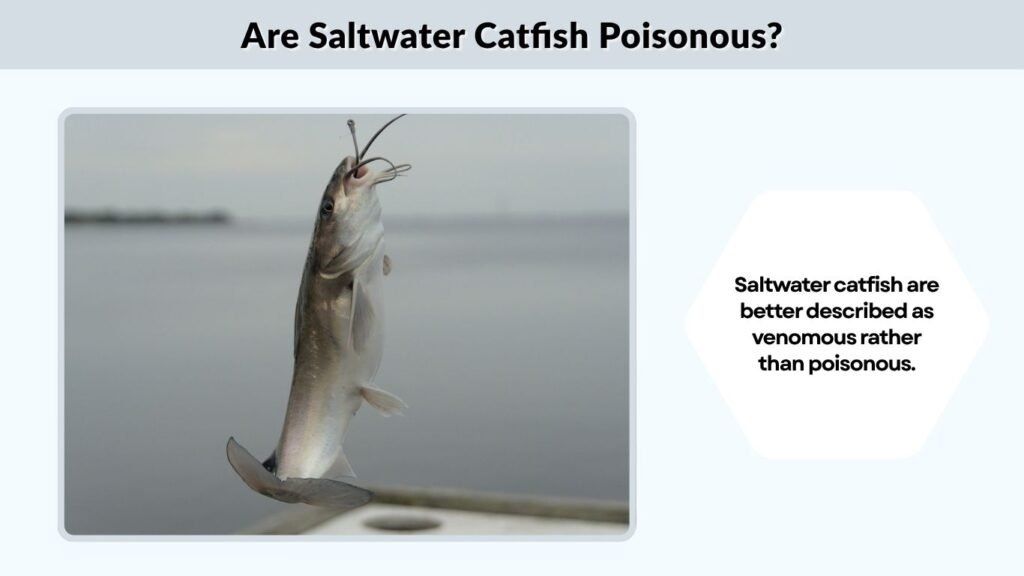
Saltwater catfish are better described as venomous rather than poisonous. Eating properly cleaned flesh does not normally inject venom. The danger comes from sharp spines positioned at the front of the dorsal and pectoral fins.
The spines can puncture the skin and introduce venomous or toxic material into the wound. Gafftopsail spines are serrated, and wildlife agencies note that they are coated with toxic slime. The resulting injury may cause immediate severe pain, swelling and inflammation.
What to Do After a Saltwater Catfish Sting
A puncture should be taken seriously because part of the spine may remain inside the wound, and marine wounds can become infected.
Basic first-aid steps include:
- Leave the water and control any bleeding.
- Rinse visible contamination from the wound.
- Do not dig deeply for a broken spine.
- Soak the injured area in very warm, non-scalding water for at least 30 minutes to help relieve pain.
- Obtain medical advice, particularly for deep punctures, severe pain or retained material.
Seek urgent medical care for breathing difficulty, faintness, rapidly increasing swelling, uncontrolled bleeding, loss of movement or a puncture near the chest, abdomen, eye or major joint. Marine wounds may also become infected by organisms such as Vibrio, so worsening redness, fever, drainage or increasing pain requires prompt medical evaluation.
How to Handle a Saltwater Catfish Safely
Never place your hand around the fish without locating all three major spines. A struggling catfish can suddenly lock its spines outward and drive one into the hand or leg.
Use a long-handled dehooking tool or strong fish gripper. Keep the fish away from bare feet, children and crowded areas of the boat. Even a dead catfish can cause injury because its spines remain sharp.
Avoid holding the fish by pressing your hand directly behind the head unless you have considerable experience. Cutting off the spines while the fish is thrashing can also result in an accidental puncture.
Can You Eat Saltwater Catfish?
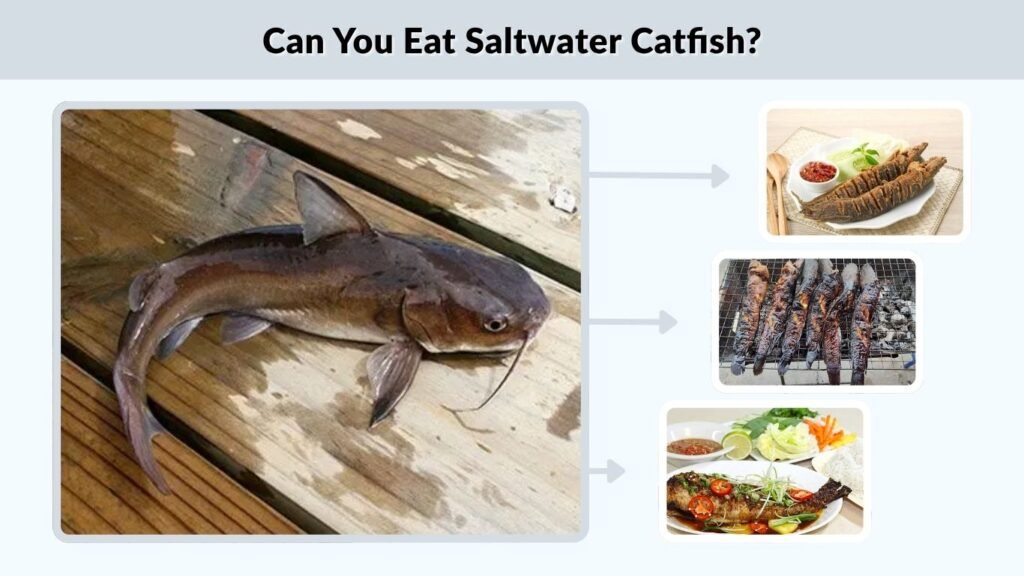
Yes, saltwater catfish are edible when caught from clean water and handled correctly. Gafftopsail catfish are generally regarded as the better food fish because they produce thicker, firmer fillets. Hardhead catfish can also be eaten, although they offer less meat and may have a stronger flavor.
The flesh is usually described as mild when the fish is fresh, properly bled and kept cold. Taste can vary with habitat, diet, fish size and preparation.
Cleaning and Cooking
Wear puncture-resistant gloves and remove the fillets without contacting the dorsal or pectoral spines. Skin the fillets, trim away dark or strongly flavored tissue and inspect the meat carefully.
Suitable cooking methods include:
- Frying
- Grilling
- Baking
- Blackening
- Making fish tacos
- Adding firm pieces to seafood stew
Cook the flesh completely and follow local seafood-consumption advisories. Do not eat a fish that smells spoiled, has been left warm for an extended period or came from water affected by pollution or harmful algal events.
Best Bait for Saltwater Catfish
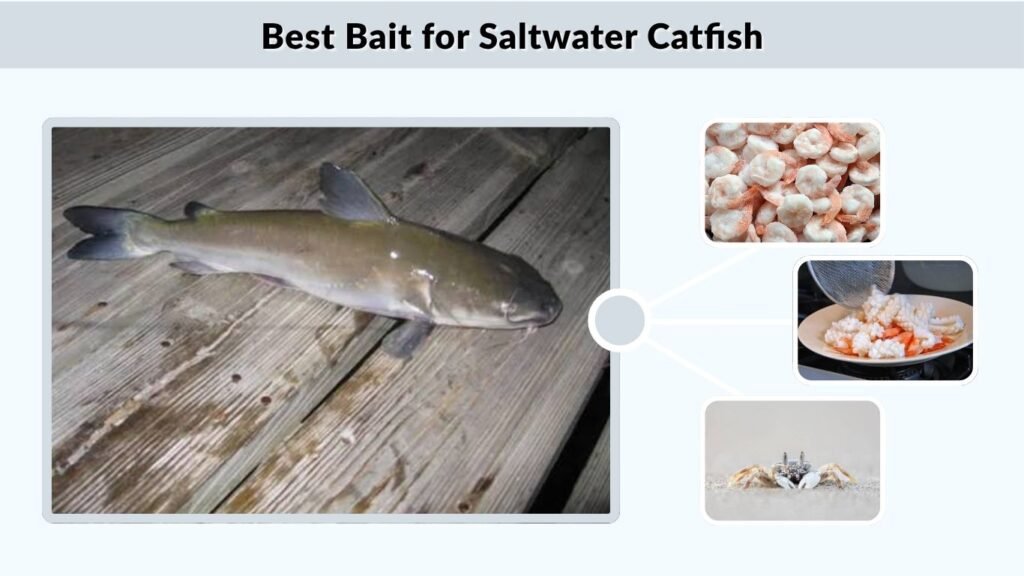
Saltwater catfish are opportunistic feeders and respond well to strong-smelling natural bait. Productive choices include:
- Fresh or frozen shrimp
- Cut mullet
- Squid strips
- Small crabs
- Fish pieces
- Clams
- Small live baitfish
A simple bottom rig often works well because hardheads commonly search near muddy or sandy bottoms. Gafftopsails also feed throughout the water column but are frequently caught with bait presented close to the bottom.
Saltwater Catfish in Florida
Hardhead and gafftopsail catfish are common in Florida’s coastal bays, estuaries, rivers and nearshore waters. Anglers frequently catch them from beaches, bridges, piers, jetties and boats.
Florida currently places both species in its “unregulated” category, meaning they have no species-specific recreational size limit. However, they remain subject to the state’s default limit for unregulated species: two fish or 100 pounds per person per day, whichever is greater. Fishing licenses, approved gear rules and local regulations still apply.
FAQs
Can saltwater catfish live in freshwater?
True marine catfish may enter brackish or occasionally freshened coastal water, but they should not be moved permanently into freshwater. Each species has different salinity tolerances.
Are saltwater catfish barbs poisonous?
Their defensive spines can deliver venomous or toxic material into a puncture wound. The dorsal spine and both pectoral spines should always be treated as hazardous.
Are saltwater catfish good to eat?
Yes. Gafftopsail catfish are generally considered better table fish than hardheads because they provide larger fillets. Both must be cleaned carefully because of their sharp spines.
How big do saltwater catfish get?
Size depends on the species. Florida gafftopsails can reach about 27 inches and 10 pounds, while some sea catfish elsewhere in the world grow considerably larger.
Is a sailfin catfish a saltwater fish?
The name can be confusing. Florida’s sailfin catfish is an introduced freshwater armored catfish and is not the same species as the marine gafftopsail catfish.